


What Is Chlorella?
Chlorella is a single-celled green freshwater algae that’s been studied as a nutritional supplement for decades. It belongs to a genus of roughly 30 species, but two, Chlorella vulgaris and Chlorella pyrenoidosa, are the ones used in almost all supplement research and sold commercially.
The green algae superfood reputation comes partly from its nutrient density and partly from a property that sets it apart from almost any other food source. Chlorella’s cell wall is tough and essentially indigestible for humans. Raw chlorella passes through the body without releasing its nutrients. For that reason, chlorella supplements are always processed to break or crack the cell wall before packaging; confirm this step before you buy.
Algae chlorella is grown commercially in large outdoor pools or closed photobioreactors, mostly in Japan and Taiwan. The harvested algae is dried, pulverized, and pressed into tablets, packed into capsules, or sold as powder. It’s naturally bright green from its high chlorophyll content.
Chlorella Nutrition Facts
Part of the reason chlorella gets called a superfood is its nutritional density. On a dry-weight basis, chlorella contains roughly 50 to 60 percent protein, a higher percentage than beef or chicken. That protein includes all nine essential amino acids, making it a complete protein source that works well for plant-based diets.
Key nutrients per typical serving (3 grams):
- Protein: 1.5–2g
- Vitamin B12: variable by species (C. vulgaris contains meaningful amounts)
- Iron: roughly 2–3mg (around 15% of daily value)
- Vitamin C: small but present
- Chlorophyll: among the highest of any food source
- Magnesium, zinc, phosphorus: notable mineral content
- Omega-3 fatty acids: small amounts, primarily ALA
Chlorella also contains a substance called Chlorella Growth Factor (CGF). This is a water-soluble extract from the cell nucleus that contains a unique blend of nucleic acids, amino acids, peptides, polysaccharides, and vitamins. CGF forms during chlorella’s rapid reproduction cycle and isn’t found in other algae, including spirulina. Supplement brands sometimes sell CGF as a standalone extract. Its biological effects in humans are still being studied, but it’s one of the properties that distinguishes chlorella from other green supplements.
Health Benefits of Chlorella
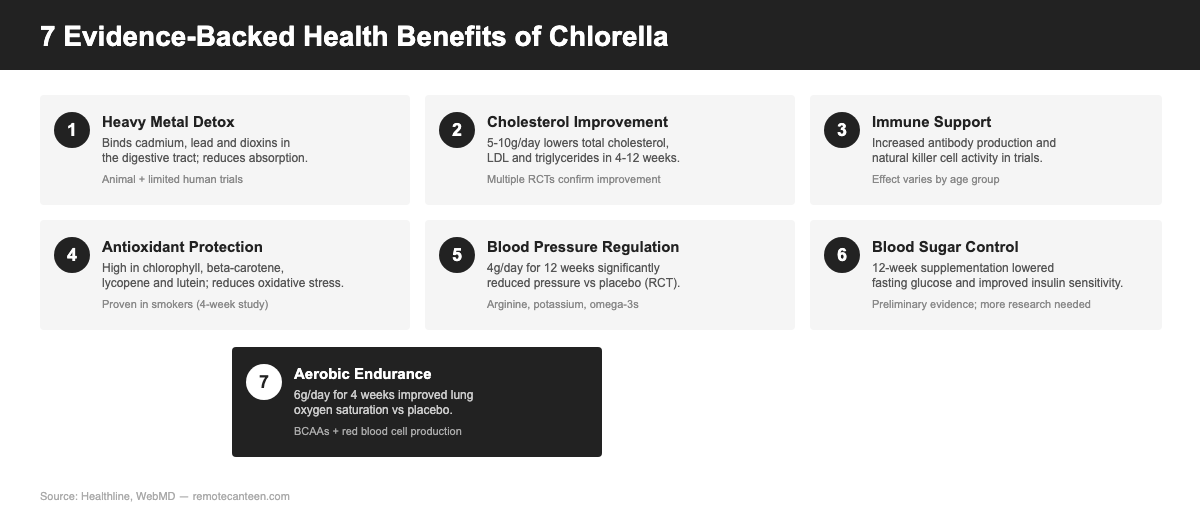
Chlorella’s research covers several health areas, mostly through small human studies and animal trials. The evidence is promising for a number of benefits, though most findings are early-stage. Here’s what the studies show.
Binds Heavy Metals and Supports Detox
Chlorella can bind to heavy metals in the digestive tract and reduce their absorption. Animal studies have shown it weakens the toxicity of metals like cadmium and lead in the liver, brain, and kidneys. It’s also been shown to reduce levels of dioxin, a persistent environmental toxin, in humans exposed to it through food.
The mechanism is the cell wall content and chlorophyll. Both have binding properties that trap metals and prevent them from being reabsorbed. Chlorella isn’t a treatment for heavy metal poisoning, but it is one of the more studied supplements for supporting the body’s natural elimination of environmental toxins.
May Improve Cholesterol Levels
Several studies have shown that taking 5 to 10 grams of chlorella daily can lower total cholesterol, LDL cholesterol, and triglycerides in people with elevated levels. That effect is thought to come from a combination of niacin, fiber, carotenoids, and antioxidants that together support healthy lipid metabolism.
The results aren’t universal. People with already-normal cholesterol see less change, but for those with elevated levels, chlorella supplementation over 4 to 12 weeks has consistently shown improvement in multiple trials.
Supports Immune Function
Some studies suggest chlorella can boost immune activity. It’s preliminary, but consistent. Participants in several trials showed higher antibody production and increased natural killer cell activity after chlorella supplementation. The immune response varied by age group; older participants showed more pronounced changes in some studies.
The caveat is that stronger immune activity isn’t always better, and people with autoimmune conditions or those taking immunosuppressants should check with a doctor before adding chlorella.
Acts as an Antioxidant
Chlorella contains several antioxidant compounds: chlorophyll, vitamin C, beta-carotene, lycopene, and lutein. These help neutralize free radicals and reduce oxidative stress in the body.
A study on chronic smokers (a group with higher baseline oxidative stress) found that four weeks of chlorella supplementation significantly increased antioxidant status. The finding suggests chlorella’s antioxidant load is meaningful even under conditions of elevated oxidative burden.
May Help Regulate Blood Pressure
In a 12-week randomized controlled trial, participants taking 4 grams of chlorella daily showed lower blood pressure compared to a placebo group. Researchers point to chlorella’s arginine, potassium, calcium, and omega-3 fatty acid content as contributing factors. Arginine in particular supports nitric oxide production, which relaxes blood vessels.
The effect was significant for people with borderline high blood pressure, though not all studies confirm the same result.
Could Improve Blood Sugar Control
A 12-week study found that chlorella supplementation lowered fasting blood glucose levels in healthy participants. A separate study in people with non-alcoholic fatty liver disease found improved insulin sensitivity after supplementation.
The exact mechanism isn’t fully understood, but chlorella’s magnesium content, fiber, and antioxidant load are considered contributing factors. This benefit is still considered preliminary. The studies are small, and more large-scale research is needed before strong claims can be made.
May Boost Aerobic Endurance
In one study, young adults who took 6 grams of chlorella daily for four weeks showed significantly better lung oxygen saturation during aerobic exercise compared to the placebo group. Researchers suggest the high content of branched-chain amino acids (BCAAs) and the improved oxygen transport from increased red blood cell production are likely explanations.
It’s a niche benefit but relevant for athletes or people focused on cardiovascular performance.
Chlorella vs. Spirulina: What’s the Difference?
Chlorella and spirulina are often sold side by side and frequently confused. They’re both algae supplements with high nutrient density, but they’re biologically different and perform differently in the body.
Spirulina is a cyanobacterium, also called blue-green algae. Technically it isn’t an alga at all, but a photosynthetic bacteria. Chlorella is a true green alga from the Chlorophyta division. The difference matters for their respective nutrient profiles and health properties.
| Property | Chlorella | Spirulina |
|---|---|---|
| Protein content | 50–60% DW | 60–70% DW |
| Chlorophyll | Very high | Moderate |
| Unique compounds | CGF | Phycocyanin |
| Heavy metal binding | Strong | Weaker |
| Taste | Earthy, grass-like | Milder, slightly salty |
| Cell wall | Yes (must be cracked) | No cell wall |
| Typical price | Moderate | Moderate–lower |
| Best use | Detox support, all-round nutrition | Protein supplementation, anti-inflammatory |
Spirulina has a slight edge in raw protein percentage, while chlorella contains more chlorophyll and has better-documented heavy metal binding. If you’re looking for heavy metal support, chlorella’s the more studied option. If heavy metal detox is the goal, chlorella is the better choice. If you want protein density and a milder flavor, spirulina is a reasonable option. Many people take both.
Chlorella Forms: Powder, Tablets, or Capsules?
Chlorella comes in four main forms, each with trade-offs.
Powder is the most versatile. It mixes into smoothies, juices, or water. The downside is taste. Chlorella has a strong, grassy, seaweed-like flavor that many people find challenging straight. Powder gives you flexibility with dosing and no added fillers, but most newcomers find the flavor overwhelming until they learn to blend it with fruit or citrus.
Tablets are pressed chlorella, no extras. They’re easier to take than powder and allow for exact, consistent dosing. The tablets are usually small and need several per serving. It’s the most popular form for consistent daily supplementation because the routine is simple.
Capsules enclose the chlorella in a gelatin or vegetable-based shell. They’re the easiest option for people sensitive to the taste, since you don’t come into contact with the flavor at all. Capsules are often slightly more expensive per gram than tablets. Some capsule products use fillers, so checking the ingredient list is worthwhile.
Liquid extracts are concentrated and absorbed quickly, but they’re the most expensive form per dose and the taste is stronger than powder. They’re typically used by people who want a concentrated CGF dose rather than whole chlorella.
For most people starting out, tablets or capsules are the most practical choice. Switch to powder once you’re comfortable with the flavor and want to incorporate it into smoothies.
How Much Chlorella Should You Take?
There’s no official recommended daily allowance for chlorella. The doses used in research range from 1.2 to 10 grams per day, depending on the study and the outcome being measured. For most people, 2 to 3 grams per day is the typical starting recommendation.
One important variable is protein concentration. Commercial chlorella products vary widely depending on how they are grown and processed. Dried chlorella’s protein content can range from 7 to 88 percent depending on cultivation conditions, harvesting timing, and processing methods. That means two “1,000mg” tablets from different brands may deliver very different nutritional profiles. Third-party testing is the most reliable way to know what you are getting.
A few practical points:
- Start at the lower end (1–2g/day) and increase gradually to minimize GI side effects
- Take with food to reduce nausea risk
- There is no clear evidence that higher doses deliver proportionally stronger benefits beyond the researched thresholds
- Consistency matters more than dose; regular daily use at a moderate dose outperforms sporadic high doses
If you’re taking chlorella for a specific health goal, such as cholesterol management, matching the dose from the research (5–10g/day) makes sense. Talk to a doctor first if you take any medications or have a health condition.
Side Effects and Safety
Chlorella is generally recognized as safe by the FDA and has a long history of use in Japan. For most healthy adults, it’s well-tolerated at typical doses. Some side effects are common, particularly when starting.
The most frequent side effects are gastrointestinal: nausea, gas, bloating, green-colored stools, and mild cramping. They’re usually mild. These usually appear in the first two to four weeks and often resolve as the body adjusts. Starting at a low dose helps.
Chlorella also increases skin sensitivity to sunlight. People who take it should apply sunscreen when spending time outdoors, especially during the summer months.
Drug Interactions to Know
Two interactions are worth knowing:
Warfarin (Coumadin): Chlorella contains significant amounts of vitamin K. Vitamin K counteracts warfarin’s blood-thinning effect, which can reduce its effectiveness and raise clotting risk. Anyone taking warfarin shouldn’t add chlorella without discussing it with their doctor and monitoring their INR more frequently.
Photosensitizing medications: Some drugs, including certain antibiotics, antifungals, and acne medications, increase sun sensitivity. Taking chlorella alongside these medications amplifies the photosensitivity effect and raises sunburn risk.
A few groups should exercise additional caution. Chlorella is considered safe during pregnancy up to 28 weeks in the second trimester based on current evidence, but there’s limited data; consulting a doctor is advisable. People with compromised immune systems should also seek medical advice first, as chlorella’s immune-stimulating properties could theoretically interfere with immunosuppressive treatment.
If you’ve got a known mold or algae allergy, test a small amount before committing to regular use, as cross-reactions are possible.
How to Choose a Quality Chlorella Supplement
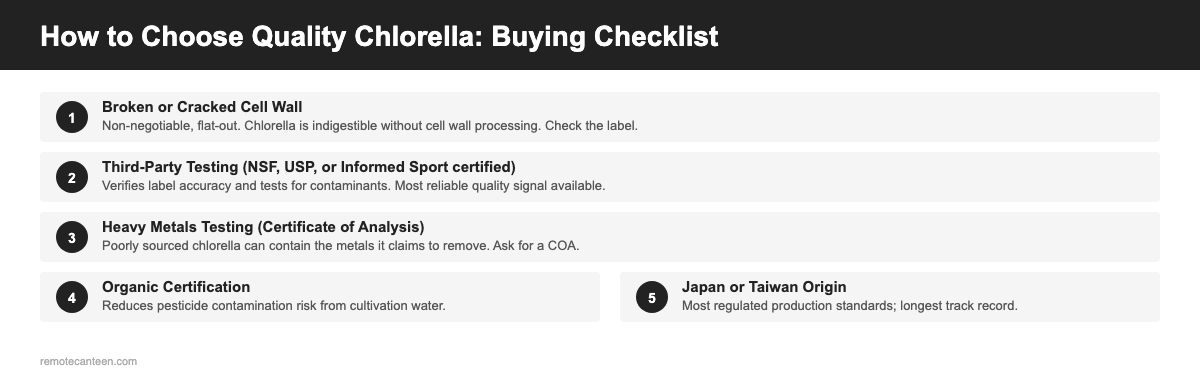
The supplement market for chlorella is crowded and quality varies widely. A few things separate a reliable product from a low-grade one.
Broken or cracked cell wall. This is non-negotiable, flat-out. Chlorella’s cell wall is indigestible. The algae passes through without releasing its nutrients unless the cell wall is mechanically broken or cracked. Any reputable product will state this on the label. If it doesn’t, look elsewhere.
Third-party testing. Look for products certified by NSF International, USP (United States Pharmacopeia), or Informed Sport. These certifications verify that the product contains what the label says and that it’s been tested for contaminants. They add cost, but they’re the most reliable quality signal for supplements.
Heavy metals testing. Chlorella is marketed for its heavy metal detox properties, which makes it a bit ironic that poorly sourced chlorella can itself contain heavy metals from contaminated water. A reputable product will show its certificate of analysis (COA) with heavy metals results.
Organic certification. Not essential, but organic certification reduces the likelihood of pesticide contamination from the cultivation water.
Country of origin. Japan and Taiwan are the established production centers for quality chlorella. Chlorella from these countries has the best track record and the most regulated production standards.
Avoid proprietary blends. If a supplement lists “chlorella blend” without specifying amounts, it may contain less chlorella than the label implies. Single-ingredient products or those with disclosed amounts are easier to evaluate.
Frequently Asked Questions
Is chlorella safe to take every day?
Chlorella is considered safe for daily use by most healthy adults at typical doses of 2 to 3 grams. Start lower and ramp up gradually to minimize early GI side effects. Long-term daily use at moderate doses has a well-established safety profile, particularly in Japan, where it’s been consumed regularly for generations.
Can chlorella help with weight loss?
No direct evidence supports chlorella as a weight loss supplement. Its high protein and fiber content may support satiety, and some studies link it to improved metabolic markers like blood sugar and cholesterol. Those are positive for overall health, but no study shows chlorella causes measurable weight loss on its own.
Does chlorella really remove heavy metals?
Animal studies consistently show chlorella binds heavy metals in the body and reduces their tissue toxicity. Human evidence is more limited. Several trials in humans, particularly those exposed to dioxins through diet, show that chlorella supplementation reduced body burden of those toxins. It isn’t a medical treatment and should not replace clinical care for heavy metal toxicity, but the binding mechanism is real and clearly documented.
What does chlorella taste like?
Chlorella has a strong, earthy flavor that most people describe as similar to seaweed, freshly cut grass, or pond water. It’s one of the more polarizing supplement flavors. Tablets and capsules largely eliminate the taste. Powder works best blended into smoothies with fruit, citrus juice, or strong flavors like mango or pineapple that can mask the green earthiness.