
Pure Protein Bars Review
 By Lisa Benz, Editor-in-chief · Updated Oct 6, 2026 · 10 min read
Disclosure: this article may contain partner links. If you buy through them, we earn a commission at no extra cost to you. The ranking is set by our editors.
Contents
A Pure Protein bar packs about 20 grams of protein into roughly 190 calories for around $1.50 to $2 depending on where you buy it, which makes it one of the cheapest protein bars sold in a regular grocery store. It is not fancy. The formula leans on a soy, whey and milk protein blend along with sugar alcohols to hit that macro profile, and it tastes closer to a mild candy bar than a chalky gym snack. The brand has been on shelves for well over a decade, and a 2023 packaging refresh changed the look without touching the actual recipe, so longtime buyers get the same bar they remember. Here is what is in a Pure Protein bar, how the flavors stack up against each other, what they cost across retailers, and how the brand compares to pricier rivals like Barebells and David Protein.
This review pulls from published nutrition labels, retailer product pages, and independent flavor-by-flavor taste tests rather than the brand's own marketing copy, so the numbers below reflect what buyers actually get rather than what the packaging promises.
Is Pure Protein Worth Buying?
Yes, Pure Protein bars are worth buying: each bar delivers roughly 20 to 21 grams of protein, 180 to 200 calories and only 2 to 3 grams of added sugar for about $1.34 to $2.19, a cheap, widely available high-protein snack if you do not mind a soft, slightly chalky texture. That price gap is the whole appeal, undercutting most name-brand protein bars by a dollar or more per bar. The catch is the sweetener blend. Most of the carb count comes from sugar alcohols rather than sugar, and the fat comes partly from palm kernel oil, which pushes the saturated fat content higher than health-focused buyers might expect.
- Protein: 20-21g per bar
- Calories: 180-200 per bar
- Added sugar: 2-3g, plus about 6g of sugar alcohol
- Price: roughly $1.34-$2.19 per bar depending on retailer and pack size
People who want a whole-food ingredient list or a bar built for daily meal replacement should look elsewhere. Anyone who wants an affordable, gas-station-accessible protein bar for the occasional snack or post-workout bite gets solid value here.
Pure Protein Nutrition Facts and Formulation
200 calories, 20 grams of protein, 17 grams of total carbs and 2 grams of added sugar: that is the standard Pure Protein bar, built from a blend of soy protein isolate, whey protein isolate, milk protein isolate and whey protein concentrate. That protein blend is the main reason the bars cost less than single-source whey bars. Soy and milk protein isolates cost less than isolated whey.
| Attribute | Pure Protein Bar (standard flavor) |
|---|---|
| Protein | 20-21g |
| Calories | 180-200 |
| Total carbs | ~17-20g |
| Added sugar | 2-3g |
| Sugar alcohol | ~6g (mainly maltitol) |
| Fat | 7g, roughly 20% of the daily saturated fat limit |
| Fiber | ~1g |
| Diet notes | Gluten-free; contains soy and milk; some flavors add hydrolyzed collagen |
How Much Sugar Is In Pure Protein Bars?
Pure Protein bars contain about 2 to 3 grams of added sugar per bar, which is low, but the total carb count is padded out with roughly 6 grams of sugar alcohol, mainly maltitol and maltitol syrup, plus sucralose. Some flavors also add acesulfame potassium alongside the sucralose, though not every flavor's label lists it, so check the specific bar if you are avoiding that sweetener. Sugar alcohols register as carbs on the label without spiking blood sugar the way table sugar does. That is the entire trick behind the low sugar line. The tradeoff is digestive tolerance. Maltitol in volume can cause bloating or a laxative effect in people who are sensitive to it, so eating more than one or two bars a day is where problems tend to show up.
The fat side of the formula is worth a second look too. Pure Protein bars use fractionated palm kernel and canola oils, and a single bar can carry around 20% of a typical daily saturated fat limit. That is not disqualifying for an occasional snack, but it adds up fast if a bar becomes a daily habit. Decorated flavors go a step further on the ingredient list: the icing and sprinkle coatings on flavors like Birthday Cake and Lemon Cake use synthetic dyes such as Yellow 5, Red 3, Blue 1, Red 40, Yellow 6 and Blue 2, worth knowing if you avoid specific food colorings. No independent third-party testing certification is listed on the brand's packaging or site either, which matters if batch-to-batch purity or label accuracy is a priority for you.
Pure Protein Bar Flavors Ranked by Taste
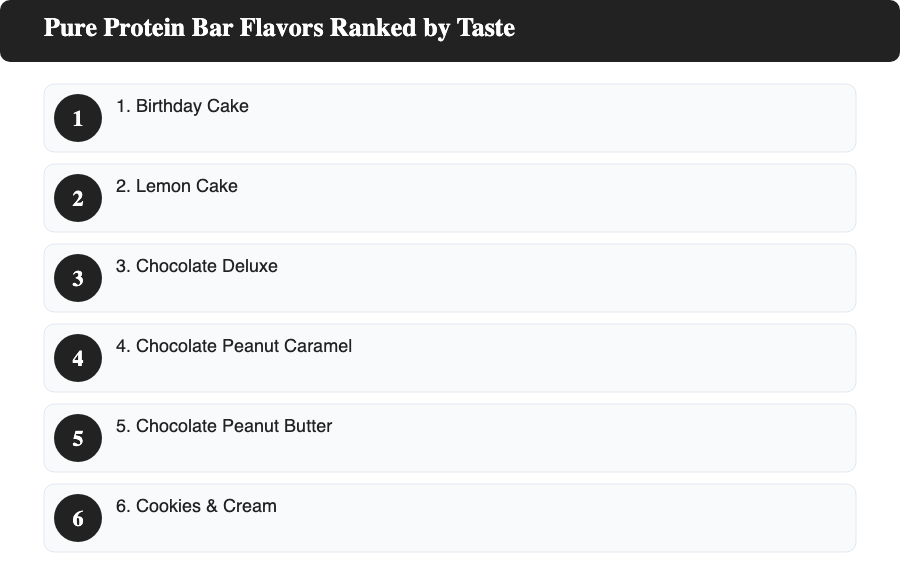
Six core Pure Protein flavors, ranked 1 to 6 by independent taste tests: Birthday Cake and Lemon Cake take the top two spots, while Cookies & Cream lands last for a drier texture and a bitter chocolate coating that overwhelms the cream flavor. Here is how the lineup stacks up, best to worst, along with a quick spec box for each flavor.
Birthday Cake
Birthday Cake is the best-reviewed Pure Protein flavor, praised for a soft, chewy interior and a coating crunch that avoids the artificial aftertaste common in bar-format cake flavors. It holds up well next to Quest's own birthday cake bar, which is a high bar to clear in this category.
| Attribute | Birthday Cake |
|---|---|
| Type | Whey/soy/milk protein blend, cake-flavored coating |
| Protein per bar | ~20g |
| Calories | ~190-200 |
| Sugar | ~2-3g added, ~6g sugar alcohol |
| Price per bar | ~$1.34-$1.87 |
| Format | Single wrapped bar, sold by the 12-count box |
| Rating | Top-ranked flavor in independent flavor tests |
Lemon Cake
Lemon Cake ranks second, with a strong citrus aroma, a visibly layered interior and a white chocolate coating over the lemon core. The only knock is a slight lingering bitterness after the sweetness fades, which is a minor issue compared to some of the lower-ranked flavors.
| Attribute | Lemon Cake |
|---|---|
| Type | Whey/soy/milk protein blend, white chocolate coating |
| Protein per bar | ~20g |
| Calories | ~190-200 |
| Sugar | ~2-3g added, ~6g sugar alcohol |
| Price per bar | ~$1.34-$1.87 |
| Format | Single wrapped bar, sold by the 12-count box |
| Rating | Second-ranked flavor, minor bitterness noted |
Chocolate Peanut Caramel
Chocolate Peanut Caramel delivers a soft, chewy bite with a gooey caramel layer, though testers describe the overall flavor as closer to a standard protein bar than an actual candy bar. Texture wins out over authentic candy-bar flavor here.
| Attribute | Chocolate Peanut Caramel |
|---|---|
| Type | Whey/soy/milk protein blend, chocolate coating with caramel layer |
| Protein per bar | ~20g |
| Calories | ~190-200 |
| Sugar | ~2-3g added, ~6g sugar alcohol |
| Price per bar | ~$1.34-$1.87 |
| Format | Single wrapped bar, sold by the 12-count box |
| Rating | Mid-pack, texture stronger than flavor authenticity |
Chocolate Peanut Butter
Chocolate Peanut Butter offers a decent peanut butter essence with crispy interior pieces for texture contrast, though the flavor leans more toward protein powder than real peanut butter. It is acceptable but unremarkable next to the top two flavors.
| Attribute | Chocolate Peanut Butter |
|---|---|
| Type | Whey/soy/milk protein blend, chocolate coating with peanut butter core |
| Protein per bar | ~20g |
| Calories | ~190-200 |
| Sugar | ~2-3g added, ~6g sugar alcohol |
| Price per bar | ~$1.34-$1.87 |
| Format | Single wrapped bar, sold by the 12-count box |
| Rating | Mid-pack, flavor reads as protein powder rather than real peanut butter |
Chocolate Deluxe
Chocolate Deluxe is the classic Pure Protein flavor, and longtime buyers describe it as unchanged over more than a decade, still tasting like a chocolate whey shake compressed into a bar. It is soft with a noticeable protein taste that some people love and others find a bit heavy.
| Attribute | Chocolate Deluxe |
|---|---|
| Type | Whey/soy/milk protein blend, chocolate coating |
| Protein per bar | ~21g |
| Calories | 180 |
| Sugar | 3g added |
| Price per bar | ~$1.42 (12-count box around $16.99) |
| Format | Single wrapped bar, sold by the 12-count box |
| Rating | 4.37/5 stars across 463 verified retailer reviews |
Cookies & Cream
Cookies & Cream is the weakest flavor in independent taste tests, held back by a drier texture than the rest of the lineup and a bitter chocolate interior that overwhelms the white chocolate coating. Testers note it lacks the cream flavor the name promises.
| Attribute | Cookies & Cream |
|---|---|
| Type | Whey/soy/milk protein blend, white chocolate coating with cookie bits |
| Protein per bar | ~20g |
| Calories | ~190-200 |
| Sugar | ~2-3g added, ~6g sugar alcohol |
| Price per bar | ~$1.34-$1.87 |
| Format | Single wrapped bar, sold by the 12-count box |
| Rating | Lowest-ranked flavor, drier texture and bitter aftertaste |
How Much Do Pure Protein Bars Cost?
A single Pure Protein bar costs between $1.34 and $2.19 depending on the retailer and pack size, with a standard 12-count box running roughly $16 to $17. That price point sits well below most competing protein bars, which often charge $3 or more per bar for a similar protein count. These are reported retail prices gathered across multiple sellers rather than a fixed manufacturer list price, and they shift with promotions and location, so treat the numbers below as a current benchmark rather than a locked-in quote. Pure Protein's own product catalog lists the full flavor lineup directly if you want to check what is currently in stock.
| Retailer | Typical price | Notes |
|---|---|---|
| Target | $16.99 per 12-count box (~$1.42/bar) | Chocolate Deluxe pricing, may vary by flavor |
| Amazon | $16.09-$20 per box, 12 or 18-count | Subscribe-and-save and coupon discounts often available |
| Costco | Bulk multipacks, lower per-bar cost | Availability varies by location |
| CVS | $1.87-$2.19 per single bar | Convenience pricing, higher per-unit cost |
Buying by the box instead of single bars is the easiest way to bring the per-bar price down, and stacking a subscription discount or a store coupon on top of that can push the price closer to the $1.30-$1.50 range. Prices shift often across retailers, so treat these figures as a general guide rather than a locked-in number.
How Pure Protein Compares to Barebells, Quest, and David Bar
Pure Protein wins on price and shelf availability but loses on taste and fiber content compared to the strongest names in the category. Independent rankings that compare 15 or more protein bars side by side consistently place Pure Protein in the middle of the pack, ahead of bars with weaker macros but behind the category leaders on flavor.
| Brand | Price per bar | Protein | Calories | Fiber |
|---|---|---|---|---|
| Pure Protein | $1.34-$2.19 | 20-21g | 180-200 | ~1g |
| Barebells | ~$2.25-$2.75 | 20g | ~200-220 | 2-5g |
| Quest | ~$2.50-$3 | 21g | ~190-200 | ~11g |
| David Protein Bar | ~$3 | 28g | ~150 | Low |
| Legion | $3-$3.33 | 20g | 240-250 | Moderate |
| Transparent Labs | $3-$3.33 | 15g | 280 | Moderate |
Barebells edges out Pure Protein on taste with its candy-bar texture, and Quest pulls ahead on fiber with roughly 11 grams per bar against Pure Protein's 1 gram, which matters for anyone using fiber to manage appetite. David Protein Bar is the outlier on macros, packing 28 grams of protein into just 150 calories, though it costs about twice as much per bar. Transparent Labs and Legion sit at the premium end of the table, charging roughly double Pure Protein's price for a similar or lower protein count, which mostly buys a cleaner ingredient list rather than better macros.
None of that makes Pure Protein a bad choice. It makes it a specific choice: pick it when the goal is the lowest price per gram of protein and the widest shelf availability, and look at Quest or Barebells instead when taste or fiber content matters more than saving a dollar a bar. If price and easy grocery-store access matter more than best-in-class taste or fiber, Pure Protein is still the practical pick. For a wider field of options, our Best Protein Bars 2026 roundup ranks all of these brands and more against each other directly.
Pros and Cons of Pure Protein Bars
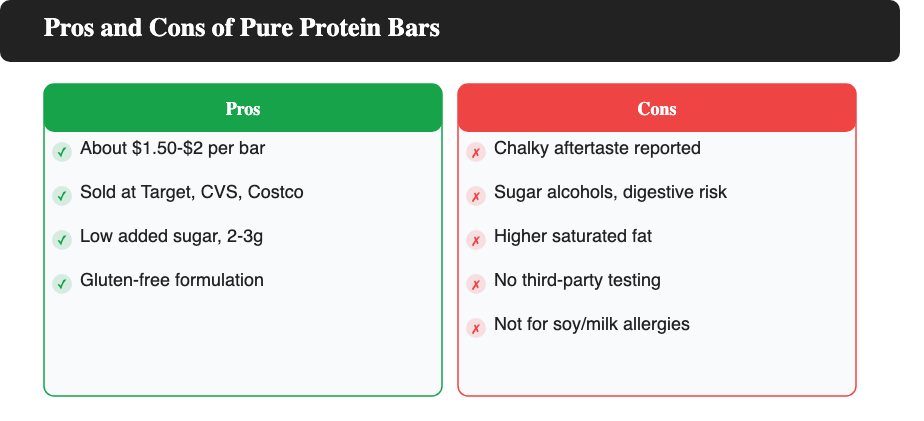
Weighing the price against the ingredient list is really the whole decision with Pure Protein, so here is that tradeoff laid out directly.
Pros:
- Roughly 20 grams of protein for about $1.50 to $2 a bar, among the cheapest per-gram protein prices in the category
- Widely stocked at Target, CVS, Costco, and most grocery chains, no online-only ordering required
- Low added sugar, around 2-3 grams per bar
- Gluten-free formulation across the core lineup
Cons:
- Chalky aftertaste reported across multiple independent reviews
- Relies on sugar alcohols that can cause digestive discomfort past one bar a day
- Higher saturated fat than health-focused competitors, from palm kernel and canola oils
- No third-party testing certification listed on packaging or the brand's site
- Not suitable for anyone with a soy or milk allergy
Pure Protein Bars FAQ
Can you eat Pure Protein bars every day?
Eating one Pure Protein bar a day is generally fine for most people, but daily use is not ideal because of the saturated fat content and the sugar alcohols, which can cause digestive discomfort if the volume adds up over multiple bars. Treat it as an occasional snack or post-workout bite rather than a daily staple.
Are Pure Protein bars good for weight loss?
Pure Protein bars can support weight loss because they combine roughly 20 grams of protein with only 2-3 grams of added sugar, which helps with satiety at a low calorie cost. They work best as a planned snack alongside a broader calorie-controlled diet rather than a meal replacement, since the fiber content is low and will not keep hunger away as long as a full meal would.
Are Pure Protein bars third-party tested?
No, Pure Protein does not list a third-party testing certification on its packaging or official site, unlike some competing brands that carry Informed Sport or NSF certification. That is worth knowing if batch purity verification matters to you, though it does not affect the nutrition facts printed on the label.
What is the best-tasting Pure Protein flavor?
Birthday Cake and Lemon Cake are the most consistently recommended Pure Protein flavors across independent taste tests, both praised for a soft, chewy texture without the strong artificial aftertaste that shows up in some of the other flavors. Cookies & Cream is the flavor most reviewers recommend skipping.