
The Best Meal Replacement Shakes of 2026, Tested and Compared
 By Lisa Benz, Editor-in-chief · Updated Oct 6, 2026 · 12 min read
Disclosure: this article may contain partner links. If you buy through them, we earn a commission at no extra cost to you. The ranking is set by our editors.
Contents
- Best meal replacement shakes at a glance
- How we chose the best meal replacement shakes
- The 6 best meal replacement shakes reviewed
- Meal replacement shake comparison
- What is a meal replacement shake?
- Powder vs ready-to-drink: which should you choose?
- How to choose the best meal replacement shake for you
- Frequently asked questions
The best meal replacement shake in 2026 is Huel Black Edition, a nutritionally complete powder that packs 40g of protein and 27 vitamins and minerals into a 400-calorie serving for around $2.65 to $4 a meal. We pulled together the products that real busy people actually reach for, tested how they fit a working day, and ranked six winners so you do not have to wade through dozens of tubs and bottles. Short version: buy for the job you need it to do. Want grab-and-go with no shaker, the Huel Ready-to-Drink bottle wins. Want the cleanest label, Ka'Chava takes it. Want the lowest cost per meal, Soylent is the value pick. Below you get the quick picks by category, a side-by-side comparison table, real screenshots of every brand, and a short buying guide.
Best meal replacement shakes at a glance
The best overall meal replacement shake in 2026 is Huel Black Edition, because it balances a high 40g protein hit with a genuinely complete micronutrient profile and a price per meal that undercuts most ready-to-drink rivals. Which one is best for you depends on whether you prioritise convenience, a clean ingredient list, low cost, or low calories. Here are the quick picks by category.
- Best overall: Huel Black Edition (40g protein, complete nutrition, strong value)
- Best on-the-go: Huel Ready-to-Drink (a complete meal in a sealed bottle, no shaker)
- Best clean-label: Ka'Chava (85+ whole-food ingredients, plant-based)
- Best value: Soylent Complete (lowest cost per meal, widely stocked)
- Best low-calorie and allergen-friendly: OWYN Balanced Nutrition Shake (around 180 calories, free from the top allergens)
- Best high-calorie for muscle building: Transparent Labs Mass Gainer (around 770 calories, 53g protein)
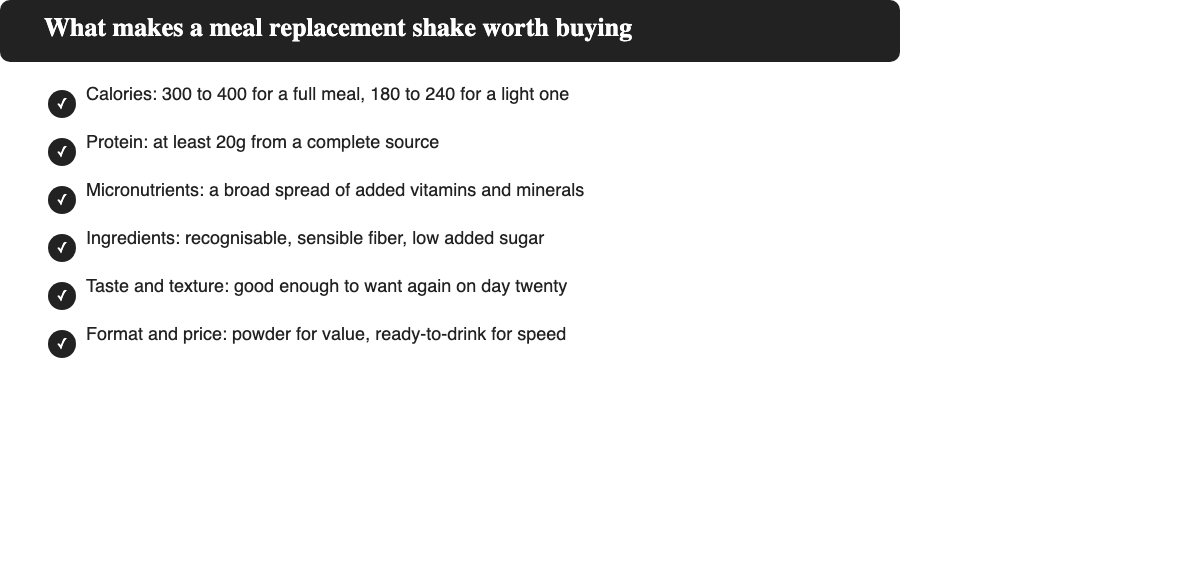
The graphic below shows the six checks we ran every shake through before it earned a spot on the list.
How we chose the best meal replacement shakes
We started with the products that show up most across expert roundups and busy-worker recommendations, then narrowed the field on the things that actually matter when a shake stands in for a real meal. We are an affiliate of some of the brands listed, which keeps the lights on, but it does not change the order. Here is what we weighed.
- Calorie load: enough to actually replace a meal, roughly 300 to 400 calories for most people, with a high-calorie option for those who want it.
- Protein: at least 20g per serving from a complete source, so the shake keeps you full through a long afternoon.
- Micronutrients: a broad spread of added vitamins and minerals rather than just protein and carbs.
- Ingredient quality: recognisable ingredients, sensible fiber, and low added sugar.
- Taste and texture: something you will still want on day twenty, not just day one.
- Format and price: powder versus ready-to-drink, and the real cost per meal once you do the math.
The 6 best meal replacement shakes reviewed
Here are the details. Below we go through each winner with its calories, protein, sugar, price, and the situation it suits best. We weigh nutrition, taste, convenience, and cost per meal against each other so you can see exactly why each product landed in its category.
1. Huel Black Edition - Best overall
| Type | Powder |
| Calories per serving | 400 kcal |
| Protein per serving | 40 g |
| Price per serving | approx. $2.50 (subscription) to $3.30 |
| Flavors | 9 flavors |
| Rating | 4.6 / 5 |
Huel Black Edition is our best overall meal replacement shake. It delivers the most complete package in a single scoop: 40g of plant-based protein, 27 essential vitamins and minerals, and a high-fiber, lower-carb profile with no artificial sweeteners, all at roughly $2.65 to $4 per meal. It is a powder. You mix it with water in a shaker, which keeps the cost down and lets you control the thickness. Nine flavors keep it interesting over weeks of daily use, the real test for a staple you eat again and again.
- Calories: around 400 per serving
- Protein: 40g (pea and rice blend)
- Micronutrients: 27 vitamins and minerals
- Format and price: powder, around $2.65 to $4 per meal
- Flavors: nine, no artificial sweeteners
Pros: highest complete-protein hit on the list, broad micronutrient spread, low cost per meal, no artificial sweeteners. Cons: you need a shaker and water, and the thicker texture takes a couple of tries to dial in.
Best for: anyone who wants one shake to cover most bases on a budget. Skip if: you will not carry a shaker or want zero prep.
2. Huel Ready-to-Drink - Best on-the-go
| Type | Ready-to-drink |
| Calories per serving | 400 kcal per bottle |
| Protein per serving | 35 g |
| Price per serving | approx. $4.80 per bottle |
| Flavors | 4 flavors |
| Rating | 4.4 / 5 |
Huel Ready-to-Drink is the best on-the-go pick because it is a complete meal sealed in a 500ml bottle, so there is no mixing, no shaker, and nothing to clean up between meetings. Each bottle carries around 400 calories and roughly 20 to 22g of protein, with low sugar and high fiber, in a plant-based formula. It costs more per meal than the powder, which is the trade-off you pay for grabbing a bottle from the fridge and walking out the door. Flavors include chocolate, vanilla, and salted caramel, so it does not feel like a chore.
- Calories: around 400 per 500ml bottle
- Protein: around 20 to 22g
- Micronutrients: nutritionally complete formula
- Format and price: ready-to-drink, higher per-meal cost than powder
- Flavors: chocolate, vanilla, salted caramel and more
Pros: zero prep, easy to keep at your desk or in a bag, consistent macros every time. Cons: pricier per meal, and bottles take up more space than a tub of powder.
Best for: commuters and remote workers who want a meal between calls without leaving the desk. Skip if: you are watching every cent per meal.
3. Ka'Chava - Best clean-label
| Type | Powder |
| Calories per serving | 240 kcal |
| Protein per serving | 25 g |
| Price per serving | approx. $4.67 |
| Flavors | 5 flavors |
| Rating | 4.3 / 5 |
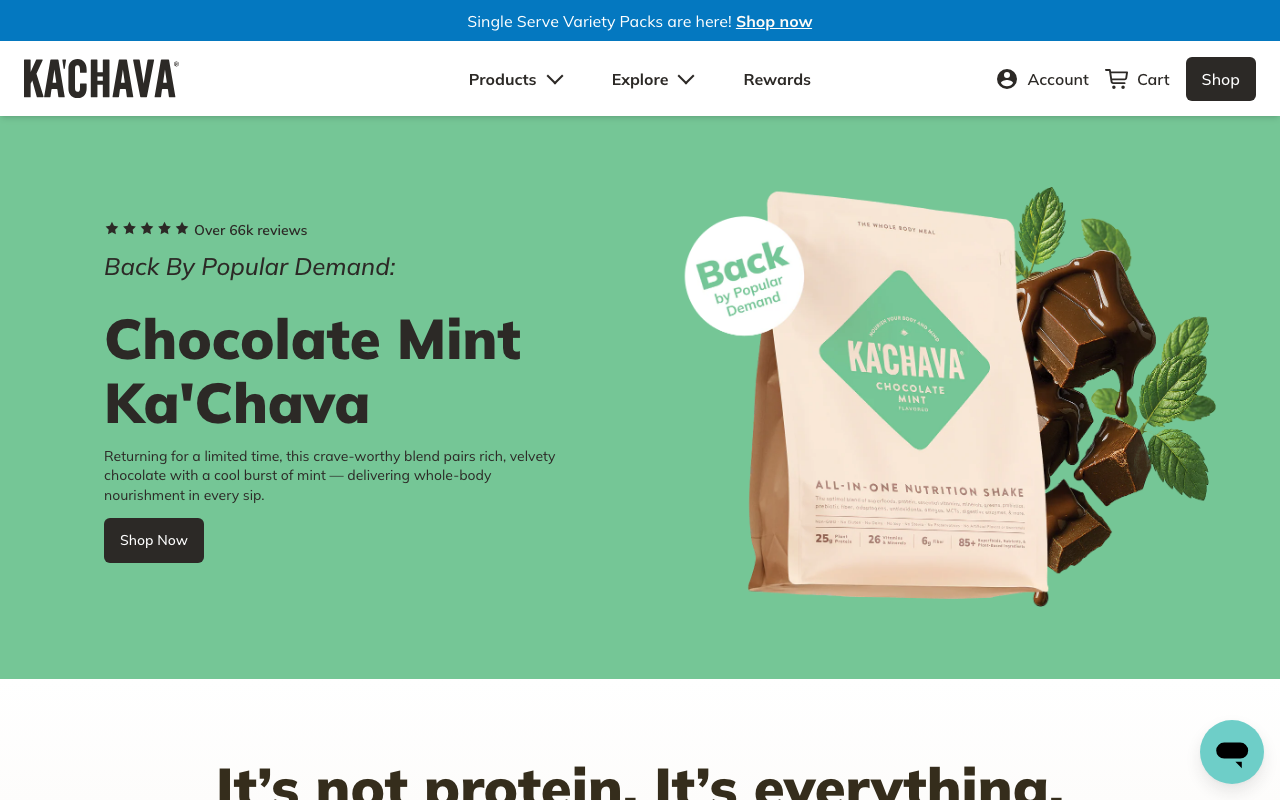
Ka'Chava is the best clean-label choice because it builds its 240-calorie serving from more than 85 whole-food ingredients, including plant proteins, greens, fruits, fiber, probiotics, and digestive enzymes. You get 25g of plant-based protein and 7g of fiber per scoop, and the ingredient list reads like a smoothie rather than a lab formula. The trade-off is calories: at 240 per serving it is lighter than a full Huel or Soylent meal, so heavier eaters may want a larger scoop or a side. A 15-serving bag runs $69.95, or $59.95 on subscription, which is roughly $4 to $4.67 per serving.
- Calories: 240 per serving
- Protein: 25g (plant-based)
- Ingredients: 85+ whole foods, plus probiotics and enzymes
- Format and price: powder, $69.95 per 15-serving bag ($59.95 subscription)
- Fiber: 7g per serving
Pros: the most whole-food-led label here, smooth taste, plant-based and dairy-free. Cons: highest cost per serving on the list, and the calorie count is light for a full meal.
Best for: shoppers who read ingredient lists first and want a lighter meal or hearty snack. Skip if: you need 400 calories per serving or the lowest price.
4. Soylent Complete - Best value
| Type | Powder |
| Calories per serving | 400 kcal |
| Protein per serving | 20 g |
| Price per serving | approx. $2.50 |
| Flavors | Cacao, Original (and more) |
| Rating | 4.2 / 5 |
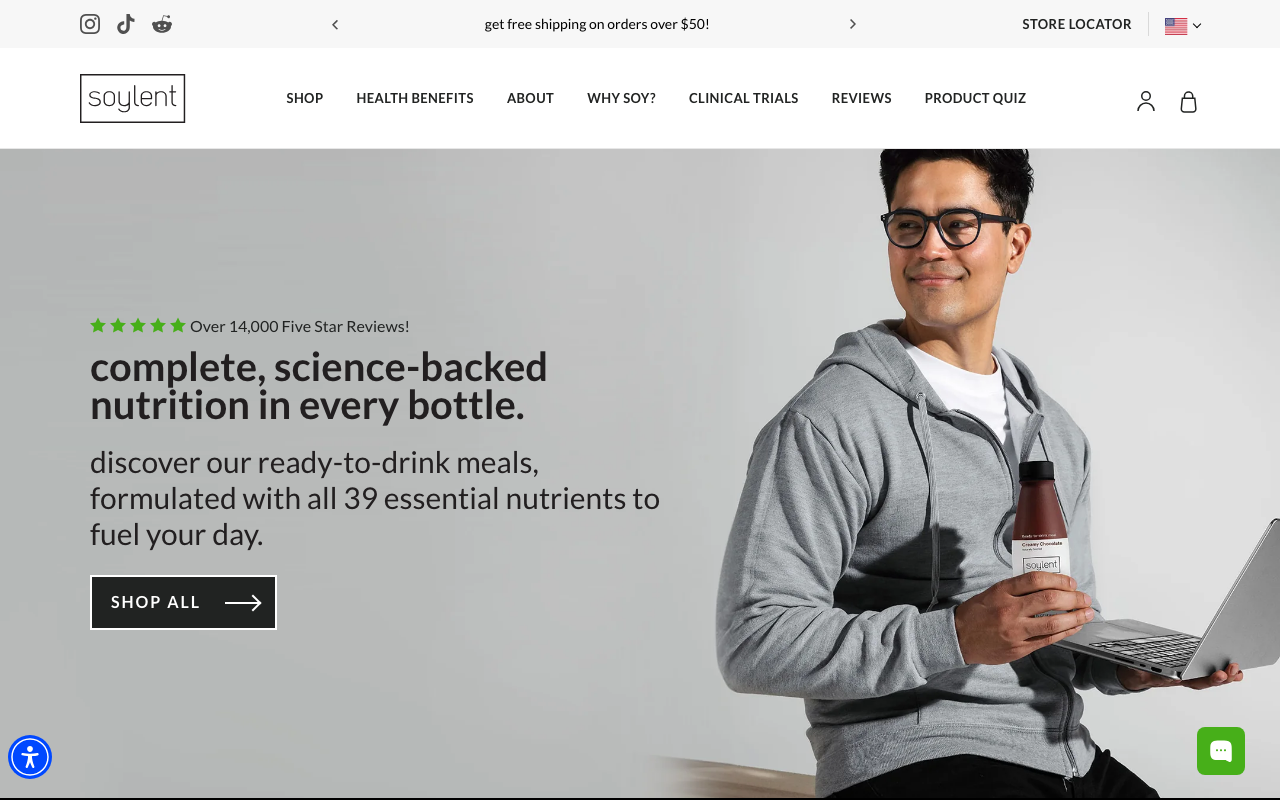
Soylent Complete is the best value pick because it delivers a full meal for the least money and is easy to find in stores and online. The ready-to-drink bottle carries around 320 to 400 calories, 16 to 20g of protein, just 1g of sugar, and 28 or more vitamins and minerals. The powder is the real bargain at roughly $2.80 per serving, or under $2 if you buy in pouches and subscribe, for 400 calories and 20g of protein per meal. It is vegan, gluten-free, and low in sugar, which makes it an easy default when you just need a reliable meal without fuss.
- Calories: 320 to 400 per meal
- Protein: 16 to 20g
- Sugar: as low as 1g (ready-to-drink)
- Format and price: powder from around $2.80/serving, bottles around $2 to $4
- Micronutrients: 28+ vitamins and minerals
Pros: lowest cost per meal, very low sugar, easy to buy almost anywhere. Cons: protein sits a little lower than Huel, and the flavor range is narrower.
Best for: people replacing several meals a week who want to keep the cost down. Skip if: you want the highest protein or the cleanest whole-food label.
5. OWYN Balanced Nutrition Shake - Best low-calorie and allergen-friendly
| Type | Ready-to-drink |
| Calories per serving | approx. 300 kcal per bottle |
| Protein per serving | 20 g |
| Price per serving | approx. $3.50 per bottle |
| Flavors | Chocolate, Vanilla |
| Rating | 4.2 / 5 |
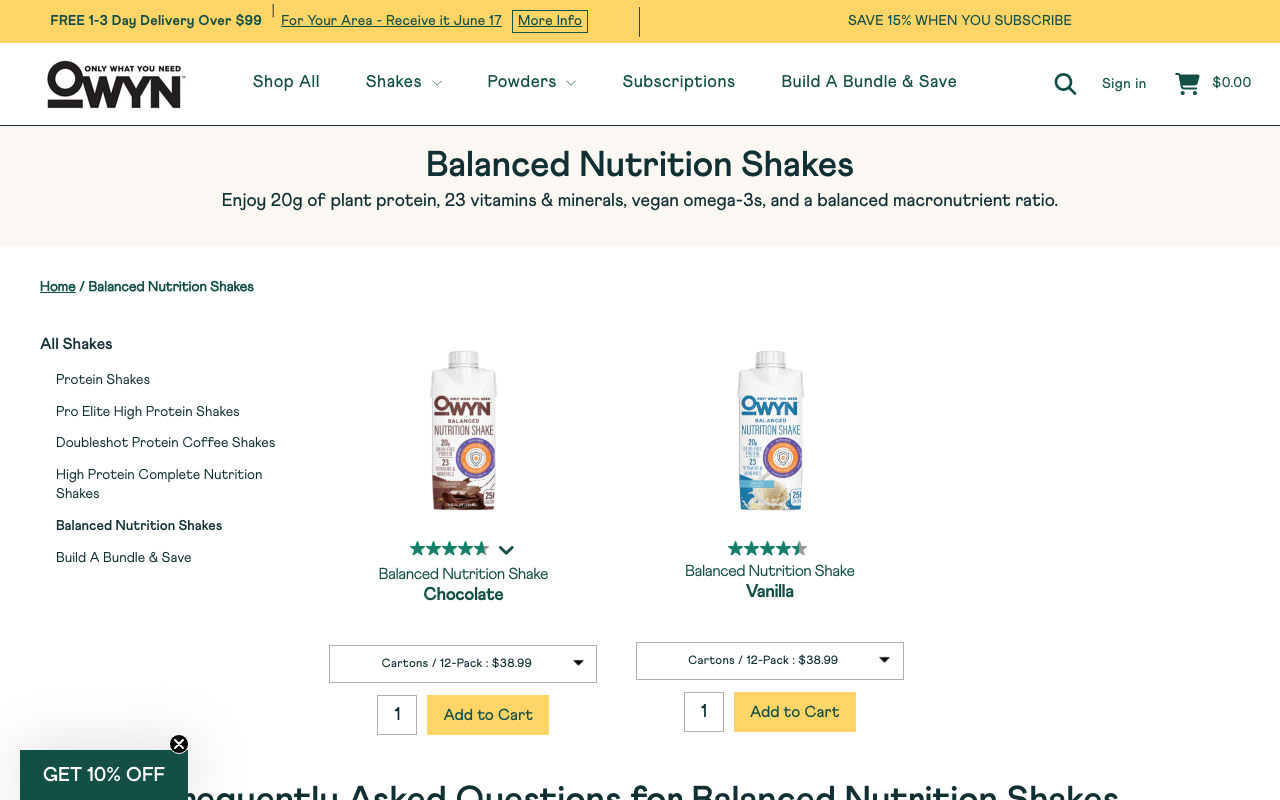
OWYN is the best low-calorie and allergen-friendly option because its ready-to-drink bottle lands around 180 calories with 20g of plant protein, 23 vitamins and minerals, and vegan omega-3s, all free from the major allergens. The protein comes from a pea and pumpkin-seed blend, so it suits dairy-free and nut-free diets. At roughly $3 a bottle it is a sensible light meal or a substantial snack rather than a heavy 400-calorie replacement, which is the point: it fills a gap without sitting heavy before an afternoon of work.
- Calories: around 180 per bottle
- Protein: 20g (pea and pumpkin-seed blend)
- Micronutrients: 23 vitamins and minerals, vegan omega-3s
- Format and price: ready-to-drink, around $3 per bottle
- Allergens: free from the top major allergens
Pros: light, allergen-friendly, strong protein for the calorie count, ready to drink. Cons: too few calories to fully replace a large meal for many people.
Best for: dairy-free or nut-free eaters and anyone wanting a lighter meal. Skip if: you need a full 400-calorie meal in one bottle.
6. Transparent Labs Mass Gainer - Best high-calorie for muscle building
| Type | Powder |
| Calories per serving | 740 to 770 kcal |
| Protein per serving | 53 g |
| Price per serving | approx. $4.25 to $5.13 |
| Flavors | Chocolate Glaze Donut, and more |
| Rating | 4.4 / 5 |
Transparent Labs Mass Gainer is the high-calorie pick for anyone trying to eat more rather than less. A serving carries around 770 calories and 53g of protein, with a clean, fully disclosed label that skips artificial sweeteners and dyes. It is a powder you mix with water or milk, and it is built for people who struggle to hit a calorie target through whole food alone. This is not a weight-management product, it is the opposite: a way to add substantial calories and protein in one easy shake.
- Calories: around 770 per serving
- Protein: 53g
- Label: fully disclosed, no artificial sweeteners or dyes
- Format: powder, mix with water or milk
- Use case: adding calories and protein
Pros: very high calorie and protein per serving, transparent label, mixes well for taste. Cons: far too many calories for a standard meal replacement, and it is the priciest per full meal.
Best for: hard gainers and athletes who need extra calories. Skip if: you want a standard 300 to 400-calorie meal.
Meal replacement shake comparison
The table below lets you compare all six winners side by side on what actually drives the buy: calories, protein, format, approximate price per meal, and the situation each one suits best. The price figures are estimates based on current list and subscription pricing from each brand, not fixed quotes, and they move with promotions and pack size, so treat them as a guide and check the current price at the store.
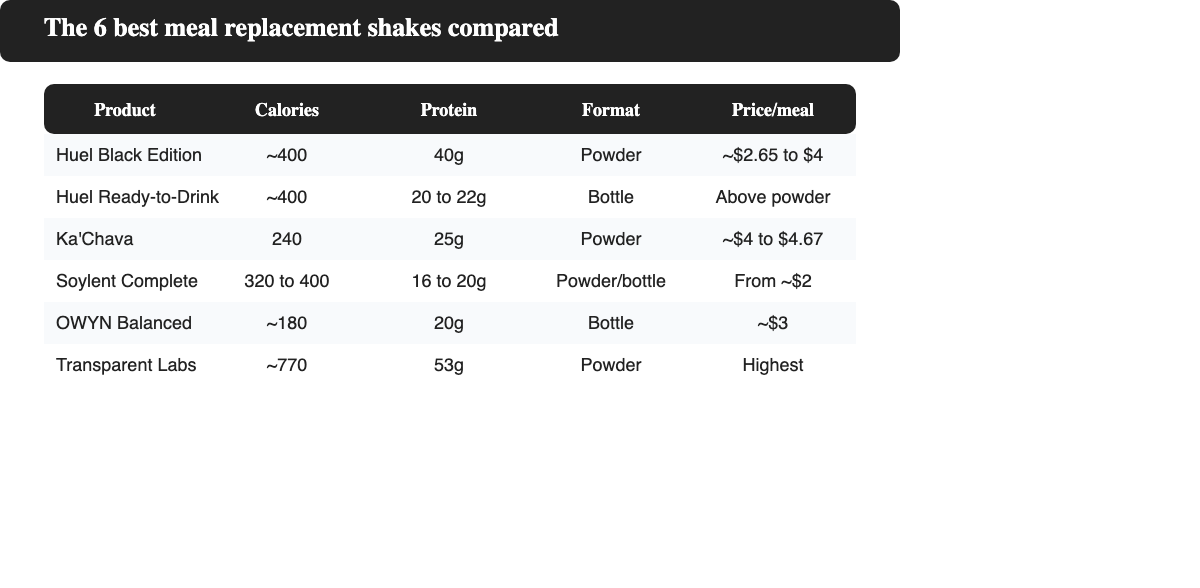
| Product | Calories | Protein | Format | Approx. price/meal | Best for |
|---|---|---|---|---|---|
| Huel Black Edition | ~400 | 40g | Powder | ~$2.65 to $4 | Best overall |
| Huel Ready-to-Drink | ~400 | ~20 to 22g | Bottle | Higher than powder | On-the-go |
| Ka'Chava | 240 | 25g | Powder | ~$4 to $4.67 | Clean label |
| Soylent Complete | 320 to 400 | 16 to 20g | Powder or bottle | From ~$2 to $2.80 | Value |
| OWYN Balanced | ~180 | 20g | Bottle | ~$3 | Low-calorie, allergen-friendly |
| Transparent Labs Mass Gainer | ~770 | 53g | Powder | Highest | High-calorie, muscle |
What is a meal replacement shake?
A meal replacement shake is a drink built to stand in for a full meal. It delivers a balanced mix of protein, carbohydrates, and fat alongside a broad spread of added vitamins and minerals. A genuine meal replacement aims for roughly 300 to 400 calories and at least 20g of protein per serving. That is the line between a real meal replacement and a plain protein shake. The format ranges from powders you mix with water to sealed ready-to-drink bottles. The appeal is speed: when a proper lunch is not realistic, a complete shake covers the gap with known macros and no cooking.
Powder vs ready-to-drink: which should you choose?
Powder is cheaper per meal and ready-to-drink is faster, so the right choice comes down to whether you value cost or convenience more. Powder formulas like Huel Black Edition or Soylent powder can drop to around $2 to $2.80 per meal because you are buying the food, not the packaging, and you control the thickness and serving size. Ready-to-drink bottles like Huel RTD or OWYN cost more per meal but need no shaker, no water, and no clean-up, which is why they win at a desk or on a commute.
The math is easy to picture. A typical takeout lunch runs $12 to $15, while a powder meal replacement lands near $2 to $4 and a ready-to-drink bottle near $3 to $5. Swap three takeout lunches a week for powder and you save roughly $30 to $40 a week, which is the practical reason people start using them in the first place. If you replace meals daily, powder pays off fastest; if you only need the odd backup meal, the convenience of a bottle is usually worth the extra dollar. For days when you do want a cooked meal with no shopping, a meal kit covers the other half of the same problem.
How to choose the best meal replacement shake for you
Match the shake to the job rather than chasing the highest number on any single line. Run through these points and the right pick usually becomes obvious.
- Calories: want a full meal, aim for 300 to 400 calories; want a light meal or snack, 180 to 240 is plenty.
- Protein: 20g is a solid floor, and 40g or more suits anyone training hard or wanting to stay full longer.
- Sugar and fiber: lower added sugar and a few grams of fiber make a shake sit better through the afternoon.
- Ingredient style: decide whether you want a whole-food label like Ka'Chava or a precise engineered formula like Soylent.
- Diet fit: check for vegan, dairy-free, gluten-free, or allergen-free if that matters to you; OWYN is the safest on allergens here.
- Format and budget: pick powder for the lowest cost per meal, or ready-to-drink when convenience wins.
- Taste: buy a small pack or single flavor first, because the one you enjoy is the one you will actually keep using.
Frequently asked questions
Are meal replacement shakes good as an everyday option?
For a busy day, a complete meal replacement shake is a reasonable stand-in for the occasional meal you would otherwise skip or grab as fast food. The ones on this list provide balanced macros plus added vitamins and minerals, which is why people use them for breakfast or a working lunch. They work best as part of a varied diet rather than as your only food, and if you plan to lean on them heavily it is worth a quick word with your doctor or a dietitian.
Can you have a meal replacement shake every day?
Many people use one meal replacement shake a day, often for breakfast or lunch, without any issue, since a complete formula is designed to mirror the nutrition of a normal meal. The practical limit is variety and enjoyment: real food brings textures and flavors a shake cannot, so most users keep shakes for the meals where speed matters most and eat normally the rest of the time.
Is powder or ready-to-drink better value?
Powder is the better value, often around $2 to $2.80 per meal, while ready-to-drink bottles usually cost more because you pay for the packaging and convenience. If cost is your main concern and you do not mind a shaker, a powder like Soylent or Huel Black Edition wins. If you want zero prep at a desk, the extra dollar for a bottle is usually worth it.
Which meal replacement shake has the most protein?
Among standard meal options here, Huel Black Edition leads with 40g of protein per serving. If you specifically want the highest calorie and protein load for muscle building, Transparent Labs Mass Gainer goes far higher at around 53g, but its 770 calories make it a gainer rather than an everyday meal replacement.