
Best Vegan Protein Powder 2026: 6 Picks Ranked for Protein, Purity and Price
 By Lisa Benz, Editor-in-chief · Updated Aug 17, 2026 · 10 min read
Disclosure: this article may contain partner links. If you buy through them, we earn a commission at no extra cost to you. The ranking is set by our editors.
Contents
The best vegan protein powders deliver 20 to 30 grams of protein from a pea, rice or seed-based blend, without the chalky texture and bitter aftertaste that gave early plant proteins a bad name. Three picks lead this list. Naked Pea Premium wins on formula simplicity. Legion Plant+ wins on independent lab testing. Huel Black Edition packs the most protein per serving for anyone who wants a near-meal-replacement shake instead of a light recovery drink.
We compared six vegan protein powders across protein content, ingredient sourcing, sweetener choice, third-party testing and price per serving, using each brand's own nutrition panel and current retail pricing. We checked one more thing competitors skip: what independent lab testing says about heavy metals in plant-based protein, a risk specific to this category that rarely gets a straight answer.
The best vegan protein powders at a glance
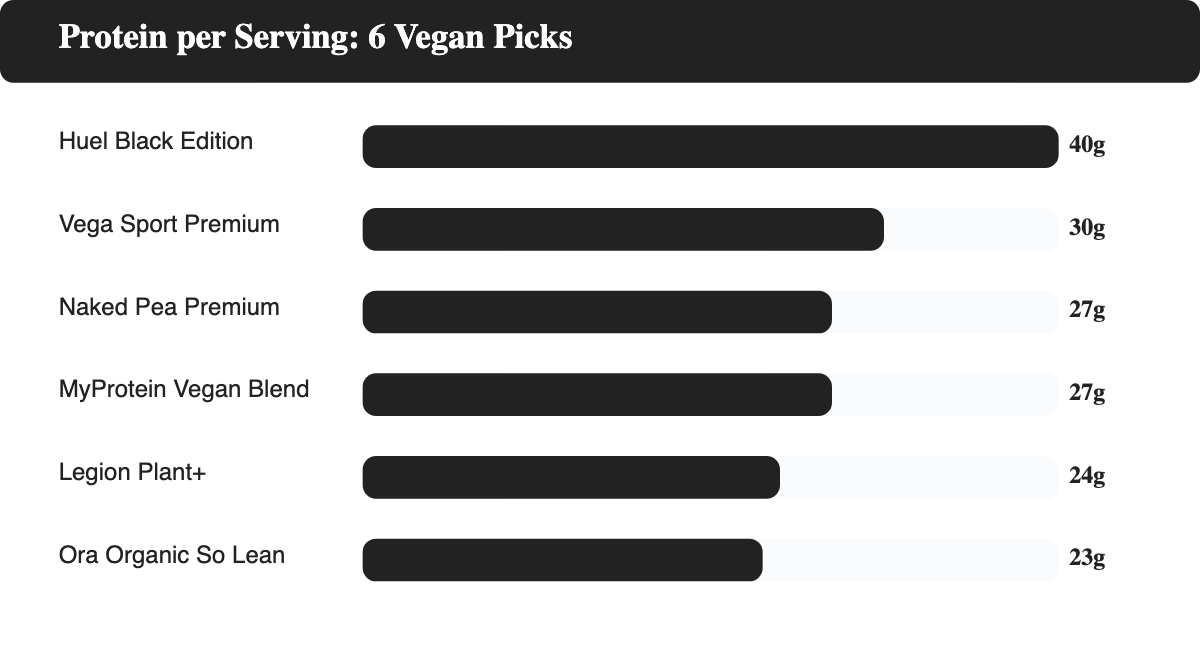
This table lines up protein, calories and price per serving side by side so you can compare the six picks before reading the full reviews below.
| Product | Best for | Protein/serving | Protein source | Price/serving | Certification |
|---|---|---|---|---|---|
| Naked Pea Premium | Best overall | 27g | Single-source pea | ~$0.75 | Third-party tested |
| Legion Plant+ | Best third-party tested | 24g | Pea + brown rice | ~$2.50 | Labdoor certified |
| Vega Sport Premium | Best for athletes | 30g | Pea + pumpkin seed + sunflower seed | ~$1.50-$3.42 | NSF Certified for Sport |
| Ora Organic So Lean & So Clean | Best organic | 23g | Pea + rice + 18 superfoods | ~$2.00 | USDA Organic |
| Huel Black Edition | Best for meal replacement | 40g | Pea + rice + oat | $1.50-$6.04 | None published |
| MyProtein Vegan Blend | Best value | 21-27g (see note) | Pea isolate + brown rice + pumpkin seed | ~$1.28 | None published |
The 6 best vegan protein powders reviewed
Naked Pea Premium: best overall
Naked Pea Premium is the best overall vegan protein powder because it delivers 27 grams of protein per serving from a single ingredient: pea protein isolate. No long additive list. Naked Nutrition's own product page lists the formula as unflavored or lightly sweetened with coconut sugar, with no artificial flavors, colors or sweeteners. That keeps the ingredient panel unusually short for the category. At roughly $0.75 per serving, it undercuts nearly every other pick on this list on a per-gram-of-protein basis.
| Protein per serving | 27g |
| Calories per serving | 120 |
| Protein source | Pea protein isolate (single source) |
| Sweetener | Coconut sugar (unflavored option available) |
| Price per serving | ~$0.75 |
| Certification | Third-party tested |
The tradeoff is flavor variety. Naked Nutrition sells fewer flavor options than brands like Huel or Vega, so if you want a dessert-style shake rather than a clean, mildly sweet one, this is not the pick. It also has no NSF or Informed Sport certification, so competitive athletes subject to drug testing should look at Legion Plant+ or Vega Sport Premium instead.
Legion Plant+: best third-party tested
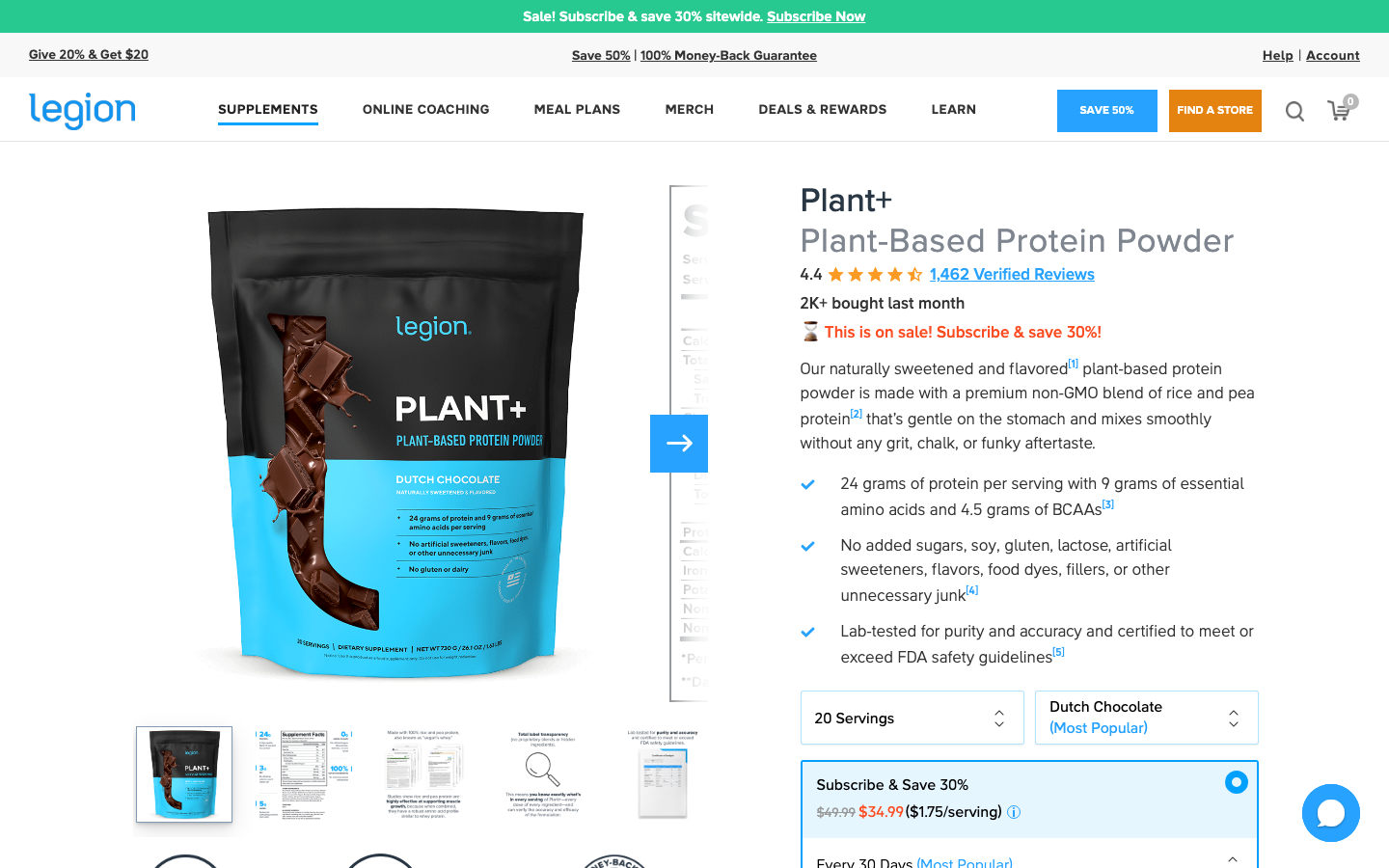
Legion Plant+ is the best third-party tested vegan protein powder because Labdoor independently certifies every batch as free of heavy metals, microbes, allergens and banned substances. Most plant proteins on this list do not publish that level of outside verification. The formula blends 17.6 grams of PURIS pea protein with 6.4 grams of organic brown rice protein per serving for 24 grams total, sweetened with a stevia, allulose and monk fruit mix instead of one sweetener alone.
| Protein per serving | 24g |
| Calories per serving | 130-140 |
| Protein source | Pea protein (17.6g) + organic brown rice protein (6.4g) |
| Sweetener | Stevia, allulose, monk fruit |
| Price per serving | ~$2.50 |
| Certification | Labdoor certified, meets FDA and WADA safety guidelines |
Legion runs frequent subscription discounts of up to 30% off, which brings the real price closer to the middle of this list rather than the premium end its list price suggests. Flavor choice is limited to chocolate, vanilla and mocha cappuccino, fewer than Huel's nine options.
Vega Sport Premium: best for athletes
Vega Sport Premium is the best vegan protein powder for athletes because it carries NSF Certified for Sport status, the same drug-testing verification used by MLB, NFL and NHL teams. It also delivers 30 grams of protein per serving, the second-highest on this list behind Huel Black Edition. The blend combines pea protein with pumpkin seed and organic sunflower seed protein, then adds 5 grams of BCAAs and a heat-stable probiotic strain (myVega's product page lists 2 billion CFU of Bacillus subtilis) aimed at recovery, not just protein intake.
| Protein per serving | 30g |
| Calories per serving | Not published on the official product page |
| Protein source | Pea + pumpkin seed + organic sunflower seed protein |
| Sweetener | Stevia leaf extract |
| Price per serving | ~$1.48-$3.42 depending on container size |
| Certification | NSF Certified for Sport, Non-GMO Project Verified |
Buying the 44-serving XL tub brings the price per serving down close to Legion Plant+; the smaller single-serving packets cost more than double that per scoop, so the value case only holds if you commit to the large size.
Ora Organic So Lean & So Clean: best organic
Ora Organic So Lean & So Clean is the best organic vegan protein powder because it holds USDA Organic certification end to end, not just for the base protein blend. It builds on a 23-gram pea and rice protein base with 18 organic superfood ingredients and digestive enzymes. Ora's own product page excludes stevia and erythritol from the formula, an unusual choice since most other picks on this list lean on stevia as their primary sweetener.
| Protein per serving | 23g |
| Calories per serving | Not published on the fetched product page |
| Protein source | Organic pea protein + organic rice protein + 18 superfood sources |
| Sweetener | No stevia or erythritol; exact sweetener not named on product page |
| Price per serving | ~$2.00 |
| Certification | USDA Organic, third-party tested with results shared publicly |
The superfood add-ins mean the ingredient list runs longer than Naked Pea's single-source formula, which matters if you specifically want a plain protein isolate rather than a greens-and-protein hybrid.
Huel Black Edition: best for meal replacement
Huel Black Edition is the best vegan protein powder for meal replacement because it carries the highest protein count on this list, 40 grams per serving, built into a full 400-calorie formula with fiber and a wider vitamin and mineral spread than a straight protein isolate. It draws its protein from a pea, rice and oat blend instead of a single legume source. That softens the gritty texture some pea-only proteins carry. Our full Huel review still flags a mild plant-protein aftertaste as the top complaint from testers.
| Protein per serving | 40g |
| Calories per serving | 400 |
| Protein source | Pea + rice + oat blend |
| Sweetener | Stevia |
| Price per serving | $1.50-$6.04 depending on format (subscription vs one-time, powder vs ready-to-drink) |
| Certification | None published |
Because it is built as a near-complete meal rather than a light recovery shake, Huel Black Edition is the wrong pick if you just want a quick post-workout protein top-up. For that use case, Naked Pea or Legion Plant+ deliver protein without the extra 250-plus calories.
MyProtein Vegan Blend: best value
MyProtein Vegan Blend is the best-value pick because a 28-serving tub runs about $35.74 on sale, roughly $1.28 per serving. Only Naked Pea costs less. The blend combines pea protein isolate, brown rice protein and pumpkin seed protein, sweetened with stevia and monk fruit extract, then adds DigeZyme digestive enzymes and a BC30 probiotic strain.
MyProtein's own product page carries a real, unresolved discrepancy worth flagging directly: the marketing headline advertises "over 21g protein per serving," while the nutrition panel on the same page lists 27 grams. Both figures come from MyProtein's own listing, not from a third party, so we cannot say which is current. Check the nutrition panel on your specific order before relying on either number for macro tracking.
| Protein per serving | 21g (marketing claim) or 27g (nutrition panel, see discrepancy note above) |
| Calories per serving | 120 |
| Protein source | Pea protein isolate + brown rice protein + pumpkin seed protein |
| Sweetener | Stevia leaf extract, monk fruit extract |
| Price per serving | ~$1.28 |
| Certification | None published |
If you already use MyProtein's whey line, our full protein powder comparison covers its whey-based Impact range alongside four other brands side by side.
Are vegan protein powders safe? What heavy-metal testing shows
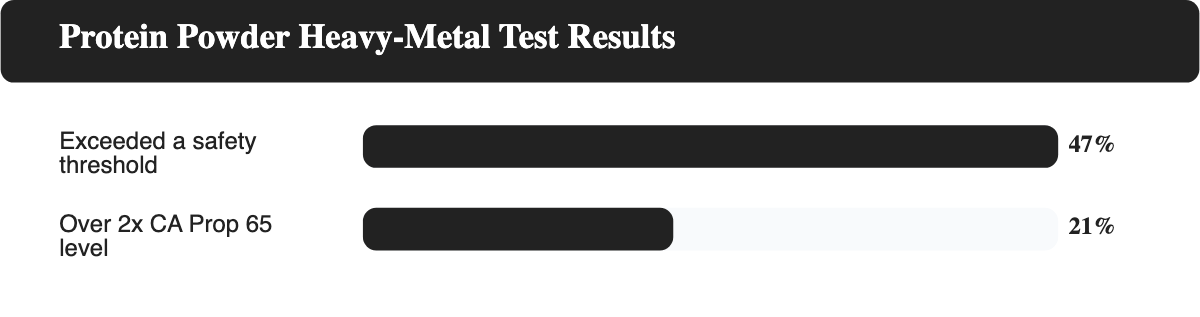
Yes, vegan protein powders are safe for most people to use regularly. Independent testing shows plant-based formulas carry more heavy-metal contamination on average than whey, though, so brand choice and testing transparency matter more here. Clean Label Project, a nonprofit product-safety testing group, published a study on January 9, 2025 that ran nearly 36,000 tests across 165 top-selling protein powders from 70 brands. The results: 47 percent of products exceeded at least one federal or state safety threshold, including California's Proposition 65 limits. 21 percent came in at more than double the Prop 65 threshold.
The category-specific finding that matters for this list: plant-based protein powders contained five times more cadmium on average than whey-based powders in the same study, since pea, rice and soy plants absorb heavy metals from soil more readily than milk-derived whey does. A separate counterintuitive result was that certified organic protein powders averaged three times more lead than non-organic products, likely because organic farming restricts synthetic fertilizers without necessarily controlling for heavy-metal uptake from the soil itself.
This does not mean every vegan protein powder on this list carries unsafe contamination levels. It means third-party testing and published results, which Legion Plant+ (Labdoor) and Ora Organic (publicly shared results) both provide, are a real safety differentiator in this category, not just a marketing checkbox.
Whey vs vegan protein: what changes with a plant source
Whey protein is a complete protein on its own. Most single-source plant proteins fall short on one or more essential amino acids, which is why every pick on this list except Naked Pea blends two or more plant sources to round out the profile. Pea protein is naturally low in methionine, so brands pair it with rice, oat or pumpkin seed protein, and each addition covers pea's amino acid gaps and vice versa.
Digestion is the other practical difference. Dairy-based concentrate carries lactose that causes bloating for some users. A well-formulated vegan blend avoids lactose entirely, but it can still cause gas or bloating from the plant fiber content. That is why several brands on this list, including Ora Organic and MyProtein, add digestive enzymes to the formula. Choosing mainly on protein content and price rather than dietary restriction? Our best protein powder guide compares five whey-based options using the same criteria.
How to choose a vegan protein powder
Start with your protein-per-serving target and match it to how you plan to use the powder. A light recovery shake works fine with 20 to 24 grams (Ora Organic, Legion Plant+), while a full meal-replacement use case calls for 30 grams or more (Vega Sport Premium, Huel Black Edition).
- Check for a multi-source blend (pea plus rice, oat or seed protein) rather than a single source, unless a short ingredient list matters more to you than a complete amino acid profile
- Prioritize third-party testing (Labdoor, NSF Certified for Sport, or publicly shared lab results) if heavy-metal exposure or banned-substance testing matters for your use case
- Compare price per serving, not per container, since serving sizes and protein content vary by 9 grams across this list
- Match the sweetener to your preference; stevia dominates this category, but Ora Organic and Naked Pea both skip it
- If you are a tested athlete, use only NSF Certified for Sport or Informed Sport products
Frequently asked questions
Is vegan protein powder safe to take every day?
Yes, vegan protein powder is safe to take every day for most healthy adults, but choose a brand with published third-party testing since plant-based formulas average higher heavy-metal levels than whey in independent lab testing. Legion Plant+ and Ora Organic both publish outside test results, which makes daily use easier to verify.
Is vegan protein a complete protein?
Most single-source plant proteins are not complete on their own, but a blended formula that combines pea protein with rice, oat or seed protein covers the amino acid gaps and functions as a complete protein. Naked Pea is the exception on this list, using only pea protein, so pair it with other complete-protein foods across the day.
Is vegan protein powder as effective as whey for building muscle?
Vegan protein powder builds muscle as effectively as whey when total daily protein intake and training are matched, since the research gap between whey and a well-blended plant protein is small once the amino acid profile is complete. The practical difference is convenience: whey is naturally complete from one source, while vegan protein needs a blend to match it.
What is the best-tasting vegan protein powder?
Huel Black Edition offers the widest flavor range on this list at nine options, which gives it the best odds of finding a flavor you like, though taste is still subjective and several testers note a mild plant-protein aftertaste common to the whole category.
What is the cheapest vegan protein powder?
Naked Pea Premium is the cheapest option on this list at roughly $0.75 per serving, followed by MyProtein Vegan Blend at about $1.28 per serving. Both trade some flavor variety and added ingredients for a lower per-serving cost.