
Best Protein Bars 2026: Tested Picks for Taste, Macros and Value
 By Lisa Benz, Editor-in-chief · Updated Oct 6, 2026 · 11 min read
Disclosure: this article may contain partner links. If you buy through them, we earn a commission at no extra cost to you. The ranking is set by our editors.
Contents
Barebells is the best protein bar overall. It hits a rare mix of 20g protein, 1g sugar and a candy-like taste, while David wins on raw protein at 28g per 150-calorie bar and Quest leads the low-carb pack. We compared the most popular bars sold in the US (David, Barebells, Quest, Pure Protein, Built Bar, RXBAR, Aloha and IQBar) on protein, calories, sugar and price per bar, so you can grab the right one without reading every label in the aisle. A good bar earns its spot when it tastes good, hits your macros and does not wreck your budget.
The best protein bars at a glance
Barebells takes best overall, David takes most protein and Quest takes best low-carb. Here is the bar that fits each common goal, with each pick explained in full further down.
- Best overall: Barebells, for the rare mix of 20g protein, 1g sugar, and a candy-like taste.
- Most protein: David, at 28g protein and 0g sugar in a 150-calorie bar.
- Best low-carb: Quest, with 21g protein and 4g net carbs.
- Best value: Pure Protein, around 20g protein for the lowest price per bar.
- Best lower-calorie: Built Bar, at 130 calories and 17g protein.
- Best minimal ingredients: RXBAR, built on egg whites, dates, and nuts.
- Best vegan: Aloha, an organic plant-based bar with 14g protein.
- Best low-sugar plant-based: IQBar, with 12g plant protein and 1g sugar.
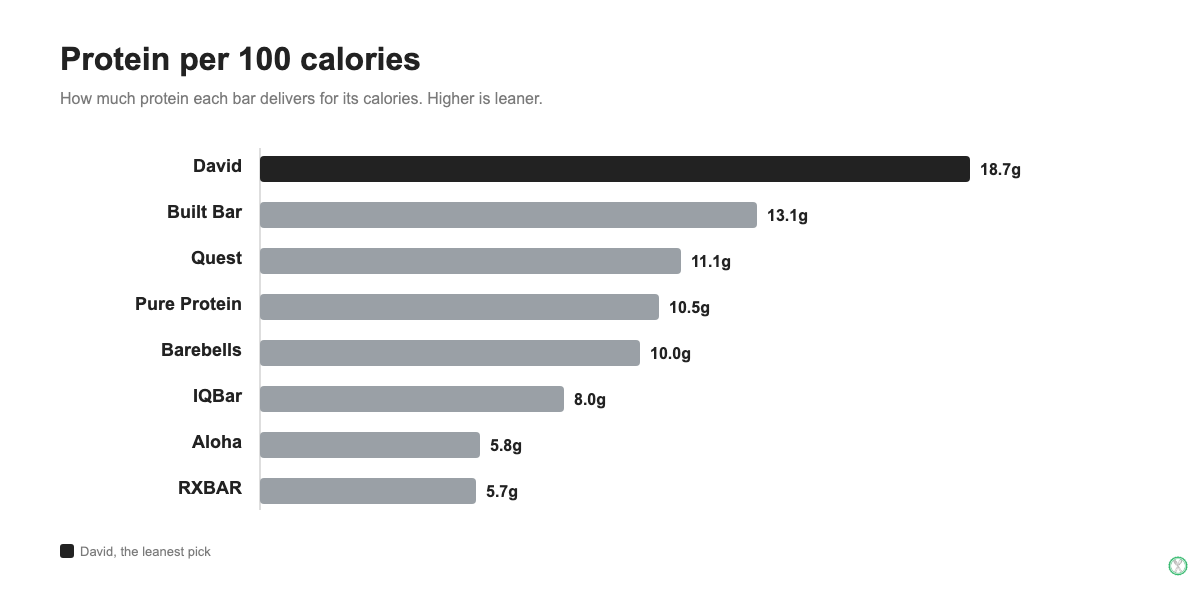
The scorecard below ranks each bar by protein per 100 calories, the cleanest single read on value for the macro you came for.
Protein bar comparison: protein, calories, sugar and price
David tops the table at 28g protein and 0g sugar, Built Bar is lowest in calories at 130 and Pure Protein is cheapest near $1.30 per bar. The full comparison below lets you match a bar to your priority, whether that is the most protein, the fewest calories or the lowest sugar. Prices are approximate per-bar figures from multipacks and shift with promotions.
| Bar | Protein | Calories | Sugar | Fiber | Approx price per bar | Best for |
|---|---|---|---|---|---|---|
| David | 28g | 150 | 0g | 0g | $3.00 | Most protein |
| Quest | 21g | 190 | 1g | 14g | $2.20 | Low net carbs |
| Barebells | 20g | 200 | 1g | 3g | $2.50 | Taste |
| Pure Protein | 20g | 190 | 3g | 2g | $1.30 | Value |
| Built Bar | 17g | 130 | 4g | 6g | $2.00 | Fewer calories |
| Aloha | 14g | 240 | 4g | 10g | $2.80 | Vegan, fiber |
| RXBAR | 12g | 210 | 15g | 5g | $2.40 | Whole-food ingredients |
| IQBar | 12g | 150 | 1g | 5g | $2.50 | Low-sugar plant-based |
One number worth watching is protein per 100 calories, a quick read on how much of the bar is doing the work you bought it for. David leads at about 19g of protein per 100 calories, Built Bar follows near 13g and the date-based RXBAR sits lowest at roughly 6g because most of its calories come from fruit and nuts.
The best protein bars reviewed
The top three are David, Barebells and Quest. Five more bars round out the list, covering value, lower calories, whole-food and vegan needs. Each review opens with the macros, then covers how the bar tastes and who it suits, including who will not enjoy it.
Best for most protein: David
| Protein per bar | 28g |
| Calories per bar | 150 |
| Sugar per bar | 0g |
| Price per bar | approx. $3.00 |
| Flavors | 8 (Fudge Brownie, Chocolate Chip Cookie Dough, Cinnamon Roll and more) |
| Rating /5 | 4.7 |
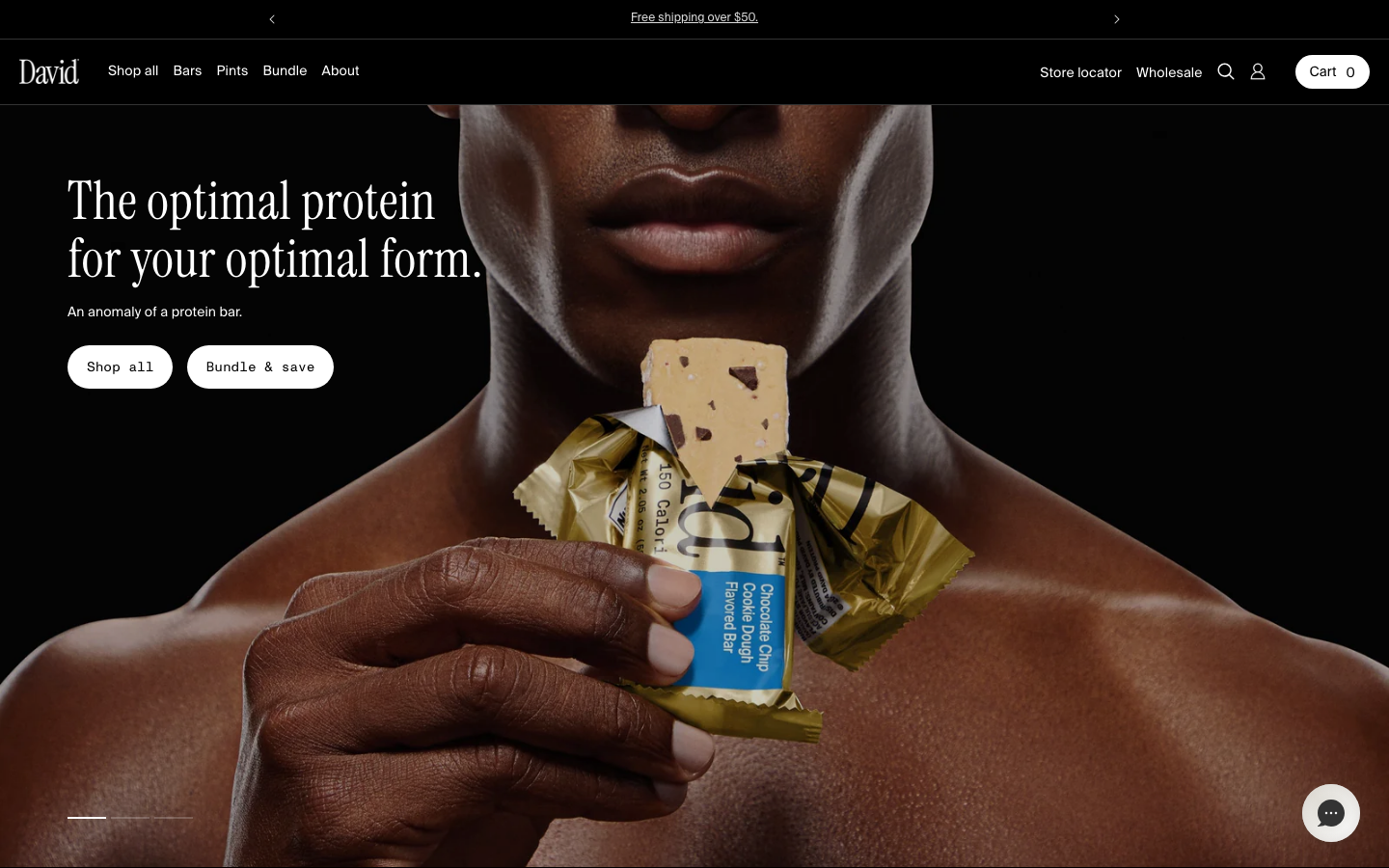
David packs 28g of protein into a 150-calorie bar with 0g of sugar. That is the highest protein-to-calorie ratio on this list. It reaches that number with a blend of milk protein isolate, collagen, whey and egg white. The texture runs firm and a little chewy, and flavors like Fudge Brownie and Chocolate Chip Cookie Dough lean dessert without being sweet.
This is the bar to reach for when protein density is the whole point. Anyone sensitive to sucralose or acesulfame potassium will taste the sweetener, so a date-based bar may suit them better. You can check the current David price on Amazon before you commit to a full box.
Best overall: Barebells
| Protein per bar | 20g |
| Calories per bar | 200 |
| Sugar per bar | 1g |
| Price per bar | approx. $2.50 |
| Flavors | Cookies and Cream, Caramel Cashew, Salty Peanut and more |
| Rating /5 | 4.8 |

Barebells delivers 20g of protein and just 1g of sugar in a 200-calorie bar, with no added sugar. What sets it apart is the texture, a soft nougat center with a chocolate coating that reads more like a candy bar than a supplement. Cookies and Cream and Caramel Cashew are the standouts.
It is the easiest bar here to recommend to someone who normally dislikes protein bars. The trade-off is a few extra grams of fat and the sugar alcohols that keep the sugar count low, which can taste cooling to some people. The variety pack is the safe first buy, and you can compare Barebells flavors and prices on Amazon.
Best low-carb: Quest
| Protein per bar | 21g |
| Calories per bar | 190 |
| Sugar per bar | 1g |
| Price per bar | approx. $2.20 |
| Flavors | 20+ (Chocolate Chip Cookie Dough, Cookies and Cream, Chocolate Brownie and more) |
| Rating /5 | 4.5 |

Quest carries 21g of protein, 190 calories, 1g of sugar and only 4g of net carbs thanks to roughly 14g of fiber. That fiber load makes it the most filling bar on the list and a steady pick for low-carb eaters. The Chocolate Chip Cookie Dough flavor is a long-running favorite.
Quest works well when you want a bar that holds you over between meals. The dense, slightly chewy bite is divisive, and the high fiber can be a lot for sensitive stomachs. Quest sells in large multipacks, so it pays to check the per-bar price on Amazon.
Best value: Pure Protein
| Protein per bar | 20g |
| Calories per bar | 190 |
| Sugar per bar | 3g |
| Price per bar | approx. $1.30 |
| Flavors | Chocolate Peanut Butter, Chocolate Deluxe, Chewy Chocolate Chip and more |
| Rating /5 | 4.3 |
Pure Protein offers around 20g of protein for roughly 190 calories at the lowest price per bar here, often near $1.30 in a multipack. The flavors are simple and the texture is closer to a classic crunchy protein bar than a soft candy-style one.
If you go through a bar a day and want protein without paying premium prices, this is the practical choice. Flavor chasers will find it plainer than Barebells or David.
Best lower-calorie bar: Built Bar
| Protein per bar | 17g |
| Calories per bar | 130 |
| Sugar per bar | 4g |
| Price per bar | approx. $2.00 |
| Flavors | Double Chocolate, Coconut, Peanut Butter and more |
| Rating /5 | 4.4 |
Built Bar lands at just 130 calories with 17g of protein and around 4g of sugar, which keeps the calorie cost low while still hitting double-digit protein. The marshmallow-like puffed texture under a chocolate shell feels indulgent for the calories.
This is the bar for anyone watching total calories who still wants something that feels like a treat. The light, airy bite is smaller than a standard bar, so big eaters may want two.
Best whole-food bar: RXBAR
| Protein per bar | 12g |
| Calories per bar | 210 |
| Sugar per bar | 13g to 18g |
| Price per bar | approx. $2.40 |
| Flavors | 14 (Chocolate Sea Salt, Peanut Butter, Chocolate Hazelnut and more) |
| Rating /5 | 4.2 |
RXBAR takes a different path with 12g of protein from egg whites and a short list of dates and nuts, which pushes calories to around 210 and sugar to 13g to 18g from the fruit. There are no added sweeteners and no sugar alcohols, so the label reads like a recipe.
Choose RXBAR when you want recognizable whole-food ingredients over the highest protein number. The dense, sticky texture and natural sugar from dates will not suit people chasing a low-sugar bar.
Best vegan bar: Aloha
| Protein per bar | 14g |
| Calories per bar | 240 |
| Sugar per bar | 4g |
| Price per bar | approx. $2.80 |
| Flavors | Peanut Butter Chocolate Chip, Coconut Chocolate Almond, Chocolate Fudge Brownie and more |
| Rating /5 | 4.3 |
Aloha is an organic, plant-based bar with 14g of protein, around 240 calories and 4g of sugar, plus a generous 10g of fiber. The protein comes from brown rice and pumpkin seeds, and flavors like Peanut Butter Chocolate Chip are smooth rather than gritty, which is not a given for vegan bars.
It is the strongest pick for anyone avoiding dairy who still wants clean ingredients. The protein number is lower than the whey-based bars, so hard-training lifters may want a second bar.
Best low-sugar plant-based bar: IQBar
| Protein per bar | 12g |
| Calories per bar | 150 |
| Sugar per bar | 1g |
| Price per bar | approx. $2.50 |
| Flavors | Chocolate Sea Salt, Peanut Butter Chip, Almond Blueberry and more |
| Rating /5 | 4.2 |
IQBar pairs 12g of plant protein with just 1g of sugar and around 150 calories, which is unusual for a vegan bar. It uses almonds and pea protein, and the flavors are nutty and not too sweet. The fiber and healthy fats make it satisfying despite the modest protein.
Reach for IQBar if you want plant-based and low sugar in the same bar. The texture is drier than a coated bar, so it pairs well with coffee or water.
How we tested and scored the bars
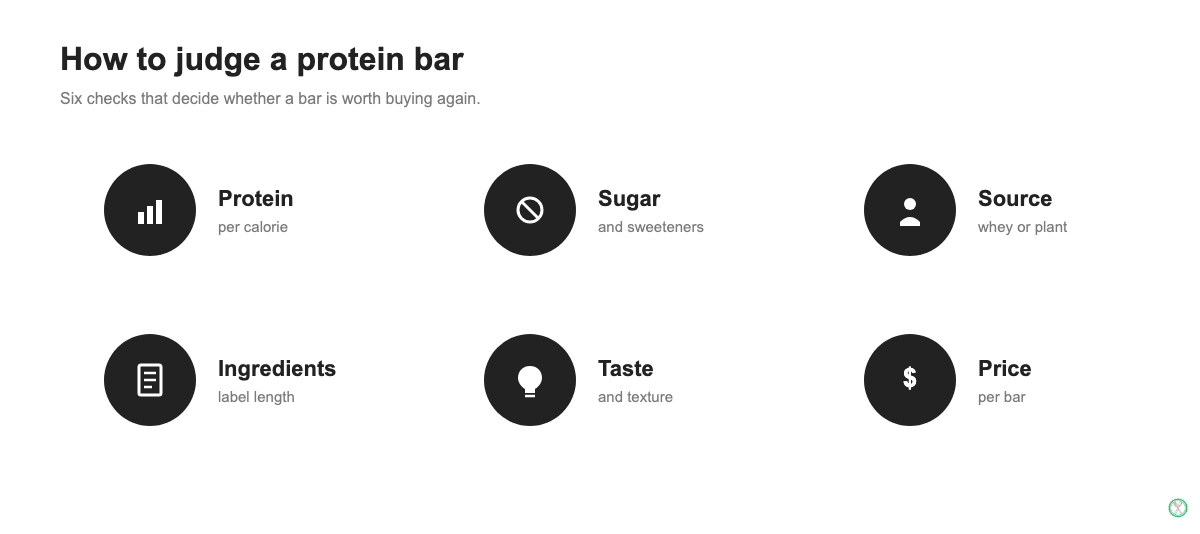
We scored each bar on five things that decide whether it is worth buying again: protein per calorie, sugar and sweeteners, taste, ingredient quality and price per bar. Macros came straight from the brands and were cross-checked against current retail listings on Amazon, Walmart and GNC, so the numbers in the table match what you actually buy.
- Protein per calorie: we ranked bars on protein per 100 calories, which is why David leads and date-based bars sit lower.
- Sugar and sweeteners: bars near 0g to 1g sugar scored well, and we noted when that came from sugar alcohols rather than no sweetness at all.
- Taste and texture: we weighed real-world taste heavily, because a bar you do not finish is wasted protein.
- Ingredients: short, recognizable lists scored alongside engineered bars rather than above them, since both have a place.
- Price per bar: we used multipack pricing, the way most people actually buy bars, not single-checkout prices.
How to choose a protein bar
Choosing a protein bar comes down to matching the macros and ingredients to your goal, then confirming it tastes good enough to eat regularly. These are the factors that separate a bar worth buying again from one that sits in the cupboard.
- Protein per calorie: A strong bar gives you 15g or more of protein, and the best ones pack that into 200 calories or less.
- Sugar and sugar alcohols: Low-sugar bars use sweeteners like erythritol or sucralose, while date-based bars carry more natural sugar. Both can taste great, so pick by preference.
- Protein source: Whey and milk protein give the highest counts, blends add collagen, and plant bars use pea, rice, or seeds for a dairy-free option.
- Ingredient list: Shorter lists with recognizable items appeal to whole-food eaters, while engineered bars optimize the macros.
- Taste and texture: Soft nougat, crunchy, marshmallow puff, and dense chewy bars all exist. This is the factor that decides whether you finish the box.
- Price per bar: Multipacks usually beat single-bar checkout prices, and value bars can cost half what premium bars do.
Best protein bars by goal and diet
If you already know your priority, this is the fast route to the right bar without rereading every review.
- Maximum protein: David at 28g, then Quest at 21g.
- Lowest sugar: David at 0g, with Barebells, Quest and IQBar all at 1g.
- Fewest calories: Built Bar at 130, then David and IQBar at 150.
- Vegan: Aloha and IQBar, both plant-based.
- Best taste for newcomers: Barebells and Built Bar.
- Tightest budget: Pure Protein, then Quest in a multipack.
Where to buy protein bars and how to save
The cheapest way to buy any of these bars is a multipack from Amazon, where a box of 12 almost always beats the per-bar price at a gas station or checkout cooler. David, Barebells and Quest all sell direct from their own sites too, which is worth checking when a new flavor drops or a bundle goes live.
- Buy the variety pack first: flavor is personal, so a mixed box lowers the risk of getting stuck with 12 bars you do not like.
- Use Subscribe and Save: Amazon trims another cut off the per-bar price if you go through bars every week.
- Watch brand-site bundles: David, Barebells, and Quest run promotions that occasionally beat retail multipacks.
Protein bar FAQ
How much protein is in a good protein bar?
A good protein bar usually delivers 15g to 21g of protein, and the standouts reach that in 200 calories or fewer. David goes further at 28g, which is the most of any mainstream bar here.
Are protein bars high in sugar?
Sugar varies a lot between bars. Engineered bars like David, Quest and Barebells keep sugar at 0g to 1g using sugar alcohols or sucralose, while whole-food bars like RXBAR carry 13g to 18g of natural sugar from dates.
What is the highest protein bar?
David is the highest protein bar on this list at 28g per bar, ahead of Quest at 21g and Barebells at 20g. It also hits that number at only 150 calories.
Do sugar alcohols change how a protein bar tastes?
Sugar alcohols can leave a slight cooling aftertaste, which some people notice more than others. Erythritol is the most common one in low-sugar bars, and on a US label sugar alcohols are listed separately from sugars under FDA labeling rules, which is why a 1g-sugar bar can still taste sweet. Bars like Barebells balance the sweetener well enough that most eaters never think about it.
When is the best time to eat a protein bar?
Most people reach for a protein bar as a convenient snack between meals or after a workout. A bar is most useful when you would otherwise skip a real meal and want protein on hand, which is why bars pair well with a rotation of meal-kit dinners during a busy week.
How much do protein bars cost?
Most protein bars run from about $1.30 to $3.00 per bar. Value brands like Pure Protein sit at the low end, while premium bars like David cost the most, and buying multipacks almost always lowers the per-bar price.