
Aloha Protein Bars Review
 By Lisa Benz, Editor-in-chief · Updated Jul 20, 2026 · 7 min read
Disclosure: this article may contain partner links. If you buy through them, we earn a commission at no extra cost to you. The ranking is set by our editors.
Contents
- Aloha Protein Bars at a Glance
- What Aloha Protein Bars Taste Like, Flavor by Flavor
- How Aloha Protein Bars Compare to Other Popular Protein Bars
- Ingredients and Nutrition Details
- Who Should Buy Aloha Protein Bars (and Who Shouldn't)
- Where to Buy Aloha Protein Bars and How Much You'll Pay
- Frequently Asked Questions
Aloha protein bars have 14g of plant based protein and 240 calories per bar. Each one is USDA Organic and costs about $2.75 to $3.25 depending on the pack. The protein comes from brown rice and pumpkin seed instead of whey or pea protein. That swap is what gives the bars a softer, cookie dough style texture with almost no plant protein aftertaste.
Want organic ingredients and a taste that actually holds up? Aloha is one of the better plant based bars on the market. Chasing the highest protein per calorie for the lowest price instead? A few competitors beat it on paper.
This review breaks down what each protein bar flavor tastes like, what is actually in the bars, how Aloha stacks up against six popular protein bars and who should buy them. For a wider ranking across the category, see our full protein bar comparison guide.
Aloha Protein Bars at a Glance
Here is the short version for this organic protein bar. Aloha bars run 240 calories, with 14g protein, 5g sugar, 10g fiber and 12g fat. A 12-count box costs $32.99 to $38.99 depending on the flavor mix. That works out to roughly $2.75 to $3.25 per bar. Every bar carries four certifications: USDA Organic, vegan, gluten free and Non-GMO Project Verified.
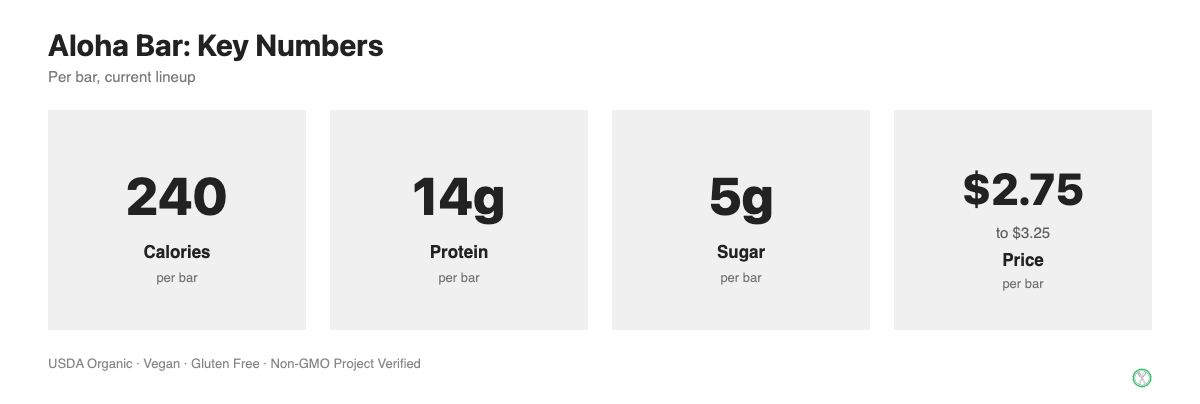
| Metric | Aloha Protein Bar |
|---|---|
| Calories | 240 |
| Protein | 14g |
| Sugar | 5g |
| Fiber | 10g |
| Fat | 12g |
| Carbs | 24g |
| Price per bar | $2.75 to $3.25 |
| Protein source | Brown rice protein, pumpkin seed protein |
| Certifications | USDA Organic, Vegan, Gluten Free, Non-GMO Project Verified |
The trade off is simple. More calories, less protein per bar than several mainstream competitors offer. In exchange, you get one of the few organic options in the category, and a texture that sells the whole product. Flavor detail comes next. The comparison table further down shows exactly where Aloha lands against David, Barebells, Quest, Built, Pure Protein and RXBAR.
What Aloha Protein Bars Taste Like, Flavor by Flavor
Plant based protein bars have a reputation problem: chalky, grainy, hard to finish. Aloha mostly dodges it. Skipping pea protein in favor of brown rice and pumpkin seed protein gives the base a chewier, denser feel, closer to raw cookie dough than a typical protein bar. Seven core flavors make up the current lineup, all built on that same base with different mix-ins.
Peanut Butter Chocolate Chip
This bar looks dense and a little glossy at first glance, which can read as hard or greasy before you taste it. It softens fast once you bite in. Peanut butter comes through clearly, and chocolate chunks are scattered generously rather than drizzled thin. Plant protein taste is close to undetectable here.
Chocolate Chip Cookie Dough
Most reviewers land on this as the strongest flavor in the lineup. Its slight graininess actually works in its favor, mimicking real cookie dough instead of fighting the format. Chocolate chips show up in nearly every bite. Start here if you are trying Aloha for the first time.
Lemon Cashew
Cashew butter gives this bar a naturally mild, slightly sweet base, avoiding the earthier taste some plant proteins carry. Lemon flavor is present but restrained. Want a sharper citrus hit? This one will feel a little muted, though the overall balance still works for an everyday bar.
Chocolate Fudge Brownie
Texture matches the rest of the lineup: chewy, a bit dense. Chocolate flavor is rich without turning artificial or oversweet. It reads as a solid chocolate bar rather than a true brownie, so temper expectations if brownie specifically is what you are after.
Coconut Chocolate Almond
Toasted coconut and almond pieces add real texture contrast against the soft base. That is a welcome break from the smoother flavors above. Coconut comes through without overpowering the chocolate coating around it.
Vanilla Almond Crunch
The lightest tasting bar in the lineup. Vanilla leads, and almond pieces add crunch without weighing the bar down. Good pick if the chocolate flavors above feel too rich for daily use.
Chocolate Mint
Mint here is clean, not artificial or toothpaste like, balanced against a standard chocolate base. This flavor splits people the way mint chocolate always does. Execution matches the rest of the lineup either way.
How Aloha Protein Bars Compare to Other Popular Protein Bars
No independent review currently ranking for this topic puts Aloha side by side with the protein bars most shoppers already know. So here is that comparison, built from each brand's own published nutrition facts and current retail pricing, per bar. Prices for competitor bars are based on current retailer listings and can shift with promotions, so treat them as a snapshot rather than a fixed number.
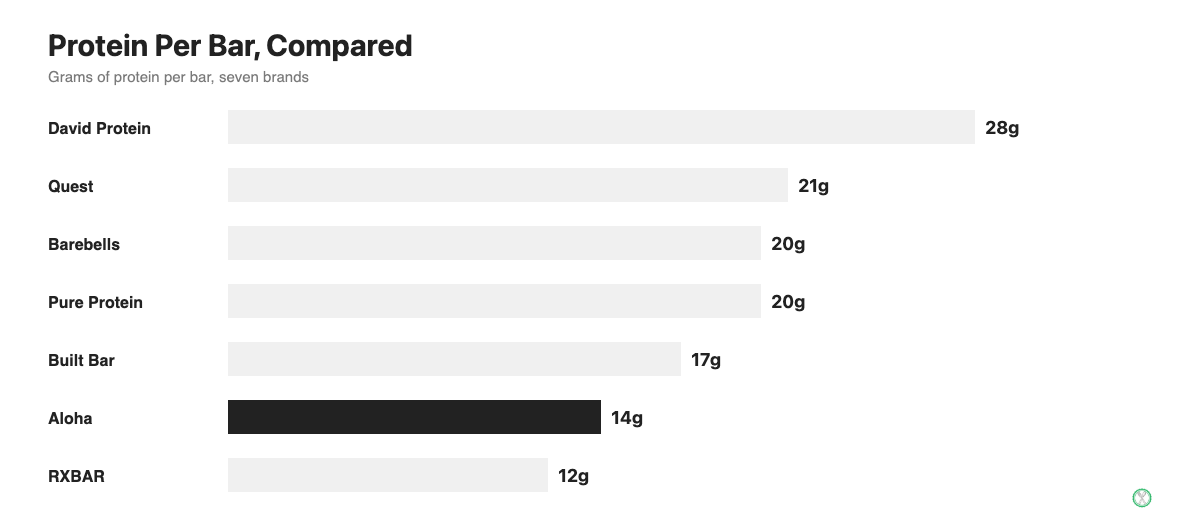
| Brand | Calories | Protein | Sugar | Price per bar | Standout trait |
|---|---|---|---|---|---|
| Aloha | 240 | 14g | 5g | $2.75 to $3.25 | USDA Organic, plant based, best texture in this group |
| David Protein | 150 | 28g | 0g | About $3.30 | Highest protein per calorie in this comparison |
| Barebells | About 200 | 20g | 1.7g | About $2.40 | Strong protein for the price, no added sugar |
| Quest | 170 to 190 | 21g | About 1g | Varies by retailer | High protein, low sugar, uses sugar alcohols |
| Built Bar | 140 to 150 | 16-17g | 4 to 8g | About $2.35 | Lowest calorie option, uses real sugar instead of artificial sweeteners |
| Pure Protein | 190 | 20-21g | 3g | Varies by retailer | Budget friendly protein-to-price ratio |
| RXBAR | 210 | 12g | 13g | Varies by retailer | Whole food ingredients, sugar comes from dates, not added sugar |
Aloha sits at the bottom of this group on protein per calorie. David Protein nearly doubles the protein in fewer calories. Barebells and Quest both edge past Aloha on protein at a similar or lower price per bar. Where Aloha wins is ingredient sourcing and texture: the only organic, whole-food-forward bar in this table, and reviewers consistently rate its texture above the whey and pea protein bars sitting next to it. RXBAR comes closest in spirit, built around minimal ingredients, but carries more sugar from dates and less protein per bar than Aloha does.
Want maximum protein for the fewest calories? Go with David Protein or Quest. Want a genuinely good tasting, organic, plant based bar where protein count is secondary? Aloha is the strongest option on this list.
Ingredients and Nutrition Details
Aloha's protein blend starts with brown rice protein and pumpkin seed protein, backed by tapioca fiber for texture and organic cocoa or vanilla depending on flavor. That combination is why the bars skip the gritty texture common in pea-protein-based competitors. Every bar in the lineup carries a long certification list: USDA Organic, Non-GMO Project Verified, vegan, gluten free, kosher and free of soy, dairy and stevia.
One detail worth flagging on its own: the bars come from a facility that also processes fish, milk, peanuts, sesame, soy, tree nuts and wheat. Have a severe allergy to any of those? That cross-contact disclosure matters more than the ingredient list itself, so check directly with Aloha before buying.
Who Should Buy Aloha Protein Bars (and Who Shouldn't)
Aloha fits well if organic, whole-food ingredients matter to you more than chasing the single highest protein number on the label. Vegans and anyone avoiding dairy and whey do well here. So does anyone who tried other plant based bars, found them too chalky, and gave up on the category. The dessert-like taste with 14g of protein attached is the whole pitch.
Skip it if you follow a strict low-carb or keto plan; 24g of carbs per bar runs high for that use case. Skip it too if maximizing protein per dollar is the actual goal, since David Protein, Barebells and Quest all deliver more protein per bar at a similar or lower price. If you are also weighing a protein shake or powder alongside bars, our protein powder picks cover that comparison separately.
Where to Buy Aloha Protein Bars and How Much You'll Pay
Aloha sells directly through its own site and through major retailers including Amazon and Trader Joe's, with availability varying by location. A single-flavor 12-count box runs $32.99. The variety pack runs up to $38.99, roughly $2.75 to $3.25 per bar either way. Orders over $40 ship free on Aloha's own site. The autoship subscription knocks 10% off a single item, 15% off two items and 25% off three or more items per delivery.
Trying Aloha for the first time? Start with the variety pack. It lets you find a favorite flavor before committing to a single-flavor subscription.
Frequently Asked Questions
How much protein is in an Aloha protein bar?
Each Aloha protein bar has 14g of protein, sourced from a blend of brown rice protein and pumpkin seed protein rather than whey or pea protein.
Are Aloha protein bars healthy?
Aloha bars are USDA Organic with 10g of fiber and 5g of sugar per bar, a reasonable profile for a snack bar, though they are not low-carb at 24g of carbs per bar. They work well if organic ingredients matter to you and you are not on a strict low-carb diet.
How much do Aloha protein bars cost?
A 12-count box costs $32.99 to $38.99 depending on the flavor mix, about $2.75 to $3.25 per bar, and the autoship subscription cuts that price by 10% to 25%.
Are Aloha protein bars vegan?
Yes, every Aloha protein bar is vegan and made without dairy, whey or any animal-derived ingredient, using brown rice and pumpkin seed protein in their place.
Are Aloha protein bars keto-friendly?
No, Aloha protein bars are not keto-friendly. Each bar carries 24g of carbohydrates, too high for most keto meal plans even once the 10g of fiber is factored in.
Can kids eat Aloha protein bars?
Kids can eat Aloha protein bars as an occasional snack, but check the allergen disclosure first. The bars come from a facility that also processes peanuts, tree nuts and other common allergens.