
David Protein Bar Review: Do the 28g-Protein Bars Live Up to the Hype?
 By Lisa Benz, Editor-in-chief · Updated Jul 13, 2026 · 7 min read
Disclosure: this article may contain partner links. If you buy through them, we earn a commission at no extra cost to you. The ranking is set by our editors.
Contents
- What Is a David Protein Bar? (Quick Facts)
- What Is EPG, the Fat Replacer in David Protein Bars?
- Nutrition Profile: Protein, Calories, and Sugar Alcohols
- Taste and Texture: What David Bars Are Actually Like to Eat
- How Much Do David Protein Bars Cost?
- David Protein Bar Flavors: Gold vs. Bronze Line
- Who Should (and Shouldn't) Buy David Protein Bars
- The Bottom Line on David Protein Bars
- FAQ: David Protein Bar Questions
David Protein Bar became one of the most talked-about snacks in the protein aisle almost overnight. The reason is simple: 28 grams of protein and 0 grams of sugar in just 150 calories. Traditional protein bars cannot match that ratio. Peter Rahal, the co-founder of RXBar, built the brand around a modified fat ingredient called EPG, then paired it with a blend of sugar alcohols and non-nutritive sweeteners instead of sugar. Here is what is actually in a David bar: how the numbers hold up, what the bars taste like, what they cost. And who should think twice before buying a case.
What Is a David Protein Bar? (Quick Facts)
David Protein Bar is a high-protein snack line sold in two tiers. The Gold line is built around maximum protein density. The Bronze line trades a little protein for a slightly gentler macro profile. Both land at 150 calories per bar with 0 grams of sugar. Protein counts, price, and flavor lineup all vary between the two.
| Attribute | David Protein Bar (Gold line) |
|---|---|
| Protein per bar | 28g |
| Calories | 150 |
| Sugar | 0g |
| Price per bar | Roughly $3-$4, depending on retailer and promotions |
| Flavors | 7 Gold flavors, 4 Bronze flavors (full list below) |
| Format | Single bars, sold by the carton of 12 |
| Rating | Widely praised for macros; taste and texture reviews are mixed (see below) |
It is gluten-free, too. People eat it as a meal replacement, a post-workout snack, a portable breakfast, whatever fits the day. That protein-to-calorie ratio is the entire premise of the brand, and it comes down to one ingredient worth understanding before you buy a case.
What Is EPG, the Fat Replacer in David Protein Bars?
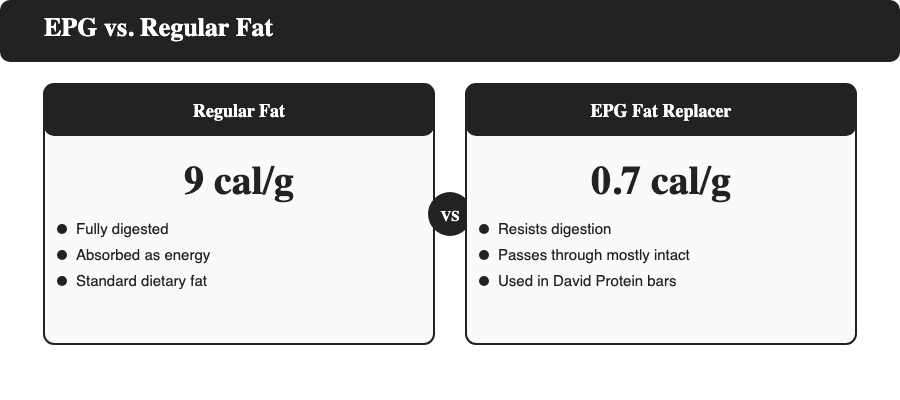
EPG, short for esterified propoxylated glycerol, is a modified plant fat. It gives David bars their creamy texture without the calories a normal fat would carry. Regular fat delivers about 9 calories per gram. EPG delivers around 0.7. Why the gap? The human digestive system cannot break EPG down the way it breaks down ordinary fat, so most of it passes through the body rather than getting absorbed. That is the whole trick behind hitting high protein and low calories without a chalky, dry bar.
David Protein did not invent this ingredient. Own Your Hunger, Nick's Ice Cream, and Legendary Foods were all using EPG before David bars went viral. What changed in 2025 is ownership: David's parent company acquired Epogee, the company that manufactures EPG. An antitrust lawsuit followed, alleging the acquisition was designed to squeeze smaller competitors out of the market. That dispute has not been resolved. Treat it as an ongoing business story, not a settled fact.
One more thing worth flagging before the nutrition breakdown: EPG shares some chemical similarity with Olestra, the fat substitute that earned a bad reputation in the 1990s for digestive side effects.
The Sweetener Blend: What Replaces the Sugar
Zero grams of sugar has to come from somewhere else. David bars use a blend of maltitol (a sugar alcohol), glycerin, allulose, sucralose, and acesulfame potassium. Early formulations used stevia and monk fruit instead, but the brand switched after customer feedback on taste. The FDA recognizes all of these ingredients as safe at normal intake levels. Maltitol and similar sugar alcohols, though, can cause digestive discomfort for some people when eaten in larger amounts.
A Note on Digestive Tolerance
Reader experiences here are mixed, not uniformly bad. Plenty of people eat a David bar daily with zero issues and genuinely like the taste. Others, especially those sensitive to sugar alcohols or new to EPG, report mild bloating or gas after eating more than one bar. Studies on EPG-type fat replacers link much higher doses, well beyond what is in a single bar, to digestive upset, but there is not enough public data to say how common mild discomfort is at normal serving sizes. If you already know sugar alcohols bother you, try one bar before buying a full case.
Nutrition Profile: Protein, Calories, and Sugar Alcohols
Start with the line difference. Gold bars deliver 28 grams of protein at 150 calories and 0 grams of sugar. Bronze bars deliver 20 grams of protein at the same 150 calories and 0 grams of sugar. Both lines pull their protein mainly from milk protein powder and egg whites. That is a more traditional protein source than the whey-only blends common in older bars.
For the Chocolate Chip Cookie Dough flavor, per-bar numbers run approximately 1.5 grams of total fat, 120 milligrams of sodium, 14 grams of carbohydrates, and 0 grams of fiber. Most of that carb count comes from the sugar alcohol and sweetener blend described above. Numbers shift slightly by flavor, so treat these as representative rather than exact for every SKU.
- Protein sources: milk protein powder and egg whites
- Fat source: EPG (esterified propoxylated glycerol)
- Sweeteners: maltitol, glycerin, allulose, sucralose, and acesulfame potassium
- Sugar: 0g across both product lines
Want the highest possible protein-per-calorie ratio? Go Gold. Want a bit more flexibility with a slightly gentler profile? The Bronze line still delivers 20 grams of protein per bar.
Taste and Texture: What David Bars Are Actually Like to Eat
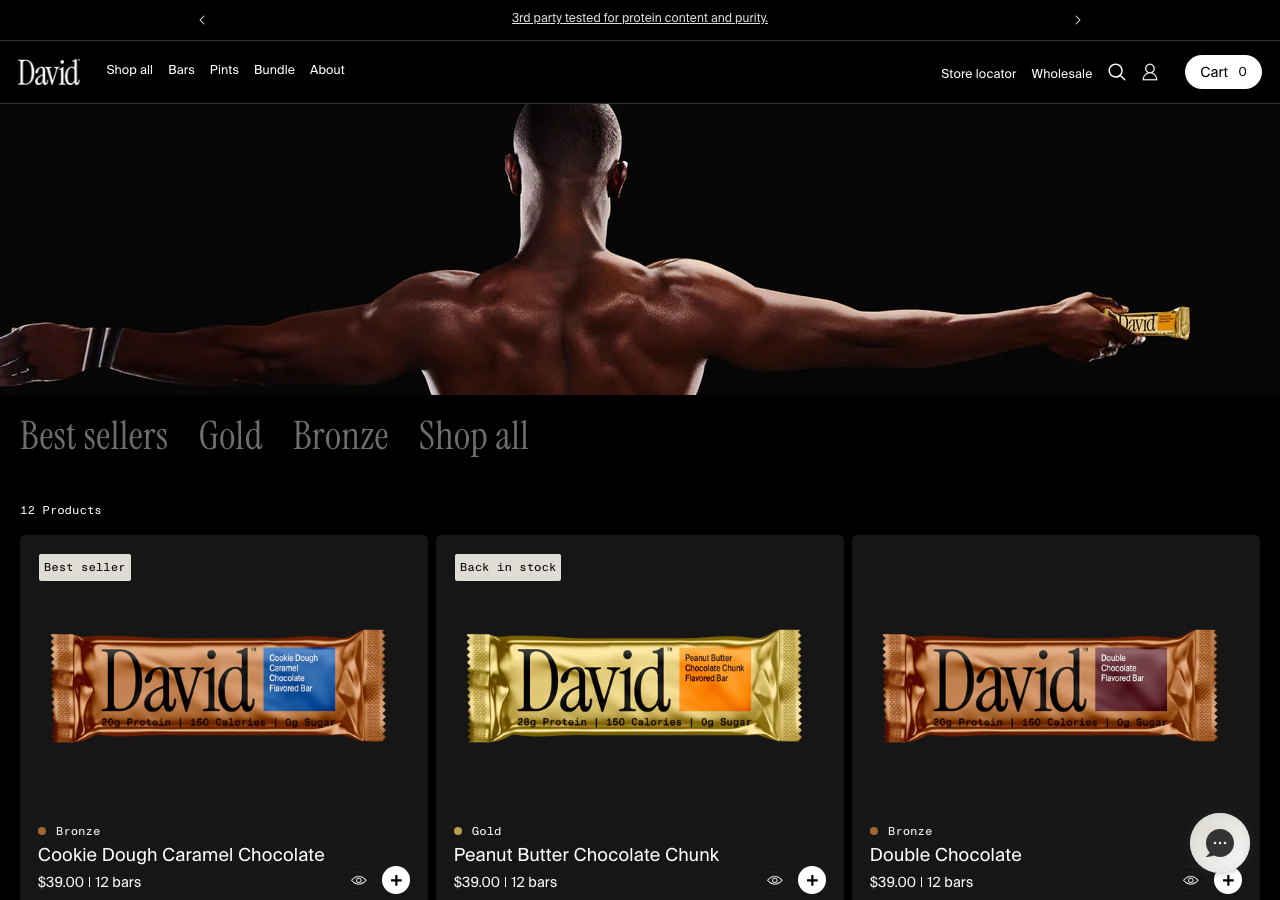
Opinions split hard on this one. Go in with realistic expectations, not the marketing copy's framing. Thanks to EPG, the texture is dense and a little sticky, closer to raw cookie dough than to a chewy, candy-bar-style protein bar. Some reviewers like that quality. Others describe it as eating chocolate protein powder pressed into bar form rather than an actual treat. The whey protein crisps added for crunch in some flavors have been called stale or bland on their own, though they work better once mixed into the rest of the bar.
The artificial sweetener blend comes through clearly in flavor, especially in the chocolate varieties, and some reviewers find it noticeably "diet" next to full-sugar snack bars. Plenty of everyday users disagree and eat one most days without complaint, usually as a quick breakfast or post-workout snack rather than a dessert stand-in. If you already like protein shakes or diet-style protein snacks, you will probably enjoy these more than someone hoping for an indulgent treat.
How Much Do David Protein Bars Cost?
Buy direct from davidprotein.com and a carton of 12 runs around $39, or roughly $3.25 to $3.89 per bar depending on current promotions. (The brand periodically runs deals like "buy 4 cartons, get 1 free.") Third-party retailers vary. Netrition lists bars at a similar per-bar price. A variety pack reported at Costco brought the effective cost down to around $2.08 per bar. Prices and promotions shift often, so check current pricing before buying in bulk.
- Direct from davidprotein.com: around $39 per carton of 12 (about $3.25 to $3.89 per bar)
- Costco (variety packs, availability varies by location): reported as low as roughly $2.08 per bar
- Amazon, Vitamin Shoppe, and Netrition: generally the same $3 to $4 per bar range as the direct site
At the high end, David bars sit closer to premium bar pricing than to budget snack pricing. The value case rests on the protein-to-calorie ratio, not on cost per bar.
David Protein Bar Flavors: Gold vs. Bronze Line
David organizes its flavor lineup by product line. The two lists do not overlap.
Gold-line flavors (28g protein):
- Chocolate Chip Cookie Dough
- Peanut Butter Chocolate Chunk
- Fudge Brownie
- Blueberry Pie
- Cinnamon Roll
- Salted Peanut Butter
- Cake Batter
Bronze-line flavors (20g protein):
- Double Chocolate
- Cookie Dough Caramel Chocolate
- Peanut Butter Chocolate
- S'mores Chocolate
David has also branched into protein pints and a Wild Caught Atlantic Cod product, but bars remain the core of the lineup. Flavor availability shifts over time, so check the brand's site if a specific flavor matters to you.
Who Should (and Shouldn't) Buy David Protein Bars
David Protein Bars fit some buyers well. They fit others poorly.
Good fit for:
- Anyone chasing the highest possible protein-to-calorie ratio in a portable snack
- Gluten-free snackers who want a bar without gluten-containing ingredients
- Low-sugar dieters who want 0g of sugar without giving up protein
- People who already enjoy protein shakes or diet-style snacks and won't mind an artificial-sweetener-forward flavor
Consider skipping, or trying just one bar first, if:
- Sugar alcohols like maltitol tend to give you gas or bloating
- You prefer whole-food ingredient lists over engineered fat replacers
- You want an indulgent, candy-bar-style treat rather than a functional protein snack
- Cost per bar matters more to you than protein density
The Bottom Line on David Protein Bars
David Protein Bar delivers on its core promise. Hitting 28 grams of protein at 150 calories is genuinely hard to do, and EPG is the real engineering reason it works. Taste, texture, and price are where opinions split. Most land on "good, not universally loved," rather than unanimous praise. If maximizing protein per calorie in a gluten-free format matters more to you than a fully natural ingredient list, David bars are worth trying. Want to compare against other brands and price points first? Our Best Protein Bars 2026 roundup lines David up against the rest of the field.
FAQ: David Protein Bar Questions
What is EPG?
EPG (esterified propoxylated glycerol) is a modified plant fat used in David Protein Bars. It provides about 0.7 calories per gram instead of the usual 9, because the body cannot fully digest it. That is the main reason the bars can offer high protein at low calories.
How much protein is in a David bar?
Gold-line bars have 28 grams of protein per bar. Bronze-line bars have 20 grams. Both lines run 150 calories with 0 grams of sugar.
Are David protein bars gluten-free?
Yes. David Protein Bars are labeled gluten-free across the current lineup.
Where can I buy David protein bars?
Direct from davidprotein.com, or through retailers including Amazon, Vitamin Shoppe, Netrition, and Costco. Pricing varies by retailer and ongoing promotions.