
Best Protein Powder for Women: 6 Picks Backed by Real Nutrition Data
 By Lisa Benz, Editor-in-chief · Updated Aug 18, 2026 · 8 min read
Disclosure: this article may contain partner links. If you buy through them, we earn a commission at no extra cost to you. The ranking is set by our editors.
Contents
- Why Women Need More Protein Than the General RDA
- Does Protein Powder Make Women Bulky?
- The 6 Best Protein Powders for Women, Compared
- The 6 Best Protein Powders for Women, Reviewed
- Whey vs Plant-Based Protein: Which Should Women Choose?
- Why Third-Party Testing Matters More for Women
- How to Use Protein Powder to Support Muscle and Hormone Health
- Frequently asked questions
Most "best protein powder" lists are written for men who want to bulk up, and the standard 0.8 gram RDA behind them is a survival minimum, not a target for muscle or hormone health. This guide reviews six protein powders for women, from Promix Whey Protein Isolate for sensitive stomachs to Ritual Essential Protein for pregnancy and postpartum, each chosen for a specific use case and checked against current nutrition science instead of generic marketing claims.
Why Women Need More Protein Than the General RDA
The standard RDA of 0.8 grams of protein per kilogram of body weight is a survival minimum, not a target for muscle health. Women who lift weights or want to preserve muscle need closer to 1.2 to 1.6 grams per kilogram and that number climbs further during perimenopause and menopause. Declining estrogen causes anabolic resistance, meaning the same protein intake that maintained muscle at 35 can fall short at 55. Research on postmenopausal women puts the higher-end target at 2 to 2.3 grams per kilogram of body weight.
The stakes are not small. Postmenopausal women who do not eat enough protein lose about 0.6 percent of their muscle mass every year. That sounds minor until it compounds. Over a decade it adds up to close to 6 percent of total muscle. Enough to affect strength, metabolism and everyday mobility. Spreading protein across the day matters too. Getting 25 to 30 grams per meal triggers muscle protein synthesis better than loading most of your protein into one meal, which is one reason a scoop of protein powder at breakfast or after a workout closes a gap that food alone misses.
Does Protein Powder Make Women Bulky?
No, protein powder alone will not make a woman bulky. Building visible muscle mass takes a sustained calorie surplus and months of progressive resistance training. Women also carry far less testosterone than men. That alone caps how fast muscle grows, even with identical training and protein intake. Extra protein without a training program to use it supports recovery, satiety and the muscle you already have. It does not drive rapid size gain.
The 6 Best Protein Powders for Women, Compared
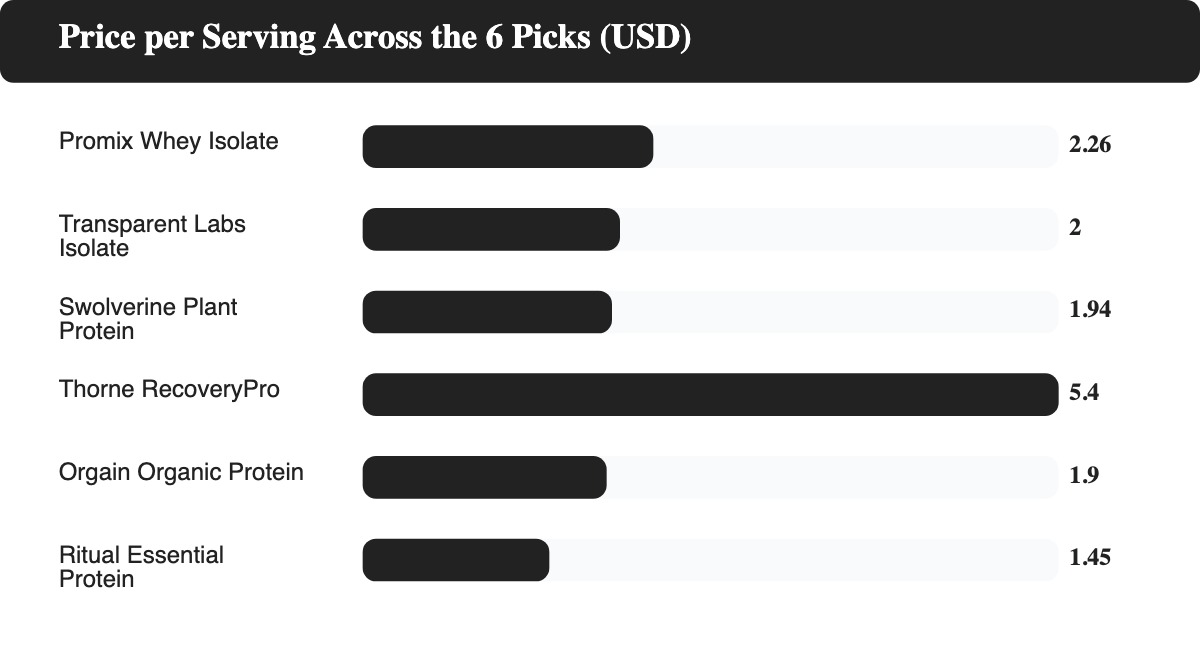
Each pick below solves a different problem, from sensitive digestion to pregnancy safety. Use this table to shortlist by protein content, cost per serving and format before reading the full reviews. Prices reflect 2026 list pricing at each brand's own store and shift with sales, so treat them as a benchmark rather than a locked-in number.
| Product | Best for | Protein per serving | Price per serving | Type |
|---|---|---|---|---|
| Promix Whey Protein Isolate | Overall pick / sensitive stomachs | 30g | ~$2.26 | Whey isolate |
| Transparent Labs Whey Protein Isolate | Clean-label purity | 28g | ~$2.00 | Whey isolate |
| Swolverine Plant Protein | Vegan pick | 25g | $1.78-$2.10 | Plant-based |
| Thorne RecoveryPro | Sleep and recovery | 13g | ~$5.40 | Whey blend + sleep support |
| Orgain Organic Protein | Budget pick | 21g | ~$1.90 | Plant-based |
| Ritual Essential Protein | Pregnancy and postpartum | 20g | ~$1.45 | Plant-based |
The 6 Best Protein Powders for Women, Reviewed
Promix Whey Protein Isolate: best overall
Promix is the pick to start with if you want a straightforward, high-protein whey isolate that will not upset your stomach. It is micro-filtered to strip out most of the lactose and fat that cause bloating with cheaper whey concentrates, while still delivering 30 grams of protein per serving from grass-fed, pasture-raised cows.
| Attribute | Detail |
|---|---|
| Protein per serving | 30g (160 calories) |
| Price | $68 per 30-serving bag (~$2.26/serving), $61.20 on subscription |
| Type | Grass-fed whey isolate, micro-filtered |
| Good to know | Minimal lactose and fat, third-party tested, unflavored option available for baking and smoothies |
Transparent Labs Whey Protein Isolate: best for clean-label purity
If you read supplement labels closely, Transparent Labs earns its name. The formula uses only 4 to 6 natural ingredients depending on flavor, is sweetened with stevia instead of artificial sweeteners and comes entirely from grass-fed, grass-finished American dairy cattle raised without added hormones.
| Attribute | Detail |
|---|---|
| Protein per serving | 28g (120 calories, 88% protein by weight) |
| Price | $59.99 per 30-serving tub (~$2.00/serving), $53.99 on subscription |
| Type | Grass-fed whey isolate |
| Good to know | No artificial sweeteners, flavors or food dyes; Informed Choice certified |
Swolverine Plant Protein: best vegan pick
Swolverine blends pea protein isolate, faba bean and pumpkin seed protein into a smooth shake that avoids the chalky, gritty texture that turns a lot of women off plant-based protein. Added MCTs, olive oil and a digestive enzyme blend help it mix and digest more easily than a single-source pea protein.
| Attribute | Detail |
|---|---|
| Protein per serving | 25g |
| Price | $62.99 per 30-serving bag (~$2.10/serving), $53.54 on subscription (~$1.78/serving) |
| Type | Pea protein isolate, faba bean, pumpkin seed protein |
| Good to know | Complete amino acid profile from the multi-source blend, no added sugar |
Thorne RecoveryPro: best for sleep and recovery
RecoveryPro is not built to maximize protein per scoop. It is built for the hour before bed, pairing 13 grams of hydrolyzed whey with 125mg of magnesium bisglycinate, 390mg of L-tryptophan and 100mg of PharmaGABA to support restful sleep and next-day recovery, which matters more for muscle repair than most women realize.
| Attribute | Detail |
|---|---|
| Protein per serving | 13g (140 calories) |
| Price | Around $54-65 per 12-serving container (~$5.40/serving) through practitioner retailers |
| Type | Hydrolyzed whey protein concentrate with sleep-support ingredients |
| Good to know | NSF Certified for Sport, sold mainly through healthcare practitioners rather than standard retail, so pricing varies more than direct-to-consumer brands |
Orgain Organic Protein: best budget pick
Orgain sits on shelves at Costco, Target and Vitamin Shoppe alongside Amazon. It is the widest-available pick on this list. It will not match a whey isolate on protein-per-dollar efficiency, but the USDA Organic, plant-based formula is a reasonable everyday option if you want something you can restock anywhere without hunting for a specialty retailer.
| Attribute | Detail |
|---|---|
| Protein per serving | 21g |
| Price | $37.99 per 2.03lb tub (~$1.90/serving) |
| Type | Pea protein, organic brown rice protein, organic chia seed protein |
| Good to know | USDA Organic certified, vegan, sold at mainstream retailers |
Ritual Essential Protein: best for pregnancy and postpartum
Ritual's Pregnancy and Postpartum formula is the only pick on this list built specifically around a pregnant or nursing body's needs. Each serving adds 250mg of choline, a nutrient tied to fetal brain development that most prenatal routines under-supply, on top of a clean, allergen-conscious protein base.
| Attribute | Detail |
|---|---|
| Protein per serving | 20g |
| Price | $44 one-time, $40 per month on subscription (~$1.45/serving) |
| Type | Pea protein |
| Good to know | 250mg choline per serving, soy-free, gluten-free, no added sugar, Clean Label Project Certified and tested for heavy metals |
Whey vs Plant-Based Protein: Which Should Women Choose?
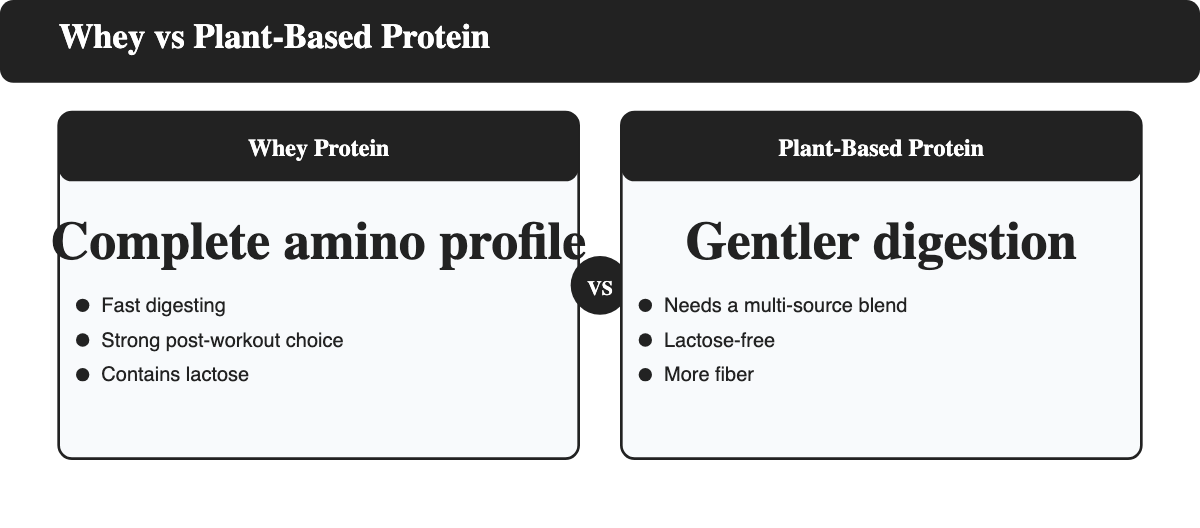
If you already lean toward a straightforward whey pick, see our full best protein powder and MyProtein review for more general-purpose options outside this women-specific list. Whey protein has a naturally complete amino acid profile and digests fast, which makes it the stronger choice right after a workout. Plant-based blends like pea and pumpkin seed protein need two or more sources combined to match that amino acid completeness, but they digest more gently for anyone who is lactose intolerant or simply feels bloated on dairy-based whey. Neither format is objectively better for women. The right choice depends on how your body handles dairy and whether you are eating enough variety elsewhere to round out a single plant protein source's amino acid gaps.
Why Third-Party Testing Matters More for Women
Protein powder is not as tightly regulated as food and testing has found real gaps in quality control. A 2025 Consumer Reports investigation tested dozens of protein powders. Over two-thirds contained more lead per serving than experts consider safe for daily use. Plant-based proteins tested higher for heavy metals than dairy-based options, because plants absorb metals from soil more directly than dairy cattle pass them into milk. That matters more for women who drink a protein shake daily for months or years and even more during pregnancy, when a doctor is likely to recommend limiting heavy-metal exposure.
Look for one of these certifications before you buy:
- NSF Certified for Sport
- Informed Choice
- Clean Label Project Certified
| Third-party certified picks on this list | Promix (third-party tested), Transparent Labs (Informed Choice), Thorne RecoveryPro (NSF Certified for Sport), Ritual (Clean Label Project Certified) |
How to Use Protein Powder to Support Muscle and Hormone Health
Pair your shake with a protein-rich snack, like the picks in our best protein bars guide, on days a full meal is not realistic. Aim for 25 to 30 grams of protein per meal rather than saving most of your daily total for dinner. That amount is what most research shows is needed to meaningfully trigger muscle protein synthesis in a single sitting and spreading it across three or four meals works better than one large protein-heavy dinner. A daily target of 1.0 to 1.2 grams per kilogram of body weight covers general maintenance, while 1.4 to 1.6 grams per kilogram supports active resistance training or a fat-loss phase and women in perimenopause or menopause should lean toward the higher end of that range to offset anabolic resistance.
Frequently asked questions
Is protein powder safe during pregnancy?
Most standard whey and plant protein powders are safe during pregnancy, but you should still check with your doctor before adding one to your routine. Choose a third-party tested, pregnancy-formulated option like Ritual's Pregnancy and Postpartum Essential Protein when possible, since these are checked for contaminants and add nutrients like choline that support fetal development.
How much protein should a woman get in a day?
Most active women should aim for 1.2 to 1.6 grams of protein per kilogram of body weight daily, well above the 0.8 gram RDA and women in perimenopause or menopause benefit from leaning toward 2 to 2.3 grams per kilogram to counter age-related anabolic resistance.
What is the best protein powder for weight loss?
A plant-based or whey isolate option with 20 to 30 grams of protein and minimal added sugar, such as Transparent Labs Whey Protein Isolate or Orgain Organic Protein, supports weight loss best because higher protein intake increases satiety and helps preserve muscle mass during a calorie deficit.
Does whey or plant protein digest better for women with a sensitive stomach?
A micro-filtered whey isolate like Promix tends to digest more comfortably than whey concentrate, since it strips out most of the lactose that causes bloating. Some women still tolerate a well-blended plant protein like Swolverine better than any dairy-based option.