 Nutrition editor
No Cow makes one of the highest-protein, lowest-sugar bars in the vegan aisle, and that’s not a small claim. The bigger question: does it taste good enough to eat twice? Short answer, the macros are outright excellent, the texture is polarizing, and the flavor you grab matters more than with most bars on the market.
This review covers what No Cow bars are made of, how five of the most popular flavors taste, what a box costs, and how the brand stacks up against whey-based bars like Barebells and Quest.
What Is No Cow?
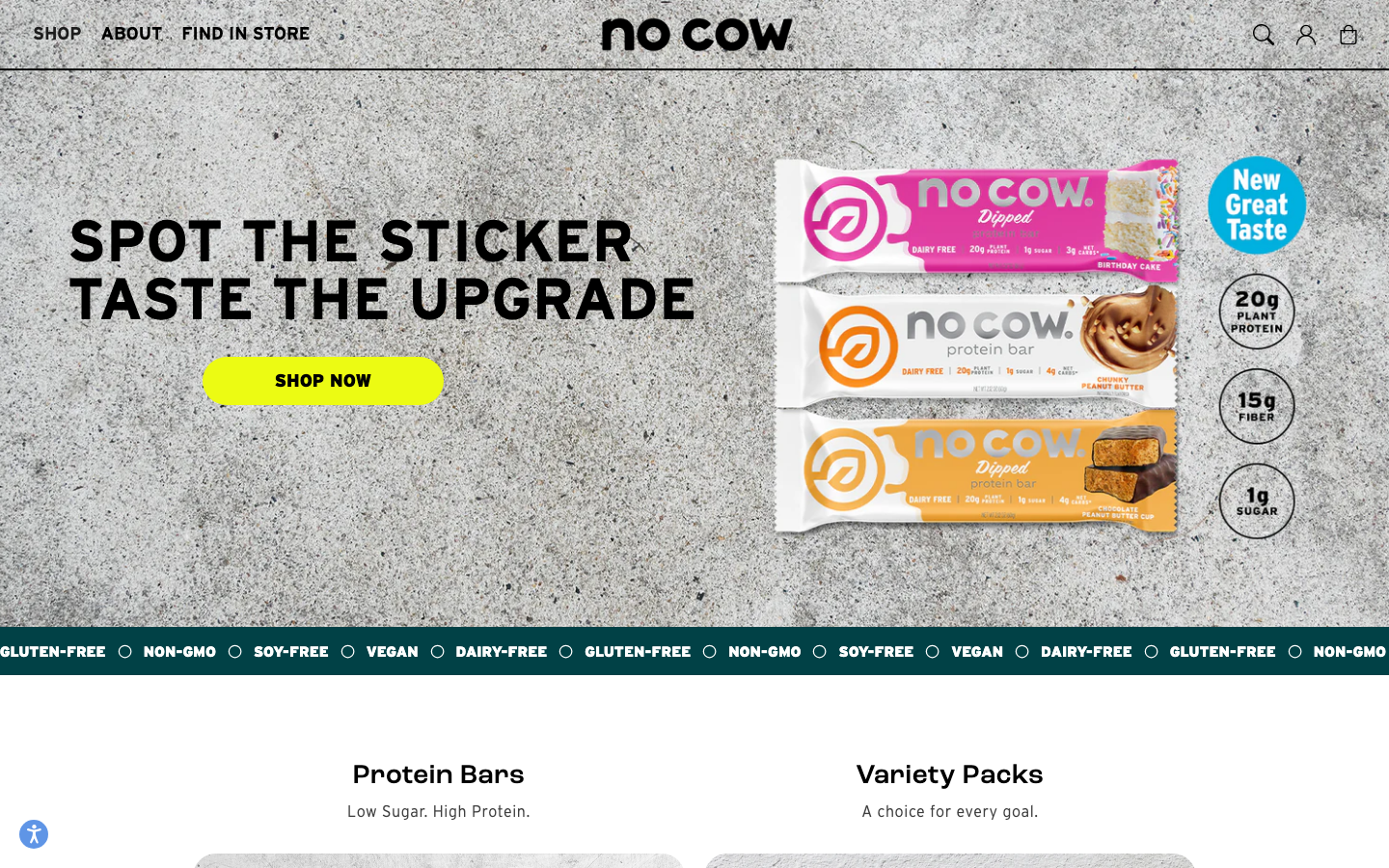
No Cow is a Denver, Colorado vegan protein bar brand that packs 20 grams of plant-based protein into every bar with only 1 gram of sugar. Founder Daniel Katz started the company as a teenager under the name D’s Naturals. He later rebranded to No Cow, and the bars have stayed built around the same idea since: a plant-based bar with a whey-bar-level protein count and almost no sugar.
Every bar leans on a brown rice and pea protein blend instead of whey or casein. That’s what makes the lineup dairy-free and vegan. The bars are also gluten-free and Non-GMO Project Verified, though not every flavor carries a kosher certification.
No Cow Protein Bar Key Facts
A No Cow bar packs 20 grams of protein and just 1 gram of sugar into a 60-gram bar priced at about $2.75 each, and that’s flat-out one of the better ratios in the vegan bar category. The full spec sheet below covers everything else before we get into how each flavor tastes.
| Attribute | Detail |
|---|---|
| Type | Vegan, plant-based protein bar (brown rice and pea protein) |
| Protein per Bar | 20g |
| Calories | About 190-210 per bar, depending on flavor |
| Sugar | 1g |
| Fiber | 15-17g |
| Price | $32.99 per box of 12 ($29.69 on subscribe and save), about $2.75 per bar |
| Flavors | 9+ core flavors plus variety and dipped packs |
| Format | 60g (2.12 oz) bar |
| Rating | Strong macros, mixed texture: a solid pick for vegan and dairy-free eaters, not the top pick on taste alone |
Taste and Texture, Flavor by Flavor
No Cow bars lean dry and dense rather than soft and chewy, and that single texture trait shapes almost every review of the brand. The protein blend carries a mild earthy note, though it shows up more in some flavors than others, so the flavor you pick genuinely changes the experience.
Peanut Butter Chocolate Chip is the flavor most reviewers name as their favorite. The peanut butter is heavy-handed enough to mask the pea protein aftertaste. The chocolate chips add just enough texture contrast to keep the bar from feeling monolithic.
Birthday Cake is the other flavor that consistently wins taste tests. It reads more like a dense spoonful of frosted cake batter than a protein bar. A white-coating version smooths out the chalkiness that shows up in the uncoated flavors.
Chocolate Chip Cookie Dough splits opinion. Fans say it tastes like eating raw cookie dough out of the bowl, but critics call it the driest flavor in the lineup. It’s the one flavor that shows up most as someone’s least favorite.
Chunky Peanut Butter packs in real peanut pieces for a thicker, more satisfying bite than the smoother flavors. It’s sweet without a noticeable stevia aftertaste, and not every flavor in this lineup can claim that.
Cookies ‘N Cream lands in the middle of the pack. It tastes close to what the name promises, but the texture leans closer to a dense protein cookie than a light wafer bar, so don’t expect anything crisp.
If texture is your top concern, the dipped bars (chocolate or white coating) are a safer bet than the uncoated originals. The coating adds moisture and a cleaner finish that offsets the drier interior.
Nutrition and Ingredients
A No Cow bar runs about 190 to 210 calories with 20 grams of protein, roughly 1 gram of sugar and 15 to 17 grams of fiber, depending on the flavor. Fat sits around 5 to 7 grams per bar.
The protein comes from a brown rice and pea protein blend, backed by soluble corn fiber for the fiber count. Sweetness comes from a stevia, monk fruit and erythritol blend rather than added sugar. Glycerine helps hold the bar together and keeps it soft.
Erythritol and glycerine are both sugar alcohols, and some people notice mild bloating or digestive discomfort if they eat more than one bar in a sitting. That’s a comfort issue, not a safety concern, and it fades once your body adjusts to sugar alcohols.
Most flavors are soy-free. A few chocolate-coated varieties do use a small amount of soy lecithin though, so check the label if you’re avoiding soy specifically.
Price and Where to Buy
A box of 12 bars runs $32.99 directly from nocow.com, or $29.69 if you sign up for the brand’s subscribe-and-save plan. That’s a little under $2.75 per bar at full price, which lands in the same range as most premium protein bars.
Beyond the brand’s own site, No Cow bars are sold through Amazon, Whole Foods and a handful of regional grocery chains. You don’t have to commit to a subscription just to try a box, and there’s no non-negotiable minimum order either.
Pros and Cons
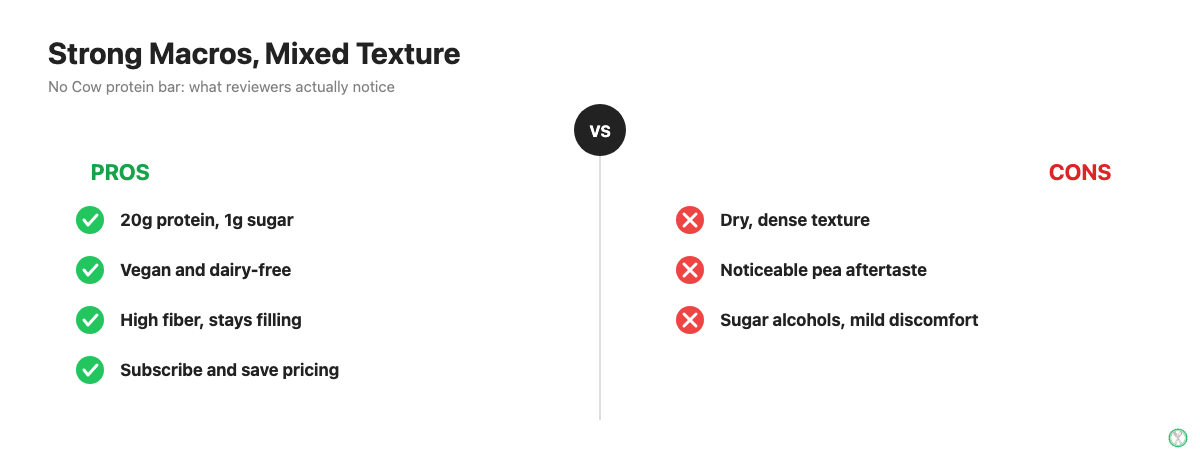
- Pro: 20 grams of protein and only 1 gram of sugar per bar, a genuinely strong ratio
- Pro: Vegan, dairy-free and gluten-free, with a real flavor lineup instead of two token options
- Pro: High fiber count that helps the bar feel more filling than its calorie count suggests
- Pro: Subscribe-and-save pricing brings the cost close to whey-based competitors
- Con: Texture runs dry and dense compared to whey-based bars like Barebells or Quest
- Con: A few flavors, especially Chocolate Chip Cookie Dough, carry a noticeable pea protein aftertaste
- Con: Erythritol and glycerine can cause mild digestive discomfort for some people at more than one bar a day
No Cow vs Other Protein Bars
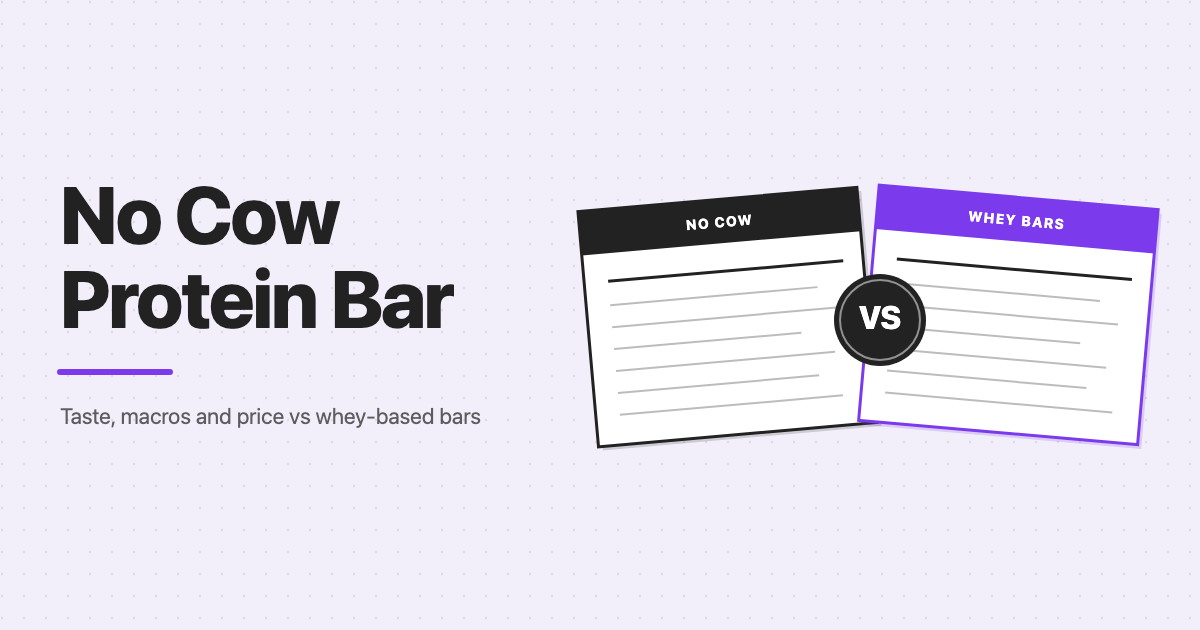
No Cow’s biggest edge over whey-based bars is diet compatibility. It’s the only fully vegan, dairy-free option in this lineup, and it still keeps sugar to about 1 gram a bar. Few whey bars manage that without sugar alcohols of their own.
| Bar | Protein Source | Protein per Bar | Calories | Sugar |
|---|---|---|---|---|
| No Cow | Brown rice and pea protein (vegan) | 20g | ~200 | 1g |
| Barebells | Milk protein (whey) | 20g | ~200 | 1g |
| Quest | Whey and milk protein isolate | 21g | 190 | 1g |
| Built Bar | Whey protein | 17g | ~140-180 | Varies by flavor |
| David Protein | Whey protein isolate (EPG-based) | 20-28g | 150 | 0g |
On paper, No Cow keeps pace with Barebells and Quest gram for gram. Where it loses ground is texture: Barebells and Quest both use a whey base that bites softer and chews closer to a candy bar, while No Cow’s plant protein blend produces a denser, drier crumb. David Protein pushes higher on protein density per calorie, but it isn’t an option at all for anyone avoiding dairy. That’s exactly the gap No Cow exists to fill.
Is the No Cow Protein Bar Worth It?
Yes, No Cow is worth buying if you need a vegan or dairy-free protein bar and don’t mind trading a softer chew for a genuinely clean nutrition label. The protein and fiber numbers are hard to beat in the plant-based category. Flavors like Peanut Butter Chocolate Chip and Birthday Cake taste good enough to reach for again.
It’s a harder sell if you can eat whey without restriction. Barebells and Quest deliver similar macros in a softer, more candy-like bar, so someone with no dietary limits will likely find those more enjoyable bite for bite. That’s not a knock on No Cow, it’s just a different trade-off.
No Cow Protein Bar FAQ
Is No Cow protein bar actually vegan?
Yes, every No Cow protein bar is vegan without exception. It’s built on a brown rice and pea protein blend with no dairy, egg or animal-derived ingredients anywhere in the formula.
Are No Cow protein bars keto-friendly?
Most flavors fit a moderate keto approach thanks to the low 1 gram of sugar per bar, though the total carb count (mostly fiber) runs higher than a strict keto bar, so check the label if you’re counting net carbs closely.
Do No Cow bars need refrigeration?
No, No Cow bars are shelf-stable and don’t need refrigeration. Chilling a bar for a few minutes before eating firms up the texture and makes the drier flavors easier to eat.
What was No Cow’s original name?
No Cow started out as D’s Naturals, the brand founder Daniel Katz launched as a teenager before renaming the company to No Cow as the product line and distribution grew.