
Healthiest Protein Bars: 6 Clean-Label Picks, Ranked by Ingredient Quality
 By Lisa Benz, Editor-in-chief · Updated Sep 4, 2026 · 14 min read
Disclosure: this article may contain partner links. If you buy through them, we earn a commission at no extra cost to you. The ranking is set by our editors.
Contents
- How We Define "Healthiest" for This List
- The 6 Healthiest Protein Bars, Ranked by Ingredient Quality
- Side-by-Side Comparison: All 6 Bars
- Sugar Alcohols and Digestive Issues: What the Research Actually Says
- Artificial Sweeteners vs. Stevia: A Sweetener the Industry Still Argues About
- Do Seed Oils Belong in a "Healthy" Protein Bar?
- What We Could Not Verify
- Healthiest Protein Bars FAQ
Most "best protein bar" lists are really "best-selling protein bar" lists. They rank Barebells and Quest and David Protein because those are the bars people already buy, not because those bars have the cleanest ingredient labels. This list asks a different question: if you ignore brand popularity and taste-test scores entirely, which protein bars are actually built from real, minimally processed ingredients, without sugar alcohols, without artificial sweeteners, and without a wall of isolates and gums?
We pulled ingredient lists and nutrition panels directly from brand websites, retailer listings, and third-party nutrition databases for six bars that are genuinely known in the clean-label and whole-food nutrition space: GoMacro, Perfect Bar, Rise Bar, Health Warrior, 88 Acres, and Bulletproof. None of them are the usual "best overall" picks, and that is the point. Where a fact could not be confirmed across at least one brand source and one independent database, we say so rather than guess.
How We Define "Healthiest" for This List
"Healthiest" is doing a lot of work in a grocery aisle full of bars that all claim to be healthy. For this list we scored bars against seven concrete, checkable criteria instead of a vague "clean" label on the front of the box.
- Whole-food ingredient list. Dates, nuts, seeds, oats, and whole grains near the top of the ingredient list, rather than protein isolates, maltodextrin, or gums doing most of the work.
- No sugar alcohols. No erythritol, maltitol, or sorbitol, all three of which are documented digestive irritants at the doses used in protein bars.
- No artificial sweeteners. No sucralose or acesulfame potassium. We flag stevia and monk fruit separately as natural but still debated high-intensity sweeteners.
- Minimal processing. Fewer total ingredients and fewer ingredients that require industrial processing to produce.
- No seed oils used as a primary fat source. Nut butters and coconut oil instead of sunflower, canola, or soybean oil, though we note when a bar uses a small amount of seed oil in a chocolate coating or as an emulsifier.
- Verifiable added-sugar count. A specific, sourced added-sugar number per bar, not a marketing claim of "low sugar."
- Real-food protein source. Nuts, seeds, dairy, egg, or collagen rather than isolated soy or pea protein doing all the lifting, though several of our picks do use some isolate and we say so.
No bar on this list is perfect against all seven criteria, and we call out the tradeoffs for each one rather than pretending otherwise. If you want the bar that wins on protein-per-dollar or on flavor instead, our best protein bars guide and our best tasting protein bars guide cover those angles with a different set of brands.

The 6 Healthiest Protein Bars, Ranked by Ingredient Quality
1. GoMacro MacroBar: Best Whole-Food, Organic Ingredient List
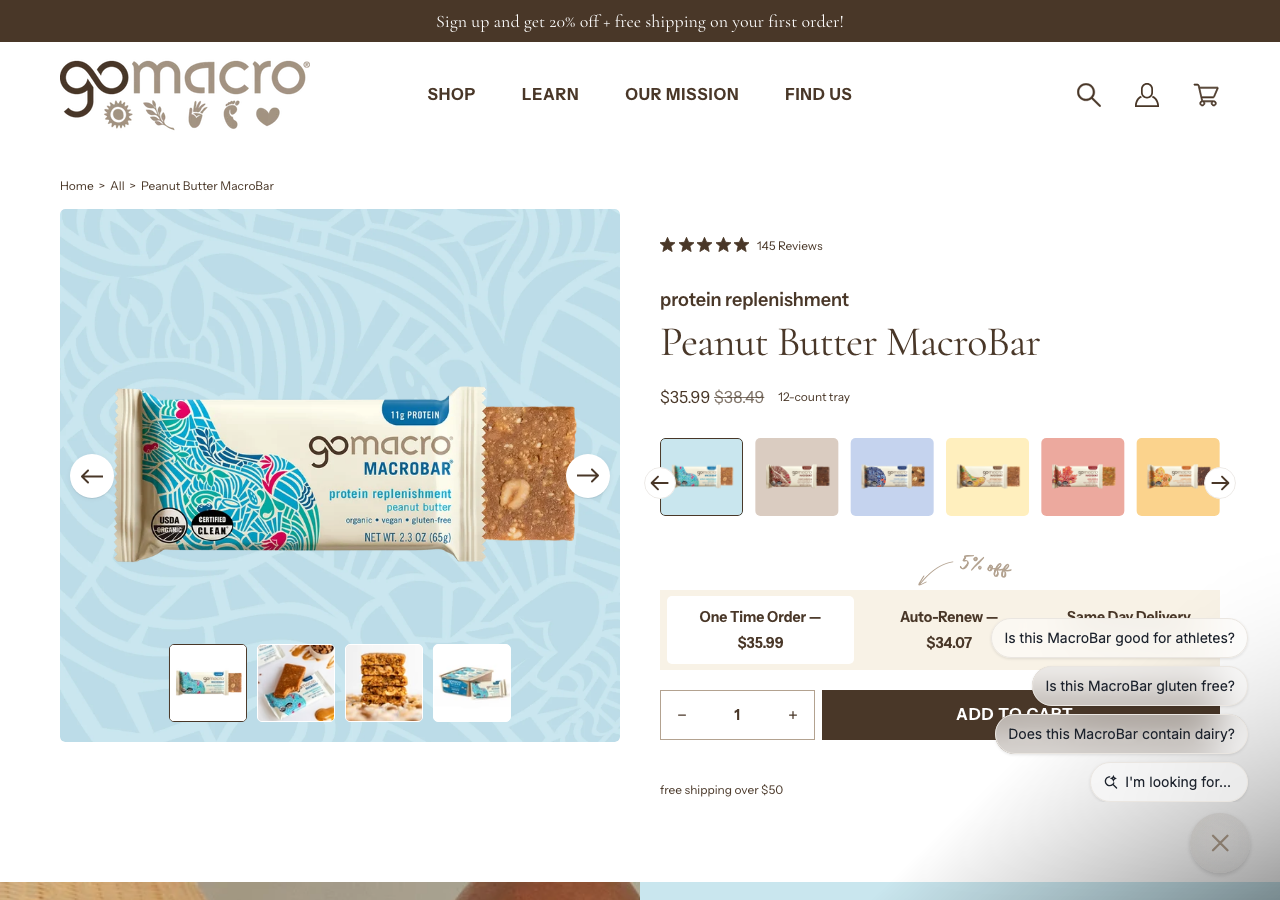
| Protein per bar | 10-11 g |
| Calories | 240-290 (varies by flavor) |
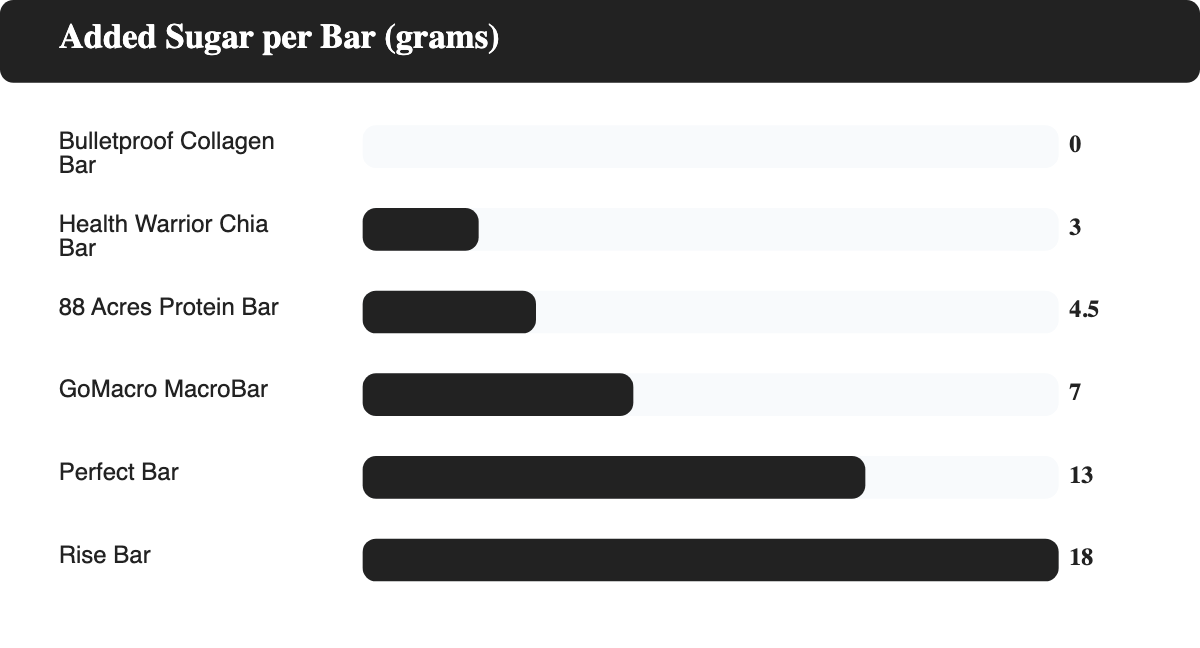
| Added sugar | 6-8 g, from organic brown rice syrup (varies by flavor; Peanut Butter lists 6 g, Salted Caramel + Chocolate Chips lists 8 g) |
| Key ingredients / sweetener type | Organic brown rice syrup, organic peanut or sunflower seed butter, organic sprouted brown rice and pea protein blend. No sugar alcohols, no artificial sweeteners. |
| Price per bar | Roughly $2.35-$2.50 in a 12-count box |
| Where to buy | Thrive Market, Amazon, Whole Foods, Walmart |
GoMacro is one of the few bars on the market where the top three ingredients are all recognizable whole foods rather than a protein isolate. The organic sprouted brown rice and pea protein blend sits alongside organic peanut or sunflower seed butter and organic brown rice syrup, and the full ingredient list rarely runs past 10 items. The honest tradeoff: brown rice syrup is a straightforward form of added sugar, and by FDA labeling rules it counts as added sugar even though it does not "taste" as sweet as table sugar. At 6-8 grams of added sugar per bar (the exact figure varies by flavor), GoMacro is not a zero-sugar bar, but it is comfortably lower in added sugar than half the other picks on this list. It earns the top spot here on ingredient quality and minimal processing, not just on sugar content, and it is certified organic, vegan, and gluten-free across its core lineup.
2. Perfect Bar: Best Refrigerated, Whole-Food Protein Bar
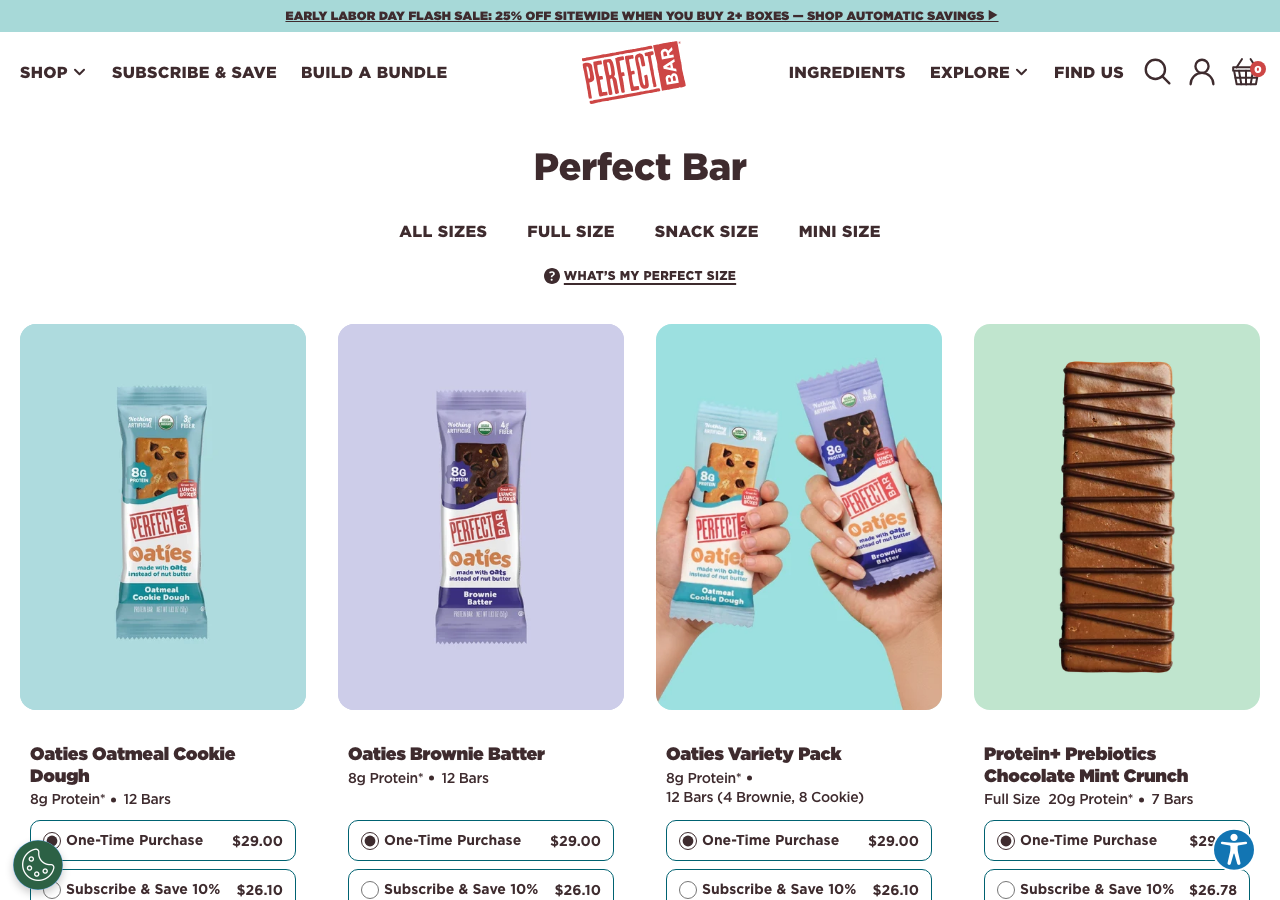
| Protein per bar | 13-17 g |
| Calories | 320-340 |
| Added sugar | 13 g added sugar (19 g total sugar) in the Peanut Butter flavor, from honey |
| Key ingredients / sweetener type | Peanut butter, honey, nonfat dry milk, rice protein, dried whole egg powder, whole-food powders (kale, flax, rose hip and others). No sugar alcohols, no artificial sweeteners. |
| Price per bar | Roughly $2.20-$2.50 in a 4-pack |
| Where to buy | Refrigerated section at Walmart, Target, Kroger; also CVS and the Perfect Snacks website |
Perfect Bar lives in the refrigerated case for a reason: it is built from real peanut butter, honey, dried milk, and whole egg powder rather than shelf-stable isolates, and that is also why it needs refrigeration to stay fresh. It is one of the few "whole food" bars that gets its protein from dairy, egg, and rice protein instead of leaning entirely on plant isolates. The tradeoff runs both ways. Honey is still sugar metabolically, and Perfect Bar carries the highest added-sugar count of the six picks at 13 grams per bar (19 grams of total sugar). The ingredient list also includes sunflower lecithin and a small amount of seed oil in some flavors' chocolate coating, so it does not fully clear our "no seed oils" bar either. We are including it anyway because the core protein and fat sources are genuinely whole-food, which is rarer than it should be in this category.
3. Rise Bar: Best Simple Ingredient List (4-5 Ingredients)
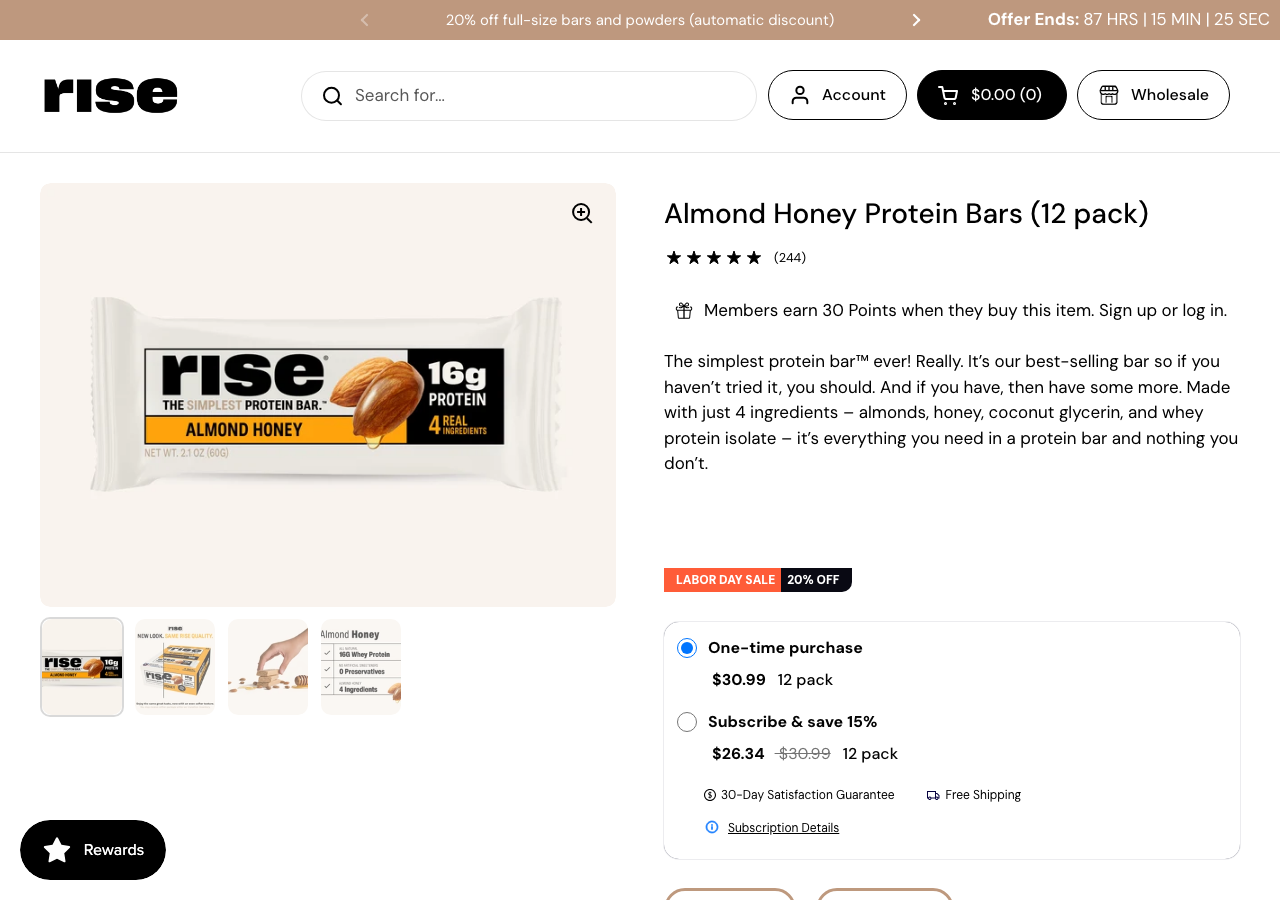
| Protein per bar | 15-20 g |
| Calories | Not consistently disclosed across flavors; roughly 270 for the Chocolatey Almond flavor |
| Added sugar | Around 18 g in the Chocolatey Almond flavor, from honey or coconut nectar |
| Key ingredients / sweetener type | Honey (or coconut nectar in the vegan line), almonds or cashews, whey protein or rice/pea protein depending on flavor. No sugar alcohols. |
| Price per bar | Roughly $2.60-$2.90 in a 12-count box |
| Where to buy | Walmart, Target, Amazon, risebar.com |
Rise Bar's entire pitch is ingredient minimalism. The Almond Honey bar lists four ingredients. The Chocolatey Almond bar lists four. Even the more involved flavors rarely pass five or six. That is a genuinely different formulation strategy from bars that need a dozen-plus ingredients to hit a protein and texture target, and it means there is very little room for gums, isolates, or fillers to hide in. Rise Bar's vegan line swaps coconut nectar for honey, so it works for plant-based diets too. The catch: fewer ingredients does not mean less sugar. At around 18 grams of added sugar in some flavors, Rise Bar sits close to Perfect Bar on total sugar, it simply gets there from fewer sources.
4. Health Warrior Chia Bars: Best Low-Sugar, Low-Calorie Option

| Protein per bar | 3-4 g (notably lower than other bars on this list) |
| Calories | 100 |
| Added sugar | 3 g total sugar per bar, from brown rice syrup and organic agave |
| Key ingredients / sweetener type | Whole chia seeds, brown rice syrup, organic cashew butter, rolled oats, organic dark chocolate chips. No sugar alcohols, no artificial sweeteners. 4 g fiber and 1,000 mg omega-3 per bar. |
| Price per bar | Roughly $2.00-$2.20 in a 15-count box |
| Where to buy | Walmart, Kroger, Whole Foods, Amazon |
Health Warrior is not really competing on protein content, and we want to be upfront about that before you buy a box expecting a post-workout bar. At 3-4 grams of protein, it is closer to a fortified snack bar than to the other five bars here, most of which carry 10 grams or more. Where it wins is sugar and calorie discipline: 100 calories and 3 grams of total sugar per bar is genuinely low for this category, and the chia-seed-and-oat base delivers 4 grams of fiber and roughly 1,000 milligrams of plant-based omega-3 fatty acids, which none of the higher-protein bars here can match. Treat it as the pick for a light, low-sugar snack between meals, not as a meal-replacement or post-workout protein source.
5. 88 Acres Protein Bar: Best Allergen-Free, Whole-Seed Protein Source
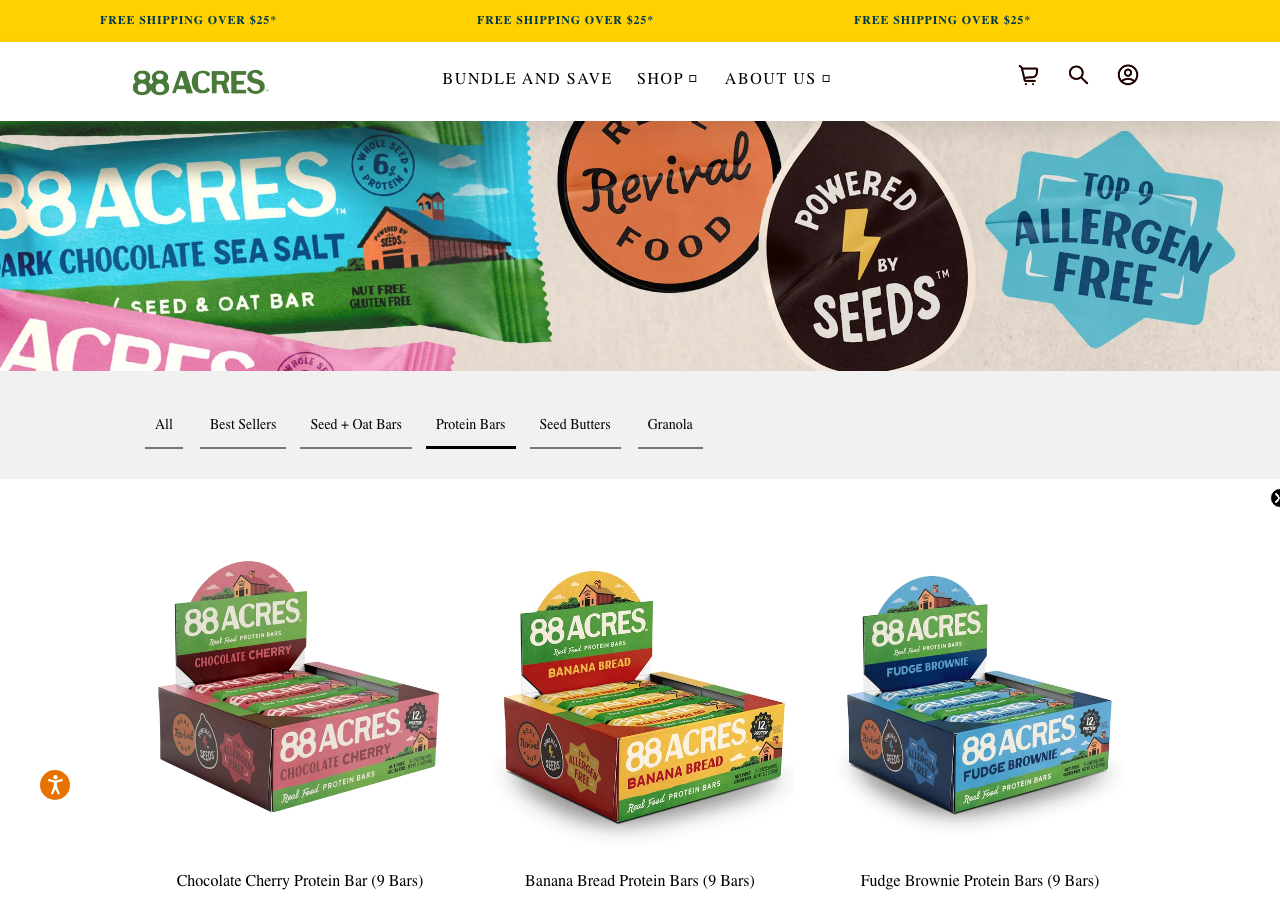
| Protein per bar | 12 g |
| Calories | 260-280 |
| Added sugar | 4-5 g, from maple syrup and brown rice syrup |
| Key ingredients / sweetener type | Pumpkin seeds, sunflower seeds, maple syrup, brown rice syrup, dark chocolate, sea salt. No sugar alcohols, no artificial sweeteners, no seed oil, no isolates. |
| Price per bar | Roughly $2.90-$2.95 in a 9-count box |
| Where to buy | 88acres.com, Staples, Shaw's, and select grocery retailers |
88 Acres is a top-nine-allergen-free bar built entirely around pumpkin and sunflower seeds, which is a genuinely different protein source from every other bar in this roundup. Because the protein comes from whole roasted seeds rather than an extracted isolate, the fat in the bar comes along with it as whole-seed fat, not as an added seed oil, which is a meaningful distinction from bars that list sunflower or canola oil separately as an ingredient. At 4-5 grams of added sugar per bar, sweetened with maple syrup and brown rice syrup, it is one of the lower-sugar picks on this list and carries a full 12 grams of protein, ahead of GoMacro and Health Warrior, and on par with Perfect Bar and Bulletproof. One honest note: we swapped out OWYN's plant-based protein bar, which we had originally shortlisted for this spot, after OWYN's own current product catalog no longer lists a protein bar in its "All Products" section, only shakes and powders. We could not confirm the bar is still an active, in-production product rather than legacy retailer stock, so we are not recommending it here.
6. Bulletproof Collagen Protein Bar: Best Zero-Added-Sugar, Keto-Friendly Pick

| Protein per bar | 11 g |
| Calories | 220 in the Vanilla Shortbread flavor, per third-party nutrition databases; other flavors may vary slightly |
| Added sugar | 0 g added sugar; around 2 g total sugar per bar |
| Key ingredients / sweetener type | Organic cashew butter, grass-fed collagen protein, chicory root inulin, MCT oil, organic chocolate, organic stevia. No sugar alcohols, no artificial sweeteners, though stevia itself is a debated high-intensity sweetener. |
| Price per bar | Roughly $3.00-$4.40 depending on retailer and pack size |
| Where to buy | bulletproof.com, Walmart, Amazon, select grocery chains |
Bulletproof is the only bar of the six with zero grams of added sugar, sweetened instead with stevia and the natural sweetness of its cashew-and-chicory-root base. For anyone specifically avoiding added sugar or sugar alcohols, it is the clearest match of our six picks. The tradeoff is the protein source: collagen protein is not a complete protein in the way whey, egg, pea, or soy protein are, since it is low in tryptophan, and research on collagen's usefulness for muscle-building compared to complete proteins is mixed. If your priority is post-workout muscle repair specifically, Bulletproof is a weaker choice than a complete-protein bar even though its sugar profile beats the other five. It is also not vegetarian-friendly, since collagen is an animal-derived ingredient.
Side-by-Side Comparison: All 6 Bars
| Bar | Protein | Added sugar | Sweetener | Primary protein source |
|---|---|---|---|---|
| GoMacro MacroBar | 10-11 g | 6-8 g | Brown rice syrup | Sprouted rice + pea protein |
| Perfect Bar | 13-17 g | 13 g | Honey | Dairy, egg, rice protein |
| Rise Bar | 15-20 g | ~18 g (varies) | Honey or coconut nectar | Whey or plant protein blend |
| Health Warrior Chia Bar | 3-4 g | 3 g total sugar | Brown rice syrup, agave | Chia seed (low overall protein) |
| 88 Acres Protein Bar | 12 g | 4-5 g | Maple syrup, brown rice syrup | Whole pumpkin + sunflower seeds |
| Bulletproof Collagen Bar | 11 g | 0 g added | Stevia | Grass-fed collagen |
Read this table as a set of tradeoffs, not a ranking by a single number. The lowest-sugar bar (Bulletproof) has the weakest protein-completeness story. The most whole-food bar by ingredient list (GoMacro) still uses a moderate amount of added sugar, just less than most of the others here. The highest-protein bar (Rise Bar) gets there partly from added sugar too. There is no single bar that wins on all seven criteria at once, which is normal for this category and worth remembering the next time a label says "healthiest" without defining the term.
Sugar Alcohols and Digestive Issues: What the Research Actually Says
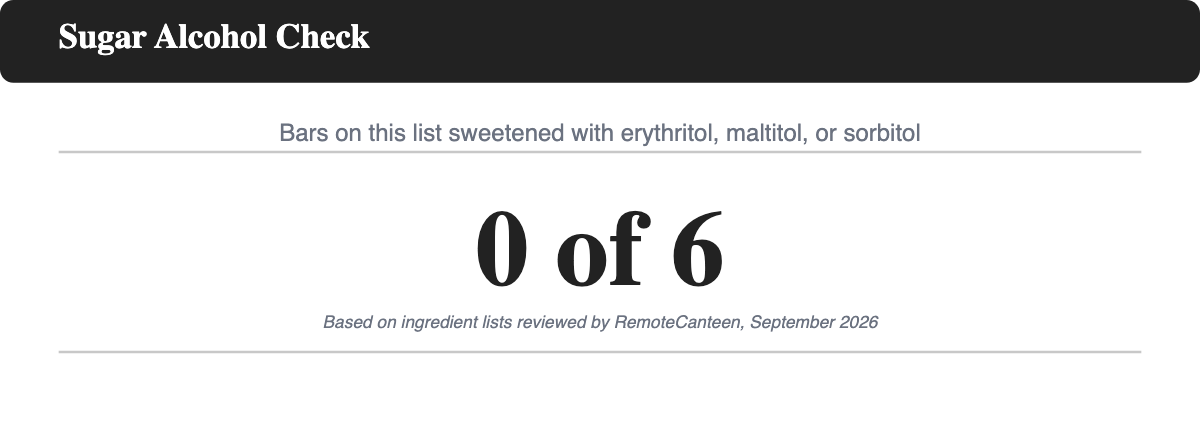
None of the six bars here use sugar alcohols, and that is a deliberate filter, not a coincidence. Erythritol, maltitol, and sorbitol show up in a large share of "low sugar" and keto-marketed protein bars specifically because they add sweetness with minimal impact on blood glucose, but they are poorly absorbed in the small intestine. Unabsorbed sugar alcohols draw water into the colon and get fermented by gut bacteria, which is the well-documented mechanism behind the bloating, gas, and diarrhea that sugar-alcohol-heavy bars are notorious for. Maltitol in particular has one of the higher glycemic responses among sugar alcohols despite being marketed as diabetic-friendly, and doses above roughly 10-20 grams are commonly cited as a threshold for noticeable GI symptoms in sensitive individuals, though individual tolerance varies widely and there is no single universal cutoff backed by consensus research.
This is also where our picks diverge hardest from more mainstream bars. Bars like Quest and some David Protein flavors lean on erythritol or a sugar-alcohol blend to hit their low-net-carb numbers, which is a legitimate way to reduce blood sugar impact but comes with the digestive tradeoff described above. If sugar alcohols cause you problems, all six bars here are made without them.
Artificial Sweeteners vs. Stevia: A Sweetener the Industry Still Argues About
None of the six picks use sucralose or acesulfame potassium, the two most common artificial high-intensity sweeteners in the protein bar category. We are drawing a clear line between those and stevia, which Bulletproof uses. Stevia is plant-derived and generally recognized as safe by the FDA, but it is still a high-intensity sweetener, and some research has raised questions about its effects on gut microbiome composition and, in a smaller body of research, glucose metabolism, with results that are mixed and not fully settled. We are not treating stevia as equivalent to sucralose, since the safety and mechanism data differ meaningfully between a plant-derived compound and a synthetic chlorinated sugar molecule, but we also are not calling stevia risk-free. If you want to avoid all non-nutritive sweeteners, including natural ones, none of the six bars reviewed here are a perfect fit, since five use some form of added sugar and the sixth uses stevia.
Do Seed Oils Belong in a "Healthy" Protein Bar?
Seed oils (sunflower, canola, soybean, and similar high-omega-6 oils) have become a flashpoint in nutrition discussions, with critics pointing to their omega-6-to-omega-3 ratio and the degree of processing required to extract them, while mainstream nutrition bodies generally maintain that seed oils in moderate amounts are not harmful and can be part of a balanced diet. We are not litigating that broader debate here. For this list, we simply checked whether each bar uses a seed oil as its primary fat source or only in a minor, secondary role.
GoMacro, Rise Bar, and Health Warrior use nut or seed butters (peanut, cashew, almond) as their primary fat source with no seed oil in the ingredient list we reviewed. Perfect Bar uses nut butter as its primary fat source but includes a small amount of sunflower lecithin, typically in a chocolate coating, not as the main fat. 88 Acres gets its fat from whole pumpkin and sunflower seeds rather than an extracted seed oil, which is a different category nutritionally since the fiber and micronutrients stay intact. Bulletproof uses cashew butter and MCT oil (derived from coconut, not a seed oil) as its fat sources. If avoiding seed oils entirely, even in small amounts, is a hard requirement for you, GoMacro, Rise Bar, and Health Warrior are the cleanest matches on this specific point.
What We Could Not Verify
In the interest of not fabricating precision we do not have: Rise Bar and Bulletproof do not consistently publish a single calorie count across all flavors in the sources we checked, so we report a range rather than a specific number. Bulletproof's protein bar line has also seen product changes and limited retailer availability over the past couple of years; we confirmed the collagen protein bar collection was live on bulletproof.com at the time of writing, but stock and exact flavor lineup can shift, so confirm current availability before ordering a full case. Exact per-bar pricing varies by retailer, promotion, and pack size for every bar reviewed here; the ranges above reflect standard multi-pack pricing at the time of research, not a guaranteed current price.
Healthiest Protein Bars FAQ
What makes a protein bar "healthy" instead of just high-protein?
Protein content alone does not make a bar healthy. The ingredient quality behind that protein matters just as much: whether it comes from whole foods or isolates, whether the bar relies on sugar alcohols or artificial sweeteners to hit a low-sugar number, and how processed the full ingredient list is. A bar can have 20 grams of protein and still be built almost entirely from isolates, gums, and sugar alcohols.
Are sugar alcohols in protein bars actually bad for you?
Sugar alcohols like erythritol and maltitol are not toxic, but they are poorly absorbed in the small intestine, which is why they commonly cause bloating, gas, or diarrhea, especially in servings larger than a single bar or in people with sensitive digestion. They are a legitimate tool for reducing blood sugar impact, but "no digestive side effects" is not something most sugar-alcohol-sweetened bars can honestly claim.
Is stevia better than sucralose in a protein bar?
Stevia is plant-derived and generally regarded as having a different safety and mechanism profile than sucralose, a synthetic sweetener. That said, stevia is still a high-intensity sweetener, and some research has raised open questions about its effects on gut bacteria and glucose metabolism. Neither is definitively "safe" or "unsafe" in a settled scientific sense; they are simply different categories of sweetener with different research bases.
Why isn't RXBAR or Aloha on this list if they're marketed as whole-food bars?
RXBAR, Aloha, and the other brands on our best protein bars and best tasting protein bars guides are strong bars in their own categories, and we did not want to repeat the same brands across three different lists on this site. This list specifically surfaces bars that get less mainstream attention but hold up just as well, or better, on ingredient-quality criteria.
Which bar on this list has the least added sugar?
Bulletproof's collagen protein bar has zero grams of added sugar, sweetened with stevia instead. Health Warrior's chia bars are next lowest at 3 grams of total sugar per bar, though with a much lower protein count than the other five.
Looking for a general-purpose recommendation instead of an ingredient-first pick? Our best protein bars guide ranks by overall value and protein-per-dollar, our best tasting protein bars guide ranks purely by flavor and texture, and our cleanest protein powder guide applies this same ingredient-quality lens to protein powders instead of bars.