
Soylent Review: Is It Worth Drinking Your Meals?
 By Lisa Benz, Editor-in-chief · Updated Jul 6, 2026 · 8 min read
Disclosure: this article may contain partner links. If you buy through them, we earn a commission at no extra cost to you. The ranking is set by our editors.
Contents
Soylent is a ready-to-drink and powdered meal replacement built around one idea: give people complete nutrition without the time cost of cooking. It started small. A group of software engineers crowdfunded the first batch in 2013, and the brand has since grown into a full product lineup sold direct-to-consumer and through major retailers. Today the company belongs to Starco Brands, which bought Soylent in 2023 and pushed the business toward a subscription-first model instead of the wide retail rollout of its early years.
This review breaks down what Soylent actually contains, what it costs per serving, whether it holds up as a regular part of your diet, and how it stacks up against the two products people search for most as alternatives: Huel and Ka'Chava.
What Is Soylent?
Soylent is a 400-calorie, 20-gram-protein meal-replacement brand sold as ready-to-drink bottles and powders, fortified with 28 vitamins and minerals to stand in for a full meal. The name and concept trace back to Rob Rhinehart's 2013 blog post about building his own food from raw nutrients, an idea that turned into a crowdfunded product and, eventually, a full consumer brand.
You can buy Soylent on soylent.com or through Amazon, Walmart, Kroger, Meijer and HEB. Since the 2023 Starco Brands acquisition, the company has pulled back from some of its earlier retail expansion. E-commerce subscriptions are now the primary channel. What hasn't changed is the pitch: "real science, real nutrition, real food" for people who want to skip a meal without skipping complete nutrition.
Soylent Product Lineup: Meal, Protein, Coffee, and Energy
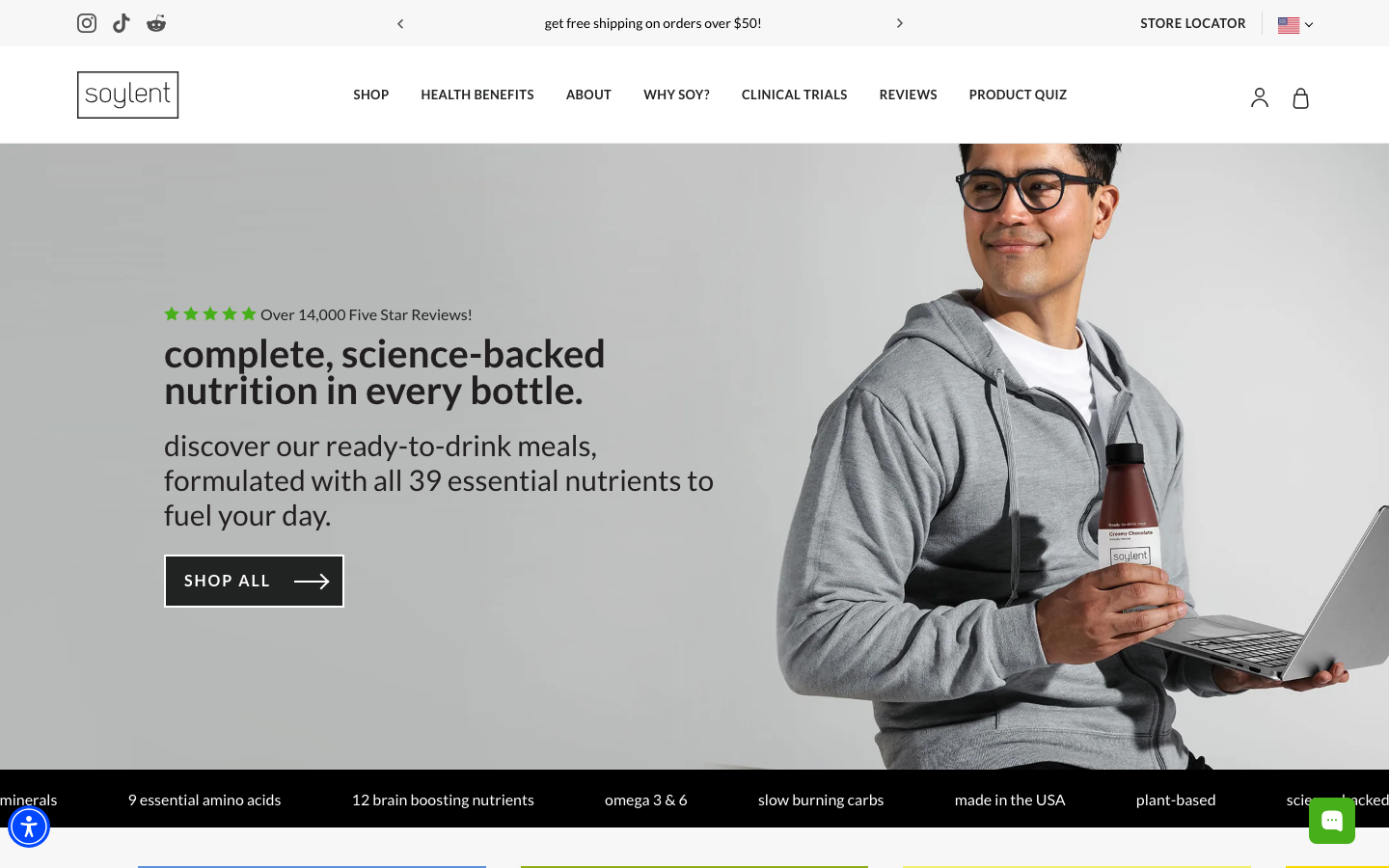
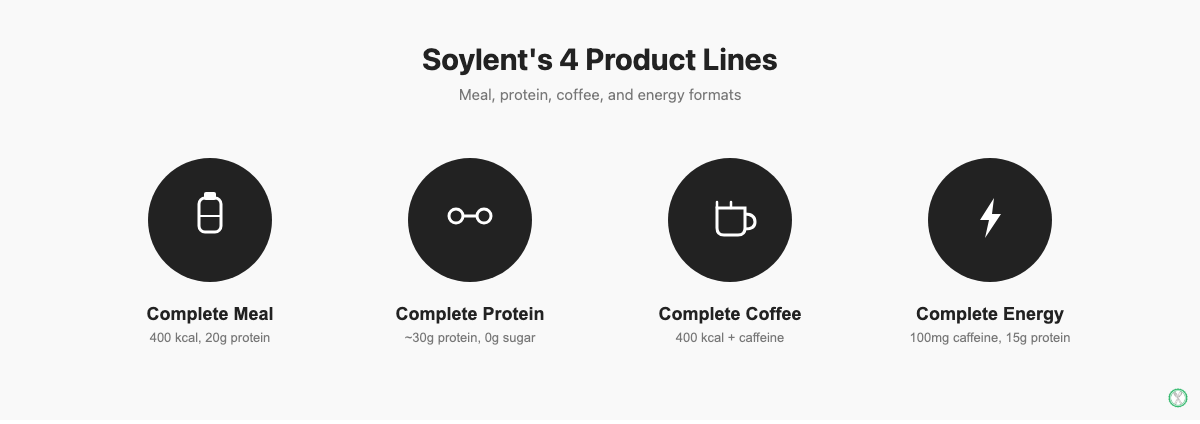
Soylent currently sells four distinct product lines: Complete Meal, Complete Protein, Complete Coffee and Complete Energy, more than most reviews of the brand account for. Older write-ups still describe it as a "drink, powder and cafe" lineup. The current catalog looks different, as the infographic below shows.
| Product | Format | Positioning | Typical rating |
|---|---|---|---|
| Complete Meal | Ready-to-drink bottle or powder | Full meal replacement | 4.5-4.7 stars |
| Complete Protein | Ready-to-drink or powder | High-protein shake, not a full meal | 4.5-4.7 stars |
| Complete Coffee | Ready-to-drink | Caffeinated meal-replacement coffee | 4.5-4.7 stars |
| Complete Energy | Ready-to-drink | Lighter, energy-focused drink | 4.5-4.7 stars |
Star ratings across the lineup run roughly 4.5 to 4.7 out of 5 on Soylent's own site. Review counts range from the hundreds to nearly 10,000 per product, a healthier spread than the brand's early reputation for polarizing feedback might suggest.
Complete Meal
Complete Meal is the original concept and still the anchor product. It's a 400-calorie shake meant to stand in for an actual meal, sold as a ready-to-drink bottle or a powder you mix yourself. Flavors include original, creamy chocolate, strawberry, vanilla and rotating seasonal options like pumpkin spice and gingerbread.
Complete Protein
Complete Protein is a soy protein isolate shake built for topping up your daily protein, not replacing a full meal. It's lighter than Complete Meal, delivers a complete amino acid profile, and carries 0g of sugar.
Complete Coffee
Complete Coffee combines the Complete Meal nutrition profile with caffeine, sold in flavors like Cafe Mocha and Cafe Latte. It's aimed at people who want their morning coffee and breakfast handled in one bottle.
Complete Energy
Complete Energy is the newest and lightest of the four lines, built around 100mg of caffeine plus a nootropic stack (L-theanine, L-tyrosine, alpha-GPC and B vitamins) instead of a full 400-calorie profile. It carries about 15g of protein and 3g of sugar per bottle, vegan, gluten-free and dairy-free like the rest of the lineup. It's positioned as a smart-energy drink rather than a full meal, and it's the product most often missing from older reviews of the brand.
Soylent Nutrition Facts
A standard Complete Meal serving provides about 400 calories, 20g of protein, 21g of fat and 36g of carbohydrates, plus 3g of fiber (the powder version runs closer to 5g). The protein comes primarily from soy protein isolate. The fat is mostly high oleic sunflower oil, and the carbohydrate load leans on slow-digesting sources like isomaltulose and allulose rather than simple sugars. Sweetness comes from sucralose and allulose instead of added table sugar, which keeps most of the lineup at 1g of sugar or less. Each serving is fortified with 28 vitamins and minerals, including vitamin A, D, E and K, calcium, iron and zinc, designed to add up across multiple servings in a day.

| Product | Calories | Protein | Sugar |
|---|---|---|---|
| Complete Meal (drink) | ~400 kcal | 20g | ~1g |
| Complete Protein | Lower, protein-focused | ~30g | 0g |
| Complete Coffee | ~400 kcal | ~20g | Low |
Exact numbers shift slightly by flavor and format. Treat the table above as a representative snapshot, not a fixed spec, and check the label on the specific product you buy.
Is Soylent Healthy?
Used occasionally, yes. Soylent can be a reasonably nutritious stand-in for a rushed meal. It's fortified with a broad spread of vitamins and minerals, built on a complete protein source, and keeps added sugar low across most of the lineup. Nutrition researchers who have reviewed the product generally agree it can improve diet quality for people who would otherwise skip a meal or grab low-quality convenience food instead. Some evidence even points to short-term weight-management support when a shake like this replaces a higher-calorie meal.
The evidence gets thinner for long-term, exclusive use. Soylent hasn't been studied as a sole, permanent food source. Relying on any single formulated product for all your nutrition skips the variety of whole foods that most dietary guidance still recommends. Soylent itself doesn't market the product as a total food replacement. Treat it the same way: a convenient stand-in for some meals, not all of them.
Who Should Be Careful With Soylent
- People with a soy allergy: the primary protein source is soy protein isolate, so Soylent isn't suitable if you have a soy allergy or intolerance.
- People managing iron intake carefully: Soylent contains phytates, which can modestly reduce iron absorption from the same meal.
- Anyone considering it as a total food replacement: it's built and marketed as a stand-in for some meals, not a validated substitute for all food, all the time.
How Much Does Soylent Cost?
Soylent runs roughly $1.50 to $4.50 per serving, with powder at the lower end and ready-to-drink bottles at the higher end, depending on pack size and whether you subscribe. Subscribing generally lowers the per-serving cost compared to a one-time purchase, which fits the brand's current subscription-first push under Starco Brands. Pricing shifts with promotions and pack size, so check the live price on soylent.com or your retailer of choice before buying rather than relying on a fixed number.
A few things move the price up or down in practice:
- Subscription versus one-time purchase: subscribing typically unlocks a lower per-serving rate.
- Product line: Complete Meal and Complete Coffee tend to cost more per serving than the lighter Complete Protein.
- Pack size: larger multi-packs usually bring the per-unit price down.
- Retailer: pricing on Amazon, Walmart or other retail partners can differ from soylent.com's direct pricing.
Soylent Reviews: What Users Actually Say
Soylent's own product ratings sit in a healthy 4.5 to 4.7 star range across its four current lines. Review counts range from several hundred to nearly 10,000 per product, a meaningfully better picture than the brand's early reputation, when a rocky product history and some high-profile complaints followed its first few years on the market.
Independent review aggregators tell a more mixed story. Recurring complaints include an artificial aftertaste on some flavors, occasional digestive adjustment when first switching to a soy-based shake as a regular meal, and friction around subscription cancellation. Some customers report their subscription reactivating after they believed they'd canceled it. None of this means the product is unsafe. It just means realistic expectations matter more than the marketing copy.
Common Complaints to Know Before You Subscribe
- Taste and aftertaste: opinions vary sharply by flavor, and what tastes fine to one person reads as artificial to another.
- Digestive adjustment: switching a meal or two per day to a soy-based shake can cause temporary digestive changes for some people.
- Subscription management: cancel through your account settings and confirm the cancellation went through. Don't assume a single click ended the recurring order.
Soylent vs. Alternatives: Huel and Ka'Chava
Huel and Ka'Chava are the two products people most often cross-shop against Soylent. Each takes a different approach to the same basic idea.
| Product | Calories | Protein | Approx. price/serving | Best for |
|---|---|---|---|---|
| Soylent Complete Meal | ~400 kcal | 20g | $1.82-$3.25 | Lowest-cost full meal replacement |
| Huel Black Edition | ~400 kcal | ~40g | $2.50-$3.31 | Higher protein per meal |
| Ka'Chava | ~240 kcal | 25g | ~$4.66 | Superfood-blend positioning over raw macros |
Soylent is generally the cheapest way to hit a full 400-calorie meal replacement. Huel Black Edition roughly doubles the protein per serving for a modest premium, which matters if you use the shake around workouts or chase a higher daily protein target. Ka'Chava costs noticeably more and delivers fewer calories, but it leans on a much longer ingredient list built around superfoods, greens and adaptogens rather than a lean macro-first formula. That's the trade-off if ingredient positioning matters more to you than cost per calorie.
Priority on lowest cost per meal? Soylent Complete Meal wins. Chasing protein density? Huel Black Edition delivers more per serving. Shopping on ingredient breadth over price? Ka'Chava is the outlier of the group, at a real cost premium.
Frequently Asked Questions
Is Soylent vegan?
Yes, the core lineup is fully vegan, built on soy protein isolate and plant oils rather than any animal-derived ingredient. Soylent's FAQ covers allergen status as a separate question from veganism, so check the label if you're managing an allergy alongside a vegan diet.
Does Soylent expire?
Yes. Ready-to-drink bottles and powder both carry a best-by date printed on the packaging. Store unopened products according to the label, typically in a cool, dry place out of direct sunlight.
Can you drink Soylent every day?
Many people use it for one or two meals a day as a time-saving replacement rather than for all meals. Evidence supporting it as a sole, exclusive food source is limited, so most guidance points toward using it alongside a varied diet, not instead of one.
Who owns Soylent now?
Starco Brands acquired Soylent in 2023 and shifted the company toward a smaller, subscription-focused direct-to-consumer business rather than the broader retail push of its earlier years.
Is Soylent safe if I have a soy allergy?
No. The primary protein source across most of the lineup is soy protein isolate, so Soylent isn't a safe choice if you have a soy allergy.