
Best Tasting Protein Powder: 6 Picks Backed by Real Flavor Science
 By Lisa Benz, Editor-in-chief · Updated Aug 20, 2026 · 11 min read
Disclosure: this article may contain partner links. If you buy through them, we earn a commission at no extra cost to you. The ranking is set by our editors.
Contents
Most protein powder is bought once and never finished. The tub goes stale in a cabinet because the flavor was chalky, too sweet, or left a metallic aftertaste that got worse with every scoop. Taste is not a minor preference here. It is the single biggest factor in whether you keep drinking the shake every day, and the research on supplement adherence backs that up: people stick with what they enjoy, not what has the best amino acid profile on paper.
This guide is a dedicated flavor deep dive, not another "best overall" ranking. We already cover general picks in our best protein powder guide, and that one names Ghost Whey as a taste standout in a single line. Here we go further: six different, taste-focused products, a breakdown of what sweetener chemistry does to your last sip, and one real third-party blind taste test cited by name instead of a made-up panel.
What Makes a Protein Powder Taste Good
Three things separate a protein powder you look forward to from one you choke down: the sweetener, the protein source's natural mouthfeel and how well the powder dissolves. Miss any one of the three and the whole product tastes off, no matter how good the flavor name sounds on the label. Nail all three and taste stops being a gamble.
Sweetener type changes the aftertaste more than the flavor does
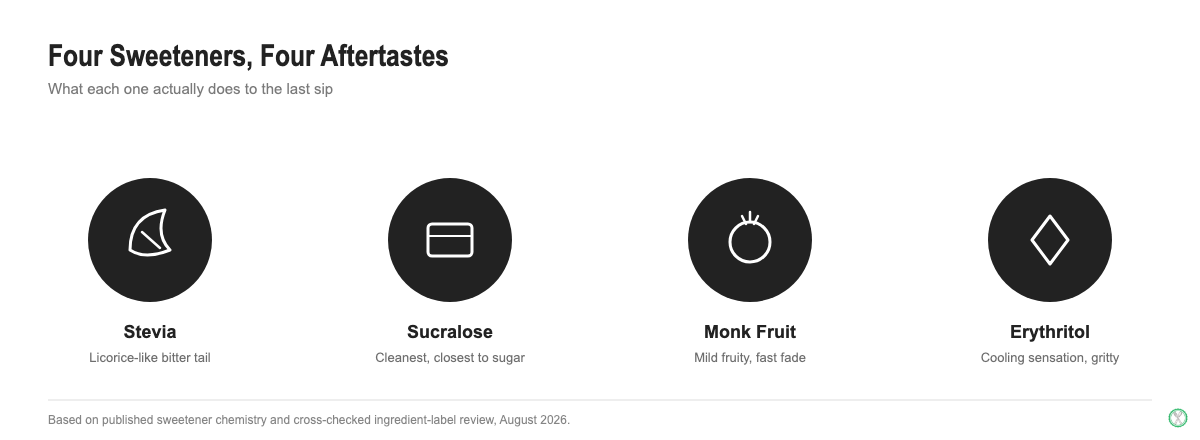
Almost every mainstream protein powder in the United States uses sucralose, acesulfame potassium (often listed as ace-K), stevia, monk fruit, or erythritol, sometimes two at once. Each behaves differently on the tongue:
- Sucralose is the closest match to real sugar's sweetness curve, which is why most of the powders in this guide default to it. It carries little to no bitter tail on its own.
- Acesulfame potassium is almost always paired with sucralose to round out the sweetness profile at high doses, but on its own it can read slightly metallic, which is one reason some tasters complain about an aftertaste even in products that use sucralose too.
- Stevia (steviol glycosides) is plant-derived and increasingly used in "clean label" flavored lines, but it carries a licorice-like bitterness that lingers longer than sucralose, especially in unflavored or low-flavor-load blends.
- Monk fruit tends to taste mild and fruity with a faster fade than stevia, which is why it shows up in newer "natural" formulations trying to avoid the stevia aftertaste complaint.
- Erythritol is a sugar alcohol, not a high-intensity sweetener, so it is usually blended with one of the above. On its own it can produce a cooling sensation on the tongue and a slightly gritty texture at higher concentrations.
None of these is universally "the best." A person who dislikes the stevia aftertaste will prefer a sucralose-sweetened blend even if it is technically less natural, and vice versa. Check the label, not just the flavor name.
Mixability and grittiness come from the protein source, not the flavoring
The filtering process explains most of it. Whey protein isolate mixes the cleanest because most of the fat and lactose has been filtered out, which is also why isolate-heavy powders often taste thinner and less "milkshake-like" than a whey concentrate or a whey-casein blend. Casein and milk protein isolate add body and a creamier mouthfeel but dissolve more slowly and clump more easily in a shaker bottle without a blender. Plant proteins sit at the grittiest end of the spectrum by default, a separate topic covered in our best vegan protein powder guide. Every pick below is whey-based for that reason: it is still the format most consistently rated highest for taste and texture in the reviews and buyer feedback we checked.
The 6 Best-Tasting Protein Powders We Found
We checked every product below against its own current product page and cross-checked it against at least one independent source. None of these six appear in our other protein powder guides on this site. If you have already read our roundups for muscle gain or protein powder for women, everything here will be new to you.
BSN Syntha-6: the dessert-blend milkshake texture
Syntha-6 blends whey concentrate, whey isolate, calcium caseinate, micellar casein and milk protein isolate. That five-source mix is why it reads thicker and creamier than a straight isolate. BSN leans into dessert-style flavor names like Chocolate Cake Batter and Cinnamon Toaster Pastry, and buyer feedback consistently describes the texture as closer to a milkshake than a typical protein shake.
| Attribute | Detail |
|---|---|
| Type | Whey concentrate, whey isolate, casein and milk protein blend |
| Protein per serving | 22 g |
| Calories | 190 |
| Sugar | 2 to 3 g, varies by flavor |
| Sweetener | Sucralose and acesulfame potassium (no stevia) |
| Flavors available | 8, including Blueberry Pancake, Chocolate Milkshake, Cookies & Cream, Fruity Cereal |
| Format | Powder tub, 28 to 97 servings depending on size |
| Price per serving | $1.83 (28-serving tub, verified on brand site) |
| Rating | Not disclosed for the specific flavor variant we checked; the listing showed zero submitted reviews at time of research |
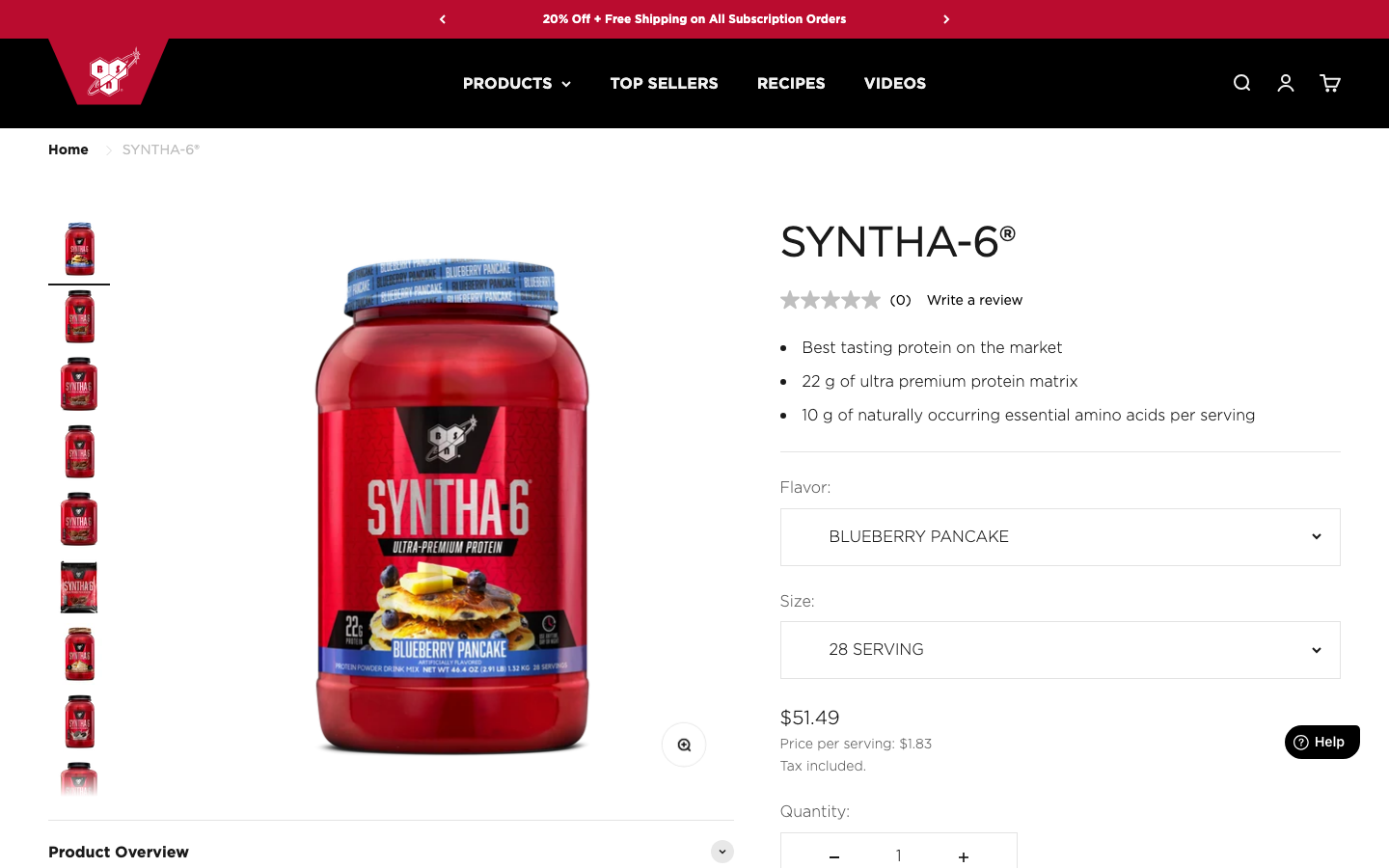
The tradeoff for that creamy texture is a longer ingredient list and a lower protein-per-calorie ratio than the isolates further down this list. If you want maximum flavor indulgence and do not mind extra calories from the added fats and fiber sources, this is one of the more consistently praised dessert-style blends on the market.
Cellucor Cor-Performance Whey: the whipped-texture pick
Cellucor markets this specifically around a "whipped" mouthfeel, most associated with its Whipped Vanilla flavor, which several buyer and forum reviews compare to a Vanilla Nesquik-style drink rather than a standard chalky shake. It is built on a whey isolate and concentrate matrix with added digestive enzymes, which the brand positions as a mixability and digestion aid rather than a flavor feature.
| Attribute | Detail |
|---|---|
| Type | Whey isolate and concentrate blend with digestive enzymes |
| Protein per serving | 25 g |
| Calories | Sources disagree: nutrition databases list 120, while the printed 4 g carb / 1.5 g fat macros calculate closer to 129 to 130. We report both rather than pick one. |
| Sugar | Not disclosed in the sources we checked |
| Sweetener | Sucralose and acesulfame potassium |
| Flavors available | Multiple, including Whipped Vanilla and Molten Chocolate |
| Format | Powder tub, 26 to 76 servings depending on size |
| Price per serving | $1.19 on the smaller 26-serving tub, dropping to roughly $0.96 on the largest 4 lb size |
| Rating | Not disclosed; treat any star rating you see on a retailer page as that retailer's own aggregate, not a verified third-party score |
This is one of the better value picks on the list once you buy the larger tub, and it is a reasonable middle ground between Syntha-6's dessert thickness and a plain isolate's thinner mouthfeel.
PEScience Select Protein: the biggest flavor lineup
Select Protein is a whey and casein blend built around milk protein isolate. It has built a reputation in supplement review circles for consistently landing on "best tasting" shortlists release after release. Flavor count is where it separates itself. PEScience runs more than a dozen options at any given time, including rotating limited releases like Island Cookie plus mainstays like Cake Pop, Snickerdoodle and Chocolate Peanut Butter Cup.
| Attribute | Detail |
|---|---|
| Type | Whey and casein blend, milk protein isolate primary source |
| Protein per serving | 24 g per 31 to 32 g scoop |
| Calories | Approximately 110 to 120, sources vary by flavor |
| Sugar | Approximately 1 g |
| Sweetener | Sucralose and acesulfame potassium, both described as trace-level |
| Flavors available | 10+, including Cake Pop, Snickerdoodle, Cookies N Cream, Island Cookie |
| Format | Powder tub, 27-serving standard size plus a 5-serving trial size |
| Price per serving | Not confirmed on the official product page during this research; third-party retail listings put it in the $1.50 to $2.00 range, but we could not verify that directly and are flagging it as unconfirmed rather than reporting it as fact |
| Rating | Repeatedly named a top-tasting pick across independent supplement review sites, though we could not find one single numeric aggregate score to cite |
If flavor variety is your main criterion, meaning you want to rotate flavors constantly instead of committing to one tub, this is the strongest option on the list for that specific use case.
Isopure Zero Carb and Naturally Flavored: the clean-isolate pick
Isopure is a 100% whey protein isolate line, and it is worth calling out for a different reason than the others: the brand runs two sweetener systems across its lineup. The Zero Carb flavored line uses sucralose, while the separate Naturally Flavored line switches to steviol glycosides, meaning stevia. That gives you a real choice inside one brand if you know which aftertaste you tolerate better, something none of the other five products on this list offer.
| Attribute | Detail |
|---|---|
| Type | 100% whey protein isolate |
| Protein per serving | 25 g (flavored Zero Carb line) |
| Calories | Approximately 100, based on the unflavored version's confirmed label; flavored variants were not fully confirmed and may run slightly higher |
| Sugar | 0 g on the Zero Carb line |
| Sweetener | Sucralose (Zero Carb line) or steviol glycosides / stevia (Naturally Flavored line, sold separately) |
| Flavors available | 8, including Banana Cream, Dutch Chocolate, Toasted Coconut, Vanilla Salted Caramel |
| Format | Powder tub; also sold as a ready-to-drink bottle |
| Price per serving | One 3 lb listing showed $2.58 per serving, which is high for this category; we saw meaningful price swings by retailer and package size and would treat any single figure here as a snapshot, not a guarantee |
| Rating | Not disclosed |
Because it is a pure isolate with no casein or added fiber, it mixes thin rather than creamy. If you specifically dislike thick, milkshake-style shakes, that thinness is a feature, not a downside.
Redcon1 Isotope: the zero-sugar keto-friendly isolate
Isotope is a plain 100% whey isolate with zero added sugar and zero grams of lactose, positioned toward the keto and low-carb audience. Three flavors, not a dozen. That smaller lineup is a real tradeoff: less choice, but a tighter, more focused formulation with less room for any single flavor to miss.
| Attribute | Detail |
|---|---|
| Type | 100% whey protein isolate |
| Protein per serving | 25 g |
| Calories | Sources disagree between 110 and 120 per serving; we report both figures rather than pick one |
| Sugar | 0 g, zero added sugar |
| Sweetener | Sucralose and acesulfame potassium |
| Flavors available | 3 core flavors: Vanilla, Chocolate, Peanut Butter Chocolate |
| Format | Powder tub, lactose-free |
| Price per serving | Not confirmed; we could not source a reliable current price during this research and are flagging it as a gap rather than estimating |
| Rating | Not disclosed |
This is the pick for someone who wants a clean, low-carb macro profile first and is willing to trade flavor variety for that.
Muscle Milk 100% Whey: the real cited blind-taste-test winner
This is the one product on this list backed by an actual documented blind taste test rather than only marketing copy or scattered buyer reviews. Treeline Review ran a multi-state blind panel, unmarked samples identified only by number, tasted side by side in both hot and cold liquid, and named Muscle Milk 100% Whey its "Best Budget" pick. Their exact assessment: "good flavor and mixability given the affordable price per gram," while also noting it was "too sweet" for some testers and "could mix better in cold water."
One naming note worth flagging: Muscle Milk sells multiple product lines under similar names. This entry is specifically the 100% Whey line (25 g protein, 140 calories per serving), not the higher-calorie Muscle Milk Genuine line (32 g protein, roughly 270 calories per serving) that shows up in other roundups. Check the label before buying, since the two are easy to mix up on a store shelf.
| Attribute | Detail |
|---|---|
| Type | Whey concentrate and isolate blend |
| Protein per serving | 25 g |
| Calories | 140 per 1/2 cup serving |
| Sugar | 2 g (Vanilla) |
| Sweetener | Sucralose and acesulfame potassium |
| Flavors available | Vanilla and Chocolate confirmed; full current lineup not fully verified |
| Format | Powder tub, NSF Certified for Sport |
| Price per serving | Not precisely confirmed, but consistently one of the more affordable options in this category based on mass-retail availability |
| Rating | Named "Best Budget" in Treeline Review's blind taste-test panel (January 2026 update) |
How We Evaluated Taste
We did not run our own in-house blind panel for this article, and we would rather tell you that directly than imply we did. What we did instead was cross-check four separate types of evidence for every product: verified-purchase buyer review language, the actual sweetener and ingredient declared on each brand's current label, one real cited third-party blind taste test where a product's result was directly relevant, and each brand's own published nutrition panel to catch inconsistencies between sources.
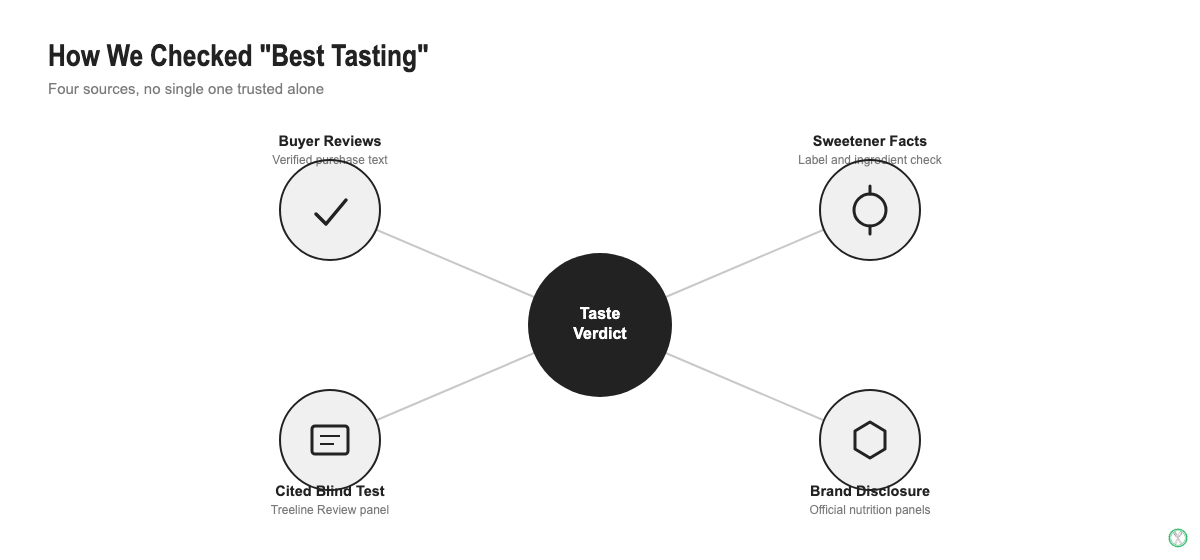
Where two credible sources gave different numbers, such as Cellucor's calorie count or Redcon1's calorie count, we reported both instead of silently picking the more flattering one. Where a fact was not published anywhere we could verify, such as exact per-serving pricing for PEScience and Redcon1 at the time of this research, we marked it "not confirmed" rather than estimating a number and presenting it as fact.
Sweetener Type Comparison
| Sweetener | Sweetness profile | Aftertaste | Used in |
|---|---|---|---|
| Sucralose | Closest match to sugar's sweetness curve | Minimal on its own | All 6 picks in this guide use it, alone or paired with ace-K |
| Acesulfame potassium | High-intensity, usually paired rather than solo | Can read slightly metallic at high concentration | Paired with sucralose in 5 of the 6 picks |
| Stevia (steviol glycosides) | Plant-derived, strong sweetness | Licorice-like bitter tail that lingers | Isopure Naturally Flavored line only, among products in this guide |
| Monk fruit | Mild, fruity | Fast fade, less lingering than stevia | Not used in any of our 6 picks; more common in newer "clean label" brands |
| Erythritol | Low-intensity sugar alcohol, usually a blend partner | Cooling sensation, can feel gritty at higher doses | Not used in any of our 6 picks |
Frequently Asked Questions
Does sweetener type matter more than flavor name?
Yes, more than most buyers expect. Two tubs with the same "chocolate" flavor name can taste completely different depending on whether the brand uses sucralose alone, sucralose with acesulfame potassium, or stevia. If you have disliked protein powder in the past, checking the sweetener on the label before buying again is a better filter than picking by flavor name alone.
Why do whey isolates taste thinner than whey blends?
Isolate has had most of the fat, lactose, and other milk solids filtered out during processing, which is what makes it leaner in calories and carbs, but that same filtering strips out the components that give a blend its thicker, creamier mouthfeel. A whey concentrate or whey-casein blend like Syntha-6 or Select Protein will generally feel richer than a pure isolate like Isopure or Isotope.
Is Ghost Whey still the best-tasting protein powder overall?
It is a strong pick, and it is what we name in our general best protein powder roundup. We left it out of this guide on purpose, along with several other already-reviewed brands on this site, so the article could cover new ground instead of repeating the same recommendation. Want the broadest overview? Start there. Want alternatives with a documented taste case behind them? The six products above are it.
What if I want a protein powder for a specific goal, not just taste?
This guide is intentionally narrow. For a protein powder chosen around a training goal, see our best protein powder for muscle gain guide, or our best protein powder for women guide if you want picks built around a different set of nutrition priorities.