 Nutrition editor
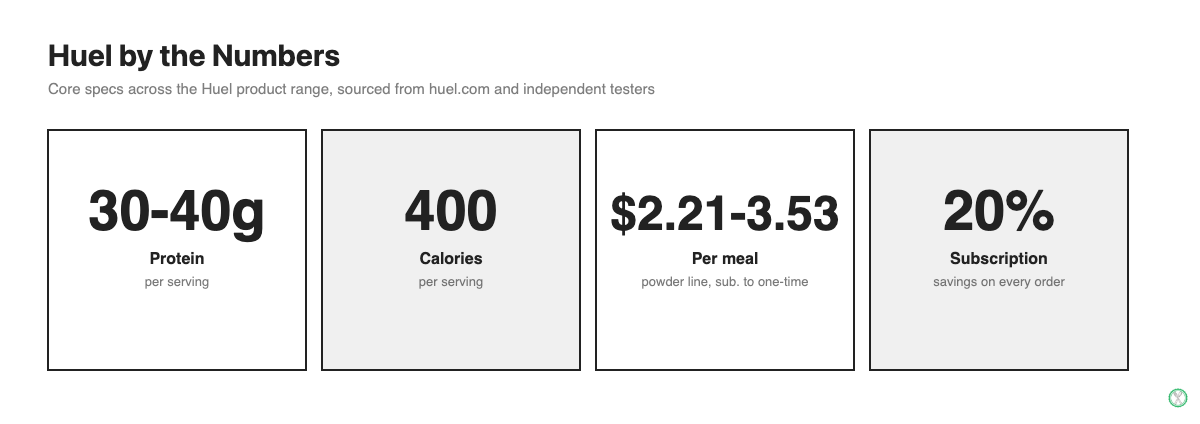
Huel costs between $1.50 and $6.04 per serving depending on the format, delivers 30 to 40 grams of protein per 400-calorie meal, and splits reviewers on taste: expert testers rate it anywhere from 3 to 5 out of 5 depending on the product line. That’s the short version. This review breaks down what’s actually in the bag or bottle, what it costs across all four product lines, what a doctor and a dietitian say about using it daily, and how it stacks up against Ka’Chava and Soylent, so you can decide if it belongs in your kitchen.
Huel Review 2026: Quick Verdict
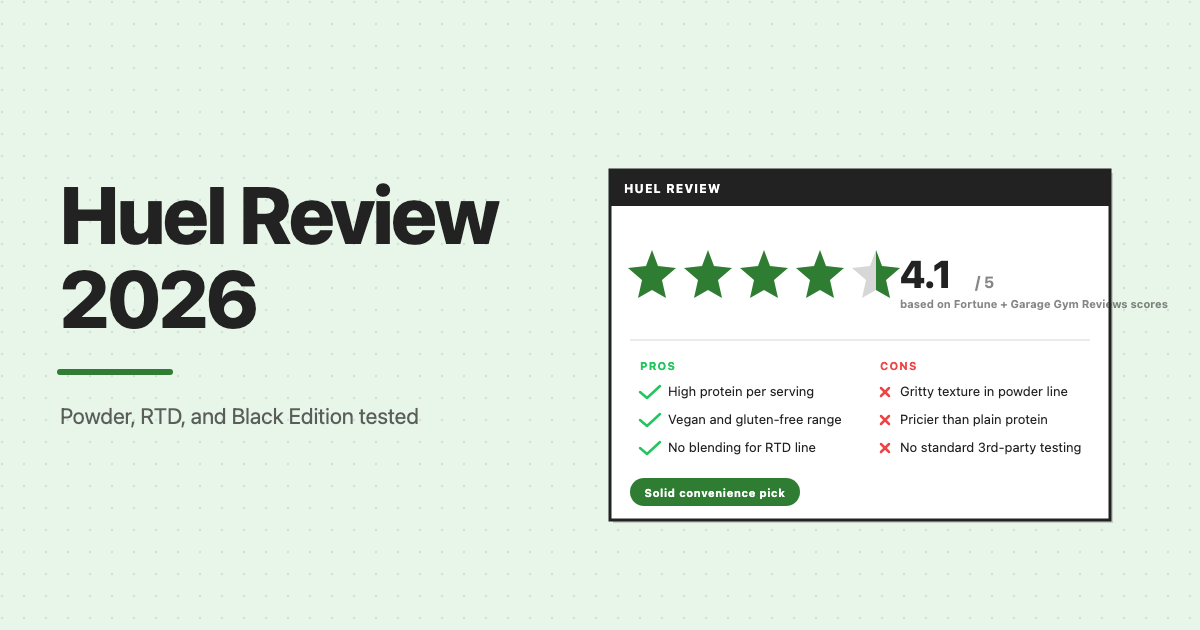
Huel earns its reputation as one of the most practical meal-replacement systems on the market. A 400-calorie serving typically carries 30 to 40 grams of protein, full vitamin and mineral coverage, and a vegan, gluten-free formula across most of its lineup. It isn’t cheap at full price, and testers across multiple outlets flag a gritty texture or plant-protein aftertaste as the main letdown. Doctors and dietitians add a genuine caveat too: Huel is convenient, not a substitute for whole foods every day. Treat it as a tool for busy weeks, not your only source of nutrition, and it earns its place in the fridge.
Huel Product Lineup and Pricing (2026)
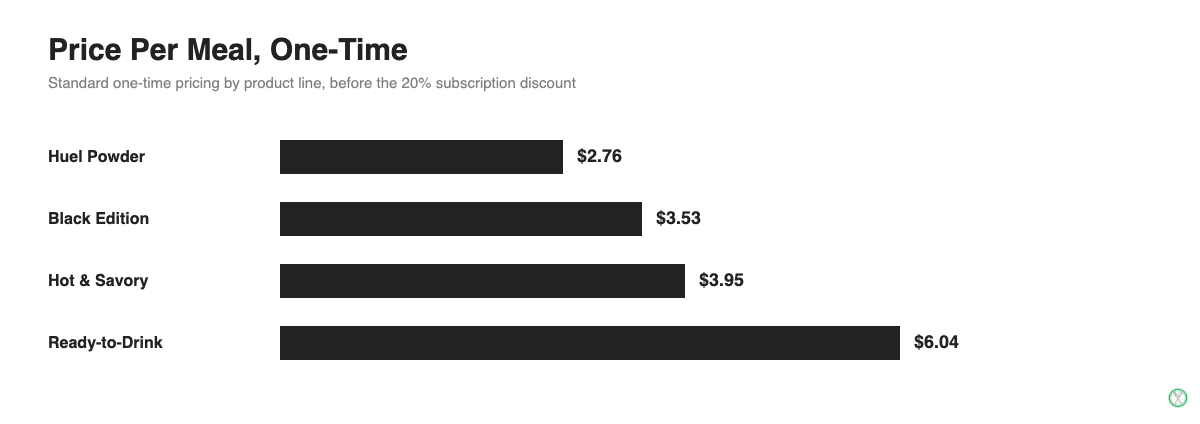
Huel isn’t one product, it’s a full range of nutritionally complete meals. The numbers below reflect standard one-time pricing plus the discounted subscription rate, sourced from Huel’s own product pages and cross-checked against independent testing at Fortune and Garage Gym Reviews as of 2026.
| Product | Format | Calories/serving | Protein/serving | Price per meal (one-time / subscription) | Dietary tags |
|---|---|---|---|---|---|
| Huel Powder | Powder, mix with water | 400 | 30g | around $2.76 / $2.21 | Vegan, gluten-free, non-GMO |
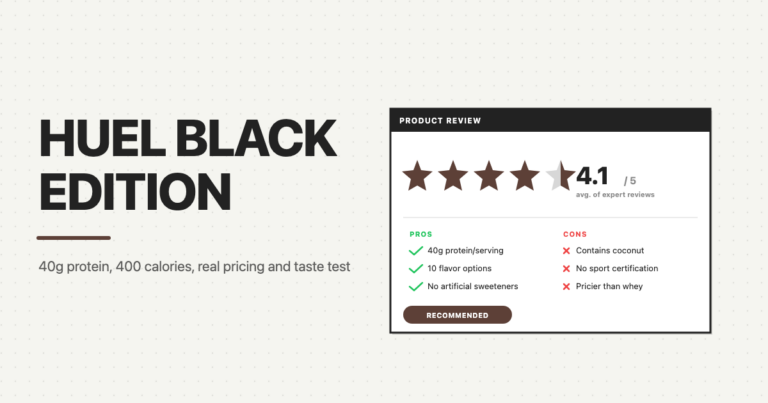
| Huel Black Edition | Powder, mix with water | 400 | 40g | $2.65/meal ($45/bag) | Vegan, gluten-free, lower carb |
| Huel Ready-to-Drink (Black Edition) | Bottled shake | 400 | 35g | $4.83/bottle sub ($58) / $6.04 one-time ($72.50 for 12) | Vegan, gluten-free |
| Huel Hot & Savory | Instant meal pouch | 400 | up to 25g | $3.95/meal ($27.65/pack) | Mostly vegan, gluten-free |
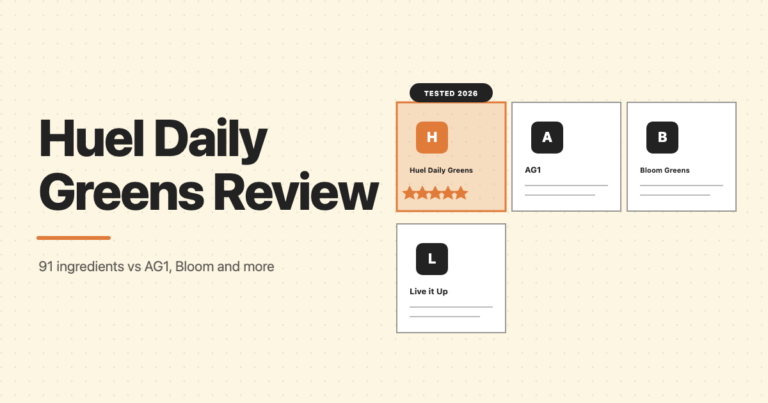
| Huel Daily Greens | Supergreens powder | 25 | minimal | $1.50/serving ($45/bag) | Vegan |
Star ratings vary by source and product line instead of settling on one number. Fortune’s testers gave the Black Edition Ready-to-Drink shake a 4 out of 5 overall, while Garage Gym Reviews scored the Black Edition powder 4.05 to 4.2 out of 5 depending on the exact test run. Trustpilot’s aggregate sits well above 27,000 reviews and trends positive on taste and quality. Subscribing knocks 20% off every recurring order across the whole Huel ready to drink and powder range.
What Is Huel?
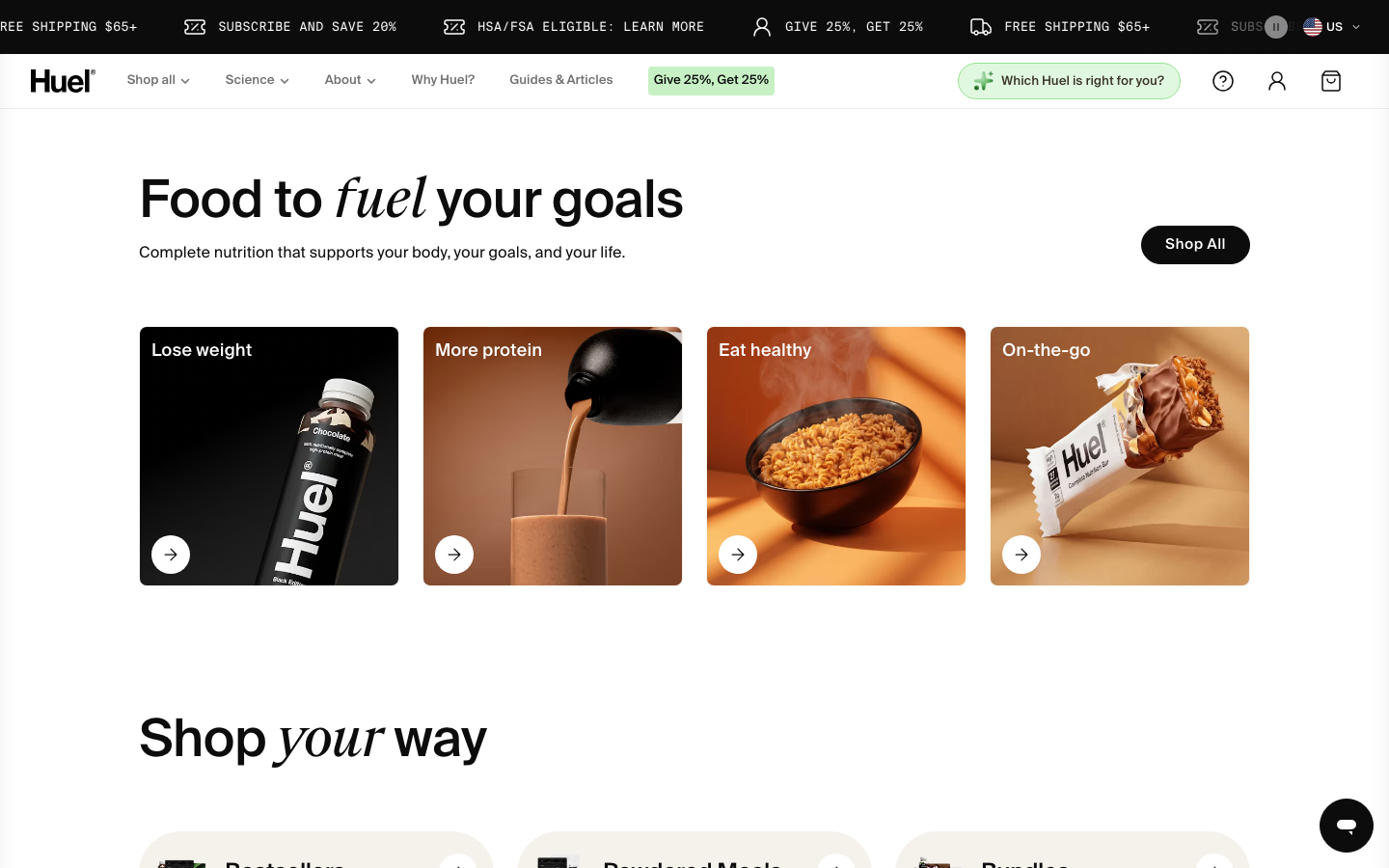
Huel is a UK-founded nutrition brand that launched in 2015 with a single powder built to deliver a complete day’s worth of nutrients in a shake. The name is a mashup of “human” and “fuel,” and that’s genuinely the whole pitch: food that covers your nutritional bases without the shopping, chopping, or cleanup. The lineup has since grown into ready-to-drink bottles, instant hot meals, protein powder, a greens supplement, and snack bars, all built around the same idea of hitting full nutritional completeness (protein, carbs, fats, fiber, and 26 to 27 essential vitamins and minerals) in a format you don’t have to cook. Huel has expanded well beyond its UK roots and, as of 2026, sells directly online and through US retailers including Target and GNC, alongside Amazon.
Most of Huel’s calories come from oats, and protein is built primarily on pea and rice sources rather than dairy-based whey, which is why the brand markets nearly its entire range as vegan. Flaxseed and MCTs from coconut supply most of the fat content, and a vitamin-and-mineral blend is added to each formula to round out the “nutritionally complete” claim rather than leaving it to whole-food ingredients alone. That blend-and-fortify approach is exactly what critics point to when they call Huel ultra-processed, a topic covered in detail further down.
What Does Huel Taste Like? Texture and Flavor
Huel tastes fine, not exceptional, and that’s the consistent verdict across every independent tester who has put a spoon or bottle to the test. Fortune’s reviewer scored the Black Edition Ready-to-Drink shake 3 out of 5 on taste, describing a noticeable plant-based protein flavor that tastes distinctly different from a whey shake. Garage Gym Reviews landed closer to the other end for the Black Edition powder, rating taste 4 out of 5 in their formal scorecard, while still flagging grittiness as a separate, lower-scoring category. Don’t expect one universal opinion; taste reads differently depending on the exact product, flavor, and how well it’s mixed.
Grittiness is the most repeated complaint in both professional reviews and everyday customer reviews. A shaker bottle with a built-in mixing ball, or a blender, tends to smooth this out, though it doesn’t disappear entirely. Unflavored and Unsweetened is the least polarizing option if grittiness or added sweetness bothers you. The Ready-to-Drink bottles skip the mixing step entirely and land closer to a standard protein drink texture than the powder does, though the same plant-protein aftertaste follows through.
- Huel Ready-to-Drink flavors: Banana, Berry, Chocolate, Cinnamon Roll, Iced Coffee Caramel, Salted Caramel, Strawberry, Vanilla (8 total)
- Huel Black Edition RTD flavors: Chocolate, Chocolate Peanut Butter, Strawberry Banana, Cookies & Cream, Vanilla, Iced Coffee (6 total)
- Hot & Savory: a genuinely pleasant surprise for several reviewers, with Thai-style curry and pasta options landing better than the shake line for people who want something that reads as an actual meal rather than a drink
- Huel bars: an underrated format according to long-term Reddit users, who call them filling relative to their calorie count and worth trying even if you’re skeptical of the shakes
Side effects worth flagging before you order: a handful of reviewers mention mild bloating or gas in the first week, almost always tied to the fiber load rather than a specific ingredient. That settles down for most people within a few days as their gut adjusts. Solubility, meaning how well the powder actually dissolves rather than clumping at the bottom of the shaker, gets consistently strong marks from testers who use a proper shaker bottle with a mixing ball.
Pros and Cons of Huel
Pros
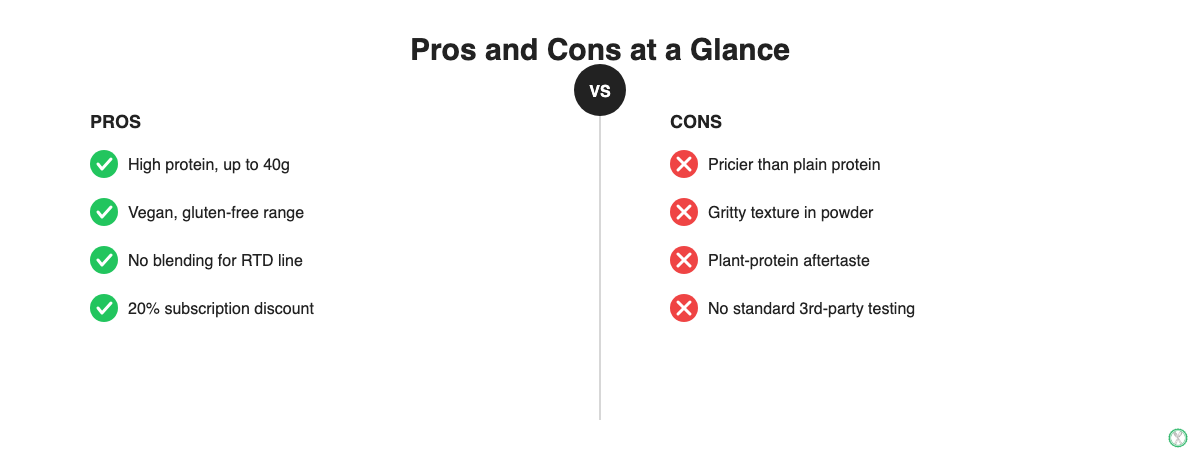
- High protein per serving, from 30g in the standard Powder up to 40g in Black Edition
- Fully vegan and gluten-free across most of the range, with no artificial colors or flavors
- No blending equipment needed for the ready-to-drink line
- Subscription knocks 20% off every order, with an added discount on orders over $120
- Wide format choice: powder, bottled shake, hot meal, protein powder, bars, and a greens mix
Cons
- Full price runs noticeably higher than a bag of plain whey or pea protein
- Testers consistently report a gritty texture in the powder line, even after thorough mixing
- A plant-protein aftertaste shows up in reviewer notes across both powder and ready-to-drink formats
- Third-party lab testing isn’t standard across the range, a gap Garage Gym Reviews called out directly
- Daily reliance runs against the ultra-processed-food caution that doctors and dietitians raise
Is Huel Healthy?
Huel is healthy enough to use regularly as a convenience option, but it shouldn’t become your only source of food. That’s the consistent read from both a UK GP and a registered dietitian who’ve reviewed the brand independently. Dr. Avni Sheth, writing a clinical review of Huel, put it plainly: Huel “can be a useful short-term convenience tool for calorie control and structured eating,” but as a daily meal replacement “it is still an ultra-processed food and lacks the diversity of whole-food phytonutrients and fibre needed for long-term gut and metabolic health.” Huel Powder carries 7 to 8 grams of fiber per serving, which sounds solid until you consider it comes almost entirely from oats and flaxseed rather than the wider mix of plant fibers your gut bacteria actually need. Relying on Huel exclusively risks narrowing that fiber diversity over time, and it may worsen symptoms for anyone with IBS or existing food sensitivities.
The practical guidance from both clinical sources lines up: use Huel two to three times a week for genuine convenience, not as a full daily replacement for every meal. Start with one meal a day and increase gradually if your body tolerates it well, rather than swapping every meal at once, since a sudden jump in fiber and a shift away from whole foods can trigger bloating or digestive discomfort in the first week or two.
- Use with caution if: you have IBS or a sensitive gut
- Use with caution if: you have a coconut allergy, since coconut appears in several formulations
- Use with caution if: you’re planning to replace every meal, every day, long term
Huel vs. Ka’Chava vs. Soylent: How the Complete-Food Brands Compare
Huel isn’t the only nutritionally complete meal-replacement brand worth considering. Here’s how the three biggest names stack up on price, protein, and calories per serving.
| Brand | Price per serving | Calories | Protein | Format |
|---|---|---|---|---|
| Huel Black Edition (powder) | $2.65 subscription | 400 | 40g | Powder, RTD, hot meals, bars |
| Ka’Chava | $3.99 subscription / $4.66 one-time | 240 | 25g | Powder only |
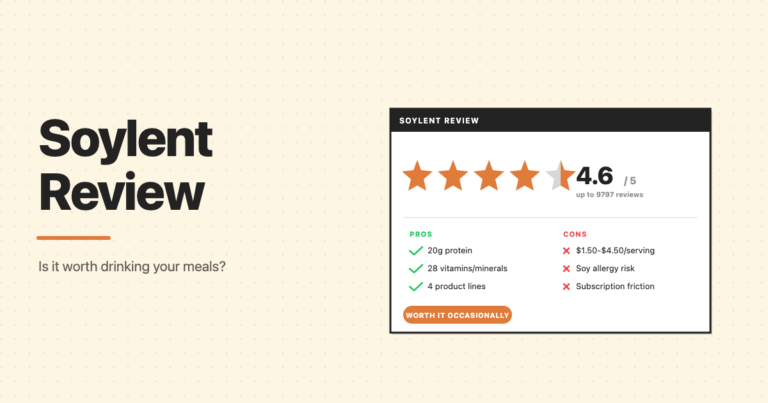
| Soylent | roughly $1.75 to $2.80 | 400 | 20g | Powder and ready-to-drink |
None of the three is a strict upgrade over the others, and that’s fine. Soylent wins on price per serving for anyone counting every dollar. Ka’Chava wins on ingredient breadth for anyone who wants a superfood blend, with adaptogens, greens, and probiotics folded into the formula, though it delivers fewer calories and less protein per serving than the other two. Huel wins on protein-to-calorie efficiency and format variety, since no competitor matches its spread of powder, ready-to-drink, hot meal, and bar options under one brand. The right pick depends on whether you’re optimizing for protein grams, price per serving, or a wider spread of superfood-style ingredients.
Who Huel Is Best For (and Who Should Skip It)
Best for
- Busy professionals and students who skip meals rather than prep something balanced
- Vegans and vegetarians who want a reliable, complete-protein option without extra planning
- Travelers who need something shelf-stable and quick between flights or meetings
- Anyone who wants precise calorie and macro control without weighing out ingredients, similar to readers comparing the best meal replacement shakes overall
Not ideal for
- Anyone with IBS or a sensitive gut, given the concentrated fiber and plant-protein load
- People with a coconut allergy, since coconut appears in several formulations
- Whole-food purists who want to avoid ultra-processed ingredients as a rule
- Anyone hoping to use Huel as a full daily replacement long term rather than an occasional convenience tool
If Huel’s plant-protein taste isn’t your thing, it’s also worth checking a dedicated best protein powder comparison or, for the snackable format, the best protein bars for options built around whey instead of pea protein.
How to Order Huel: Subscriptions, Shipping, and Returns
Subscribing knocks 20% off every recurring order, and Huel adds a further discount on orders over $120. Standard shipping typically runs a flat fee around $9 on smaller orders, with free shipping above roughly $59 to $65; priority shipping is also available for an added cost. Canceling isn’t a hassle: log into your Huel account, open My Subscriptions, and cancel from there, or simply pause a delivery if you just want a break rather than a full cancellation. Canceling a subscription doesn’t delete your account, so placing a one-off order later is still an option.
- Subscription cadence is flexible: choose delivery every 1, 2, 3, or 4 weeks and adjust anytime
- Skip or pause a delivery from your account without canceling outright
- Unopened items can be returned within Huel’s standard return window; check the current policy on huel.com at checkout since return terms can change
- Available direct from huel.com, plus Amazon, Target, and GNC in the US as of 2026
Huel FAQ
Does Huel actually taste good?
It’s decent, not exceptional. Testers consistently note a mild plant-protein aftertaste and, in the powder line, a gritty texture that persists even after thorough mixing. Ready-to-Drink bottles and Hot & Savory meals tend to land better with first-time users than the mixed powder does.
How much does Huel cost per month?
Budget roughly $60 to $100 a month if you’re replacing five to seven meals a week with subscription pricing. It’s a wide range because the exact figure depends heavily on which product line you choose and how many meals you’re replacing.
Are there any side effects?
Some users report bloating, gas, or loose stools when they start, largely from the concentrated fiber load. Easing in with one meal a day rather than a full switch tends to reduce this. Anyone with IBS or a known food sensitivity should talk to a doctor before making Huel a daily habit.
Can Huel help with weight loss?
Huel isn’t marketed as a weight-loss product, but its consistent calorie and macro counts make portion control easier for people who overeat when meals aren’t pre-measured. Weight loss still comes down to overall calorie balance, not the product itself.
Where can I buy Huel?
Directly through huel.com, plus Amazon, Target, and GNC in the US as of 2026. Buying direct from Huel is usually the only way to access the full subscription discount.
Is Huel vegan?
Most of the range, including Huel Powder, Black Edition, and Ready-to-Drink, is fully vegan. Always check the label on newer or limited-run flavors, since formulations occasionally shift.
Is Huel better than Soylent or Ka’Chava?
Not universally. Huel generally wins on protein-to-calorie efficiency and product-format variety, Soylent tends to run cheaper per serving, and Ka’Chava leans into a broader superfood ingredient list at fewer calories and less protein. The best fit depends on what you’re optimizing for, not a single winner across the board.