
Huel Alternatives: 5 Meal Replacement Brands Worth Trying in 2026
 By Lisa Benz, Editor-in-chief · Updated Jul 29, 2026 · 6 min read
Disclosure: this article may contain partner links. If you buy through them, we earn a commission at no extra cost to you. The ranking is set by our editors.
Contents
- Why Look for a Huel Alternative?
- Huel Alternatives Compared at a Glance
- Ka'Chava: Best Whole-Food Blend Alternative
- Soylent: Best Budget Alternative
- Saturo: Best Ready-to-Drink Import
- Ample: Best Keto-Friendly Alternative
- OWYN: Best Allergen-Free Alternative
- Which Huel Alternative Should You Choose?
- Frequently Asked Questions
Huel built its name on convenience. Mix a scoop of powder or crack open a bottle, and you have a full meal in under a minute. It is not the only complete-food brand doing this anymore. And it is not automatically the best fit for every reader on this page.
This guide walks through five credible Huel alternatives sold in the United States right now: Ka'Chava, Soylent, Saturo, Ample and OWYN. Every brand gets the same treatment below. Price per serving, calories, protein, format and flavors, side by side, so you can compare them on equal terms instead of guessing from marketing copy.
Why Look for a Huel Alternative?
Most people searching for a Huel alternative are not unhappy with the idea of a meal replacement. One specific thing about Huel itself usually pushes them to look elsewhere.
- Taste and texture fatigue after drinking the same shake daily for weeks
- Digestive discomfort, often tied to the fiber blend or sweeteners in Huel's recipe
- Price creep, since Huel's subscription savings shrink if you skip too many orders
- Wanting a different protein source, a shorter ingredient list or a ready-to-drink format instead of mixing powder
None of this makes Huel a bad product. A different formula, format or price point can simply suit your routine better. Already using Huel and want the full picture on that product line first? Our Huel review and Huel Black Edition review cover the flagship lineup in detail.
Huel Alternatives Compared at a Glance
Here is how the five alternatives stack up against Huel Black Edition on the numbers that change your daily cost and nutrition. Read this table first, then the full breakdown below.
| Brand | Price per serving | Calories | Protein | Format |
|---|---|---|---|---|
| Huel Black Edition (reference) | $2.65-$3.53 | 400 kcal | 40g | Powder |
| Ka'Chava | $4.00-$4.67 | 240 kcal | 25g | Powder |
| Soylent Original | $2-$4 (brand-stated range) | 400 kcal | 20g | Ready-to-drink |
| Saturo | ~$5.17 | 400 kcal | 36g | Ready-to-drink |
| Ample Original | ~$6.50 | 400 kcal | 25g | Powder |
| OWYN Pro Elite | ~$2.83-$3.08 | 180 kcal | 20g | Ready-to-drink |
Prices shift with promotions and subscription discounts. Treat this table as a starting comparison. Check each brand's own site for the current offer before you buy.
Ka'Chava: Best Whole-Food Blend Alternative
Ka'Chava costs $59.95 a bag on subscription, or $69.95 one time. It leans on whole-food ingredients like superfoods and adaptogens instead of a bare protein-and-fiber blend. That whole-food angle, not raw protein grams, is why people choose it over Huel.
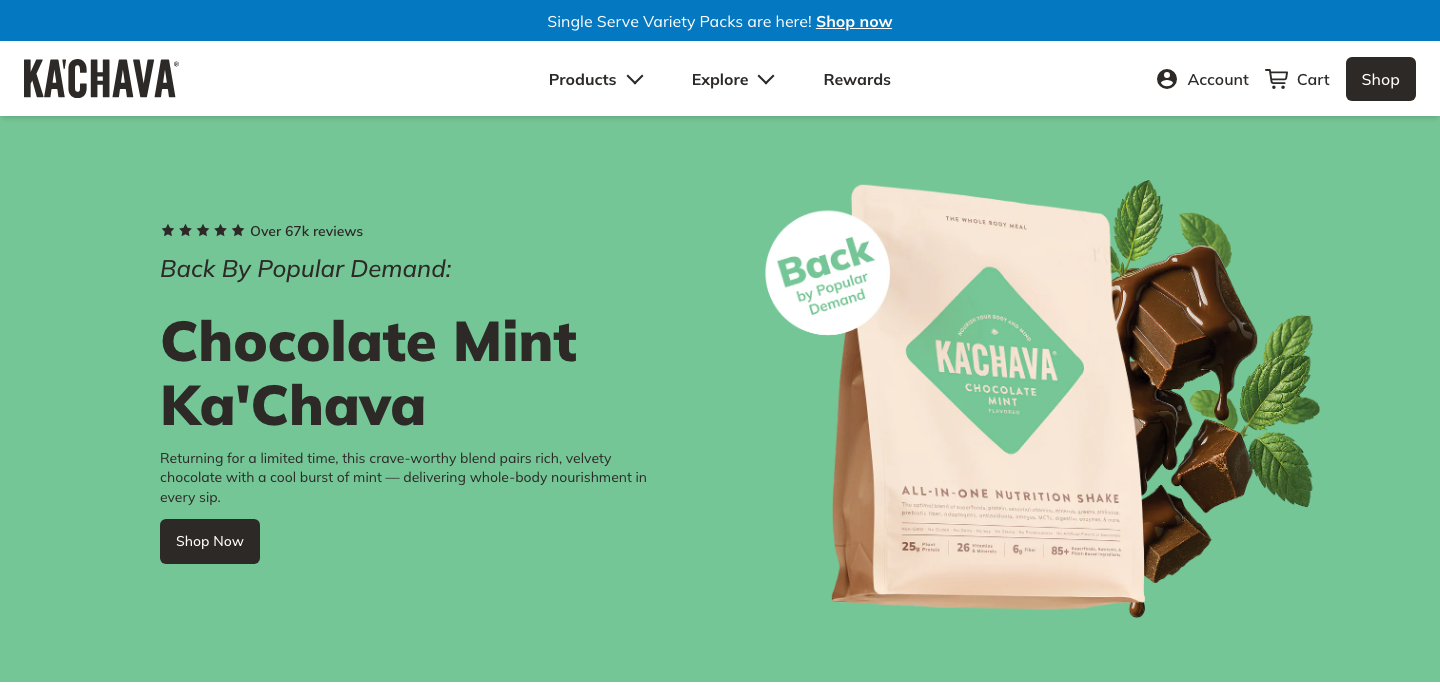
- Price per serving: $4.00 subscribed, $4.67 one-time
- Calories: 240 per serving
- Protein: 25g plant-based, from five sources
- Format: Powder, mixed with water or plant milk
- Flavors: Chocolate, Vanilla, Coconut Acai, Matcha, Chai
- Servings per bag: 15
At 240 calories a serving, Ka'Chava reads more like a nutrient-dense snack shake than a full meal swap. That matters if you plan to replace an entire meal rather than top up between meals. It also costs more per serving than Huel. The trade: fewer, pricier calories in exchange for a whole-food ingredient list.
Soylent: Best Budget Alternative
Soylent is the original mass-market meal replacement, and it still undercuts almost everyone else on price. The brand advertises $2 to $4 per serving across its lineup. That range matches Huel or beats it.
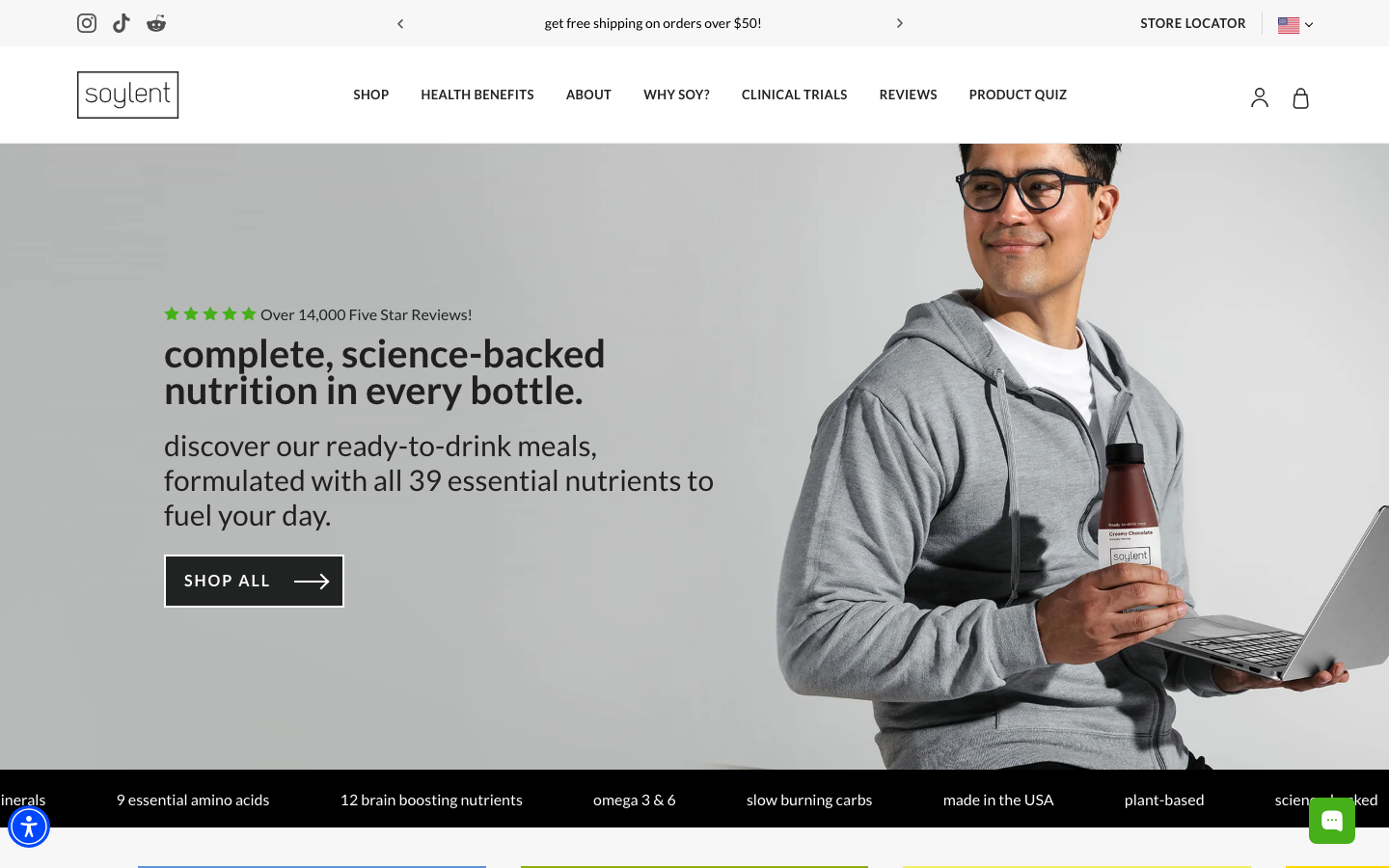
- Price per serving: $2-$4 (brand-stated range, varies by pack size and format)
- Calories: 400 per 14oz bottle
- Protein: 20g, soy-based
- Format: Ready-to-drink bottle (a powder version also exists)
- Flavors: Original, with other flavors rotating in and out of stock
One catch right now: availability. The flagship Original ready-to-drink bottle showed as sold out on Soylent's own site at the time of writing. Check current stock before you plan a subscription around it. When it is in stock, it matches Huel's 400-calorie meal size at half the protein, which suits readers who want volume and price over a high-protein macro split.
Saturo: Best Ready-to-Drink Import
Saturo is an Austrian complete-food brand. It only recently opened direct US shipping through its own site, so this is a genuinely new option for American readers, one most older buying guides will not mention. A 6-pack of 400ml bottles runs $30.99, about $5.17 a bottle.
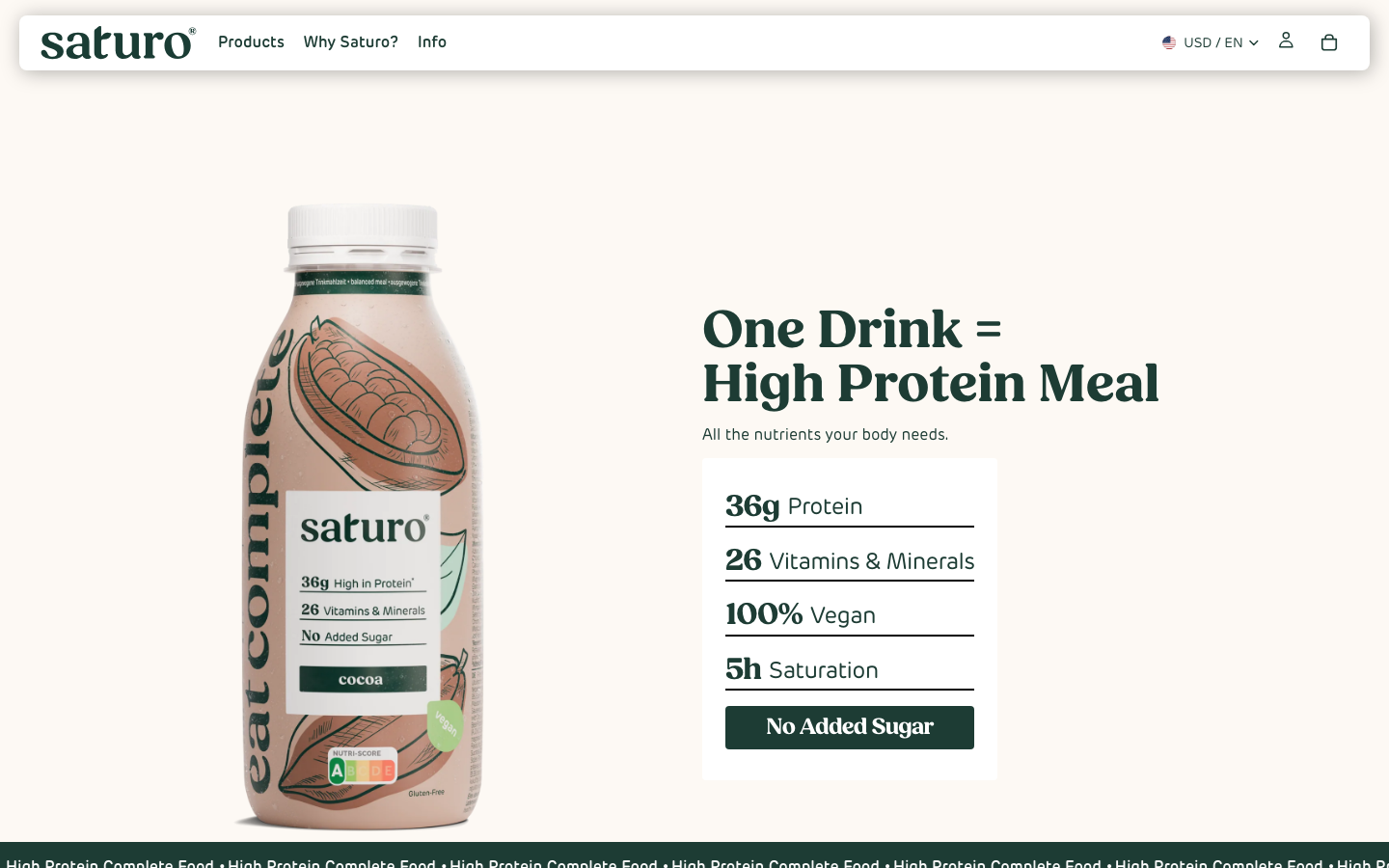
- Price per serving: ~$5.17 per 400ml bottle
- Calories: 400 per bottle
- Protein: 36g per bottle
- Format: Ready-to-drink bottle, no mixing required
- Flavors: Cocoa, Vanilla, Strawberry, Banana, Cappuccino (contains caffeine)
Saturo's 36g of protein per 400 calories is the closest match to Huel Black Edition's protein density among the ready-to-drink options here. Want Huel-level protein without mixing powder? This is the pick. The trade-off is price. It costs more per serving than Huel or Soylent.
Ample: Best Keto-Friendly Alternative
Ample is built around whole-food ingredients and a low-carb macro split. That puts it in a different lane from Huel's higher-carb recipe. A 15-serving canister works out to about $6.50 per meal, the most expensive option on this list.
- Price per serving: ~$6.50 (canister), higher for single ready-to-drink bottles
- Calories: 400 per serving (a 600-calorie bottle option also exists)
- Protein: 25g, with about 4g net carbs
- Format: Powder canister or ready-to-drink bottle
- Flavors: Vanilla, Chocolate
Ample's low net-carb count is why keto and low-carb readers pick it over Huel's higher-carb recipe. You pay a real premium for that macro profile. It fits best when carb count, not price, is your main filter.
OWYN: Best Allergen-Free Alternative
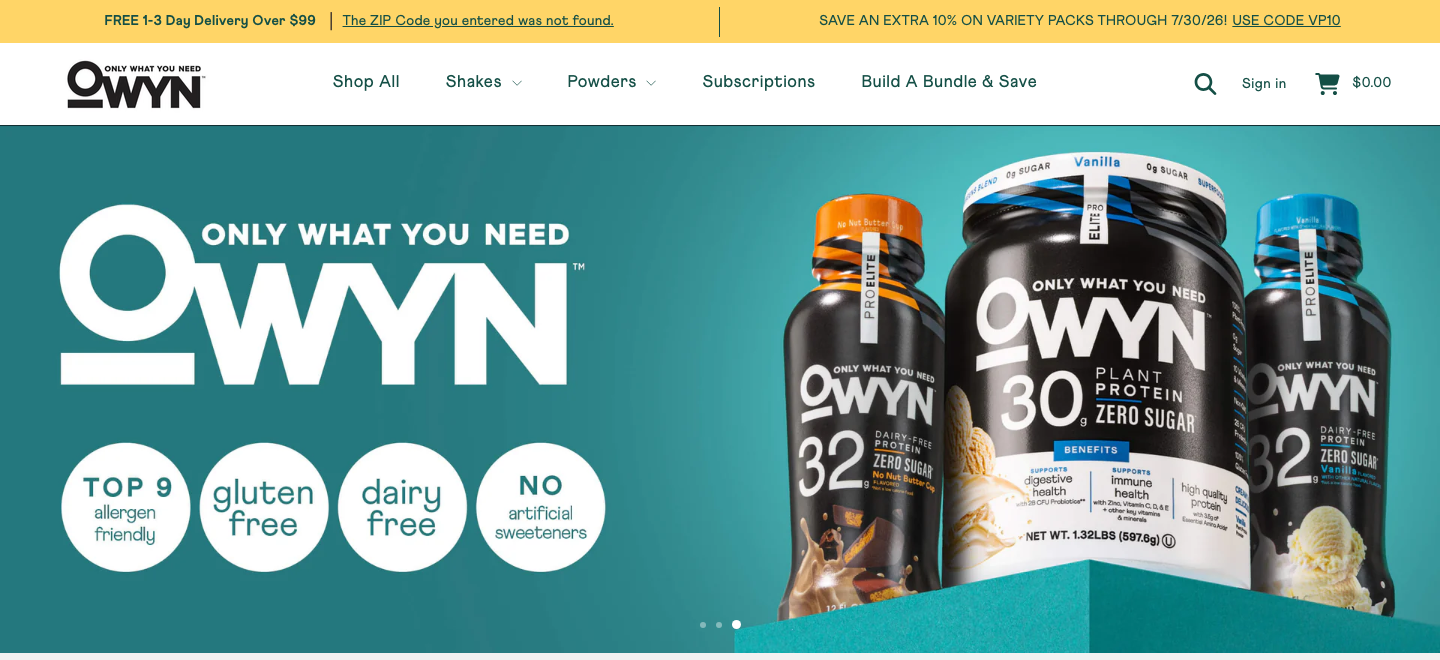
OWYN stands for "Only What You Need." It is built to avoid all nine major food allergens, the pick for readers who cannot use Huel's pea-protein-and-oat blend. A 12-pack of Pro Elite runs about $34, close to $2.83 a bottle.
- Price per serving: ~$2.83-$3.08 per 12oz bottle
- Calories: ~180 per bottle
- Protein: 20g, plant-based
- Format: Ready-to-drink bottle
- Flavors: Chocolate, Vanilla, Dark Chocolate, No Nut Butter Cup
OWYN's 180 calories a bottle makes it closer to a protein shake than a full meal replacement. It works better as a snack or a protein top-up than a straight swap for a 400-calorie Huel meal. If allergens are your main concern, that lower calorie count is a fair trade for the label safety.
Which Huel Alternative Should You Choose?
Match the brand to the reason you are switching. Do not just pick whichever one ranks first.
- Want a whole-food ingredient list over a lab-formulated blend: Ka'Chava
- Want the lowest price per serving: Soylent, when it is in stock
- Want Huel-level protein in a ready-to-drink bottle: Saturo
- Want the lowest net-carb count for a keto or low-carb diet: Ample
- Want a formula that avoids all major allergens: OWYN
None of these fit? If you are still curious about Huel's own range, our Huel Daily Greens review covers a lighter, greens-focused option inside the same brand.
Frequently Asked Questions
Is Huel or its alternatives healthier?
Neither side is automatically healthier. Huel and brands like Ka'Chava, Soylent, Saturo, Ample and OWYN all supply a full or partial meal's worth of calories, protein and micronutrients. The better fit depends on your own macro targets, allergens and taste preferences, not on one brand being objectively superior.
Which Huel alternative is cheapest per serving?
Soylent and OWYN both land in the $2-3 per serving range when in stock, undercutting Huel Black Edition's $2.65-$3.53 range. OWYN's 180-calorie bottle is closer to a snack than a full meal, though.
Do any of these alternatives ship to the United States?
Yes. All five brands covered here, Ka'Chava, Soylent, Saturo, Ample and OWYN, ship directly within the United States. Saturo is the newest addition to that list, having opened direct US shipping through its own site.
Can I switch between Huel and an alternative without a transition period?
Most people can switch right away. Introducing any new fiber blend, plant protein or sweetener can still cause short-term digestive adjustment. If you have a medical condition or take medication, check with a doctor before making meal replacement products a regular part of your diet.